You think you are perfectly safe floating hundreds of feet above the ground until a split second changes everything. The tragic news that a 63-year-old British pilot lost his life in a paragliding accident in Spain hits the tight-knit free flying community hard. It also exposes the brutal realities of a sport where the line between an exhilarating flight and a fatal mistake is razor-thin.
Most people look at an accident like this and immediately blame the gear or the wind. That's a mistake. When you look closely at what happened near the Pyrenees, the real danger wasn't the air at all. It was what we build on the ground.
The Tragedy in Palau de Noguera
On Wednesday afternoon around 1:20 PM, local emergency services received an urgent call. A paraglider was in severe distress near the historic village of Palau de Noguera, located in the Catalan province of Lleida.
Three fire crews from the nearby stations of Tremp and Sort rushed to the scene alongside police officers from the Mossos d'Esquadra and two specialized Medical Emergency System teams. They managed to track down the 63-year-old British man in an area that wasn't easily accessible. Firefighters provided immediate first aid to the critically injured pilot, but his injuries were too severe. He died right there at the scene.
Early reports from Catalan authorities indicate the pilot became tangled in high-voltage power lines. The local police have opened a formal investigation, though initial assessments point toward a tragic accident rather than equipment failure or reckless behavior. The Foreign, Commonwealth & Development Office in the UK confirmed they are stepping in to provide support to the man's family.
Why the Location Matters to Pilots
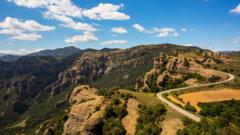
Palau de Noguera sits just outside Tremp, right at the foot of the Pyrenees. For anyone who flies, this region is legendary. It serves as a major gateway to Àger, a world-famous paragliding hub that frequently hosts the Hang Gliding World Championship and the Paragliding World Cup.
The Catalan and Spanish Air Federations highly rate Àger for its exceptional thermal conditions and massive open landing fields. Pilots from all over Europe travel to Lleida specifically to log hours and test their skills against the mountain air.
But mountain flying brings invisible hazards. Thermal lift can push you up quickly, but it can also trap you in sinking air or sudden micro-bursts of wind. When you are looking for an emergency landing spot in a valley, infrastructure becomes your worst enemy.
The Silent Killer in Free Flying
Power lines are arguably the most terrifying hazard for any paraglider or hang glider pilot. They are virtually invisible from the air.
When you fly a paraglider, you are looking down at the earth from a vertical perspective. Thin cables blend perfectly into the backdrop of fields, roads, and trees. Often, a pilot won't see a wire until they are literally a few meters away, which is far too late to react when flying a foot-launched glider that moves at 35 to 50 kilometers per hour.
Getting tangled in power lines presents a double threat. First, there is the massive physical impact of hitting a tensioned steel cable and dropping to the ground. Second, there is the immediate risk of electrocution.
This isn't an isolated incident in the region. Just last month, a 68-year-old paraglider died in another accident within the very same province of Lleida. The parallels are hard to ignore and show that even experienced pilots can get caught out by localized conditions or ground hazards.
What Pilots Can Do Next to Stay Alive
If you fly, or if you are planning a trip to a famous European flying site like Àger, you can't rely on luck. You need a concrete plan to deal with ground hazards before your boots leave the launch pad.
First, study the power grids using local maps before you take off. Many popular flying apps now include overlay maps highlighting power lines and cable cars. If a site doesn't have digital mapping, talk to the local club. They know exactly where the dangerous spans are located.
Second, always identify multiple landing options early. Don't wait until you are 200 feet over the deck to choose a field. If the wind changes or a thermal drops you unexpectedly, you need a clear approach path away from roads and utility poles.
Third, assume every road and every building has wires connected to it. If you have to make an emergency top-landing or a landing in an unfamiliar field, fly your approach well clear of the perimeter structures.
The tragic loss of life in Lleida is a stark reminder that nature isn't always the biggest danger in the sky. Sometimes, it's the infrastructure we leave behind on the ground.