The UNIFIL mission in southern Lebanon is practically dead in the water, and Europe knows it. With the blue helmets set to pack up and leave this coming December, a massive power vacuum is staring everyone in the face. If you think the current situation is unstable, imagine what happens when the only international buffer separating the Israeli army and Hezbollah evaporates completely.
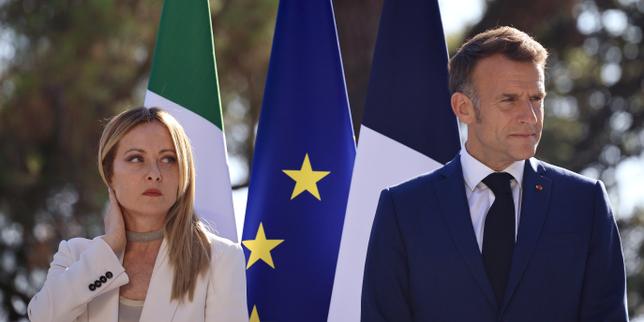
That’s exactly why French President Emmanuel Macron and Italian Prime Minister Giorgia Meloni just met in Antibes. They didn't just gather to talk diplomacy; they announced an ambitious, borderline desperate plan to deploy a brand-new multinational coalition to take over the moment the UN mandate expires.
It’s a massive gamble. Here is what is actually going on behind the scenes, why the current UN framework failed, and what this new military coalition will look like.
The Decisive Move at Antibes
When Macron and Meloni stood side by side on the French Riviera, the message was clear. They want to lead a coalition that bypasses the traditional, often paralyzed UN command structure to directly reinforce Lebanese sovereignty. The timing isn't accidental. UNIFIL won't be renewed in its current form when December rolls around.
Meloni didn't hold back during the press conference, stating bluntly that a strategic international presence must be maintained to prevent an "extremely dangerous security vacuum." To jumpstart the process, Rome is already pushing for an international conference involving several European and Middle Eastern partners.
The goal? Give the Lebanese government a total monopoly on the use of force and full control over its borders. But doing that requires rewriting the rules of engagement.
Why UNIFIL Failed and What Changes Now
Let's be real about why we are here. UNIFIL had nearly 7,500 peacekeepers on the ground, yet they couldn't stop the recent military incursions or the constant rain of rockets across the Blue Line. Meloni openly admitted that the UN mission suffered from a faulty legal framework and a lack of a clear, aggressive mandate.
The old model relied on asking nicely and observing violations. The new proposed coalition wants teeth. Instead of a passive observation force, Paris and Rome are trying to build a robust operational framework alongside the Lebanese Armed Forces (LAF).
But they face massive hurdles:
- The Legal Groundwork: They still need some form of international legal backing, whether through a reworked UN resolution or a direct bilateral invitation from Beirut.
- Local Sovereignty: Macron already spent the week on the phone with Lebanese President Joseph Aoun and Prime Minister Nawaf Salam to secure local buy-in. Without the explicit backing of Beirut, any foreign force looks like an occupation.
- The Hezbollah Factor: Any new force trying to assert the Lebanese state's absolute control over the south will run headfirst into Hezbollah's heavily armed presence, regardless of recent Swiss-brokered ceasefires between the US and Iran.
The Geopolitical Stakes for 2026
This isn't just about regional peace; it’s about European survival. Italy and France are the largest European contributors to the security missions in the Levant. If southern Lebanon completely collapses into a permanent warzone, the fallout lands straight on Europe's shores via massive migration waves and disrupted Mediterranean trade.
There is also a clock ticking for the leaders themselves. This Antibes summit represents one of the final major foreign policy plays for Macron, who leaves the Elysée in May 2027. Meloni, facing her own legislative elections next year, wants to cement Italy as the primary stabilizing power in the Mediterranean. They need this coalition to work, and they need it fast.
What Happens Next
The diplomacy is moving quickly, but the military planning needs to move faster. If you're tracking how this affects regional stability, keep your eyes on these specific milestones over the next few weeks:
- The Rome Conference: Watch for the official date of Meloni’s proposed international conference. Who shows up—especially from the Gulf States—will tell you if this coalition has the financial backing to survive.
- The LAF Equipment Drive: The coalition's success hinges entirely on the Lebanese Armed Forces. Look for immediate announcements regarding Western weapons transfers and funding specifically earmarked for Lebanese army deployments to the south.
- The UN Security Council Debates: Watch how Russia and China react to this French-Italian initiative. If they threaten to block a new UN mandate, Paris and Rome will be forced to deploy this coalition completely outside the UN umbrella, drastically raising the political stakes.