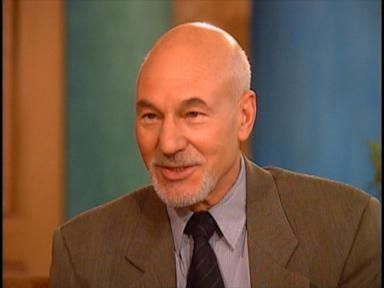
People think they know Patrick Stewart. They see the crisp Starfleet uniform, the aristocratic British cadence, and the unmistakable gleaming pate of Captain Jean-Luc Picard. Or they picture the brooding, telepathic authority of Professor Charles Xavier in the X-Men franchise.
Those two roles alone would secure anyone a permanent spot in the pop culture pantheon. But reducing Patrick Stewart to a pair of sci-fi icons misses the entire point of who he is and how he actually got here.
He didn't stumble into global fame by playing it safe. He spent decades sweating on dusty regional theater stages, speaking Shakespeare to half-empty houses, and wrestling with a childhood marked by severe poverty and domestic violence in Yorkshire. When you listen to Patrick Stewart talk about his own life in his own words, you realize his career is a masterclass in relentless resilience.
The Brutal Realities of a Yorkshire Childhood
If you want to understand why Stewart projects such fierce moral integrity on screen, look at where he grew up. Born in Mirfield, Yorkshire, in 1940, his early life was far from glamorous. His father returned from World War II suffering from what was then called combat fatigue—now universally recognized as severe PTSD.
The household was volatile. Fear was a constant companion. Yet, salvation arrived in a completely unexpected form: a public education system that valued the arts, coupled with an inspirational English teacher who handed a thirteen-year-old boy a copy of Shakespeare's plays.
Stewart has frequently noted that walking onto a stage for the first time saved his life. It gave him an outlet, a voice, and a safe space to inhabit characters who had power and agency when his own life felt entirely out of control. He didn't just learn lines; he absorbed the rhythm of language as a survival mechanism.
Decades of Grit Before Sci-Fi Stardom
Most fans assume Stewart shot to international prominence overnight when Star Trek: The Next Generation premiered in 1987. The reality is far less glamorous.
For nearly thirty years prior to boarding the USS Enterprise, Stewart was a classical theater workhorse. He joined the prestigious Royal Shakespeare Company in 1966, grinding it out in supporting roles night after night. He learned how to project his voice to the back row of massive auditoriums without a microphone. He learned how to command attention through stillness rather than shouting.
When Gene Roddenberry first considered casting an unknown, bald British Shakespearean actor to lead the flagship continuation of his beloved space franchise, Hollywood executives thought it was madness. They wanted hair, youth, and traditional American action-hero charisma. Roddenberry and the casting team trusted their gut.
Stewart showed up to his first audition wearing a terrible hairpiece that he bought himself. Fortunately, someone had the good sense to make him take it off.
Owning Jean-Luc Picard
Stepping into the captain's chair wasn't easy. The initial reception from hardcore original series fans was brutal. Purists screamed that a bald Englishman had no business running Kirk's ship. Tabloid media mocked the premise.
Instead of getting defensive, Stewart treated the sci-fi television set with the exact same reverence he gave to the Royal Shakespeare stage. He brought weight, vulnerability, and intellectual curiosity to Picard. He fought for complex storylines, pushed for moral ambiguity, and refused to play the captain as a cardboard cutout.
Over seven seasons and multiple feature films, he transformed Picard into the gold standard of modern television leadership. He taught generations of viewers that strength doesn't require shouting, and that listening is often a leader's most powerful tool.
The Art of Reinvention
Most actors coast after landing one legendary franchise. Stewart landed two.
When director Bryan Singer approached him to play Professor Charles Xavier in 2000's X-Men, Stewart initially declined. He didn't know the comics, and he was wary of getting trapped in another nerdy box. Once he realized the heavy civil rights allegory woven into the comic book's DNA, he changed his mind.
Playing Xavier allowed him to lean into a different kind of authority—one marked by profound empathy, physical vulnerability, and quiet wisdom. He became a father figure to a whole new generation of moviegoers who had never watched an episode of The Next Generation.
Speaking Truth Off Screen
What makes Stewart genuinely compelling isn't just his resume; it's his willingness to use his platform for things that actually matter. Because of his childhood experiences with domestic abuse, he has spent decades as a passionate advocate for Refuge, a UK charity supporting victims of domestic violence.
He doesn't treat charity work as a PR exercise. He speaks publicly, rawly, and uncomfortably about watching his father abuse his mother, admitting the profound shame and helplessness he felt as a child. That level of transparency is rare for actors of his generation. It proves that his off-screen character matches the moral clarity of the roles he chooses to champion.
What We Can Learn From His Journey
If you want to take a page out of the Patrick Stewart playbook, stop looking for shortcuts.
- Embrace the grind: Excellence takes decades of obscure, unglamorous practice.
- Refuse to be pigeonholed: He jumped effortlessly from high-brow Elizabethan drama to cheesy sci-fi, animated voice acting, and broad comedy without losing credibility.
- Own your story: Use your past—even the ugly parts—to fuel your empathy and your work.
Patrick Stewart didn't just act his way into history; he thought his way through it, line by line, year by year. Stop waiting for permission to command the room. Build the craft, own the stage, and speak with conviction.