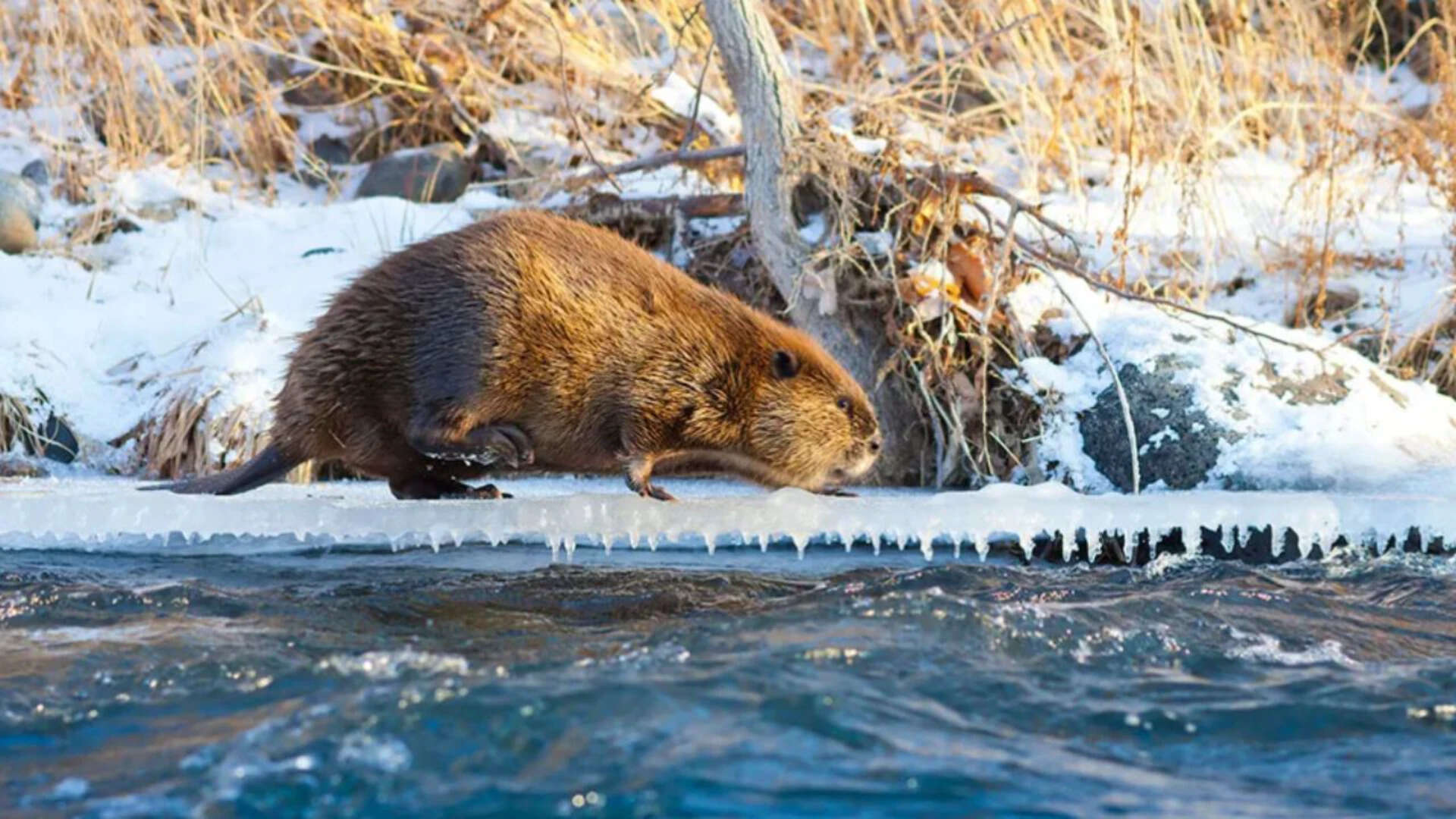
For decades, we viewed the Arctic tundra as an unyielding expanse of frozen soil, ice, and low-lying lichen. That reality is breaking down fast.
Castor canadensis, the North American beaver, is pushing farther north into Canada's Northwest Territories and Arctic Alaska than ever recorded in modern history. They aren't just visiting. They're moving in, building dams, and altering high-latitude waterways at a rate that has taken climate scientists by surprise.
Many people assume this northward drift is a harmless byproduct of a warmer world. A few extra rodents in the tundra might sound like a quirky wildlife story, but it isn't. When a beaver builds a dam in temperate forests, it creates a thriving wetland ecosystem. When it builds that same dam on tundra permafrost, it sets off a chain reaction of thermokarst thaw, altered stream chemistry, and disruption for local Indigenous communities.
Understanding this biological invasion requires looking closely at how these animals engineer the ground beneath their feet.
How Beavers Are Re-Engineering the Tundra
Beavers are ecosystem engineers. In Southern Canada and the lower 48 US states, their dam-building creates natural water storage, prevents wildfires, and creates habitat for dozens of bird and fish species.
In the High Arctic, the rules change.
Tundra streams are historically shallow, cold, and fast-flowing over frozen ground. When beavers arrive, they immediately harvest whatever woody vegetation they can find. Rising Arctic temperatures have sparked a widespread greening across the region, causing taller alder and willow shrubs to proliferate along riverbanks. That gives the rodents both food and raw construction materials.
Once a beaver builds a dam across a tundra stream, deep standing water accumulates behind it. That standing water is the real catalyst for change.
+-------------------------------------------------------------------+
|               TRADITIONAL TUNDRA STREAM                           |
| Shallow water -> Flows fast -> Shallow thaw depth in summer       |
+-------------------------------------------------------------------+
                                  │
                                  ▼ (Beaver Colonization)
+-------------------------------------------------------------------+
|               ENGINEERED ARCTIC BEAVER POND                       |
| Deep standing water -> Retains heat -> Rapid permafrost thaw      |
+-------------------------------------------------------------------+
Water holds significantly more thermal energy than air or frozen soil. In winter, deep ponds retain a liquid layer beneath the surface ice instead of freezing solid down to the bed. That persistent body of warm, liquid water transfers heat straight into the surrounding permafrost.
The permanently frozen ground underneath and around the pond begins to thaw. The ground slumps, edges collapse, and the pond expands. Research led by Dr. Georgia Hole from Anglia Ruskin University and Durham University examined tree-ring data and shrub scars along the corridor from Inuvik to Tuktoyaktuk in Canada's Inuvialuit Settlement Region. Working alongside the Indigenous Imaryuk Monitors, her team mapped beaver activity dating back to 2008, showing how rapidly beaver ponds expand surface water footprints across fragile northern terrain.
The Hidden Permafrost Feedback Loop
Permafrost acts as a giant biological freezer. It locks up thousands of years of dead plant material, keeping ancient organic carbon frozen and dormant.
When beaver ponds melt that frozen baseline, microbes break down the thawed organic material. Because these deep ponds create low-oxygen environments at the bottom, anaerobic decomposition takes over, releasing methane alongside carbon dioxide. Methane is a potent greenhouse gas with a warming potential dozens of times higher than carbon dioxide over a 20-year horizon.
Beaver Dam Built
  └─► Water Pools in Deep Ponds
        └─► Thermal Energy Transferred to Frozen Soil
              └─► Permafrost Thaws & Collapses
                    └─► Anaerobic Decomposition Occurs
                          └─► Methane & Carbon Released
Scientists tracking this shift, including Dr. Ken Tape at the University of Alaska Fairbanks, have mapped thousands of new beaver ponds across the Arctic using satellite imagery and field measurements. In parts of western Alaska and northern Canada, the number of beaver ponds has doubled in less than two decades.
It is a feedback loop in action. Climate warming enables shrub growth and longer ice-free seasons. Beavers move in and construct dams. The resulting ponds thaw permafrost, releasing carbon and methane that contribute to further regional warming.
Impact on Local Communities and Arctic Fish
The ecological changes don't happen in a vacuum. Indigenous populations in places like the Inuvialuit Settlement Region and Nunavik have relied on Arctic river systems for generations for transportation, hunting, and fishing.
Local observers report several direct consequences:
- Disrupted Fish Migration: Arctic char and whitefish rely on open, free-flowing streams to reach their spawning grounds. Beaver dams act as physical barriers, blocking fish migration routes and shrinking populations in traditional fishing spots.
- Water Quality Changes: As permafrost thaws around beaver impoundments, heavy metals like mercury and bound organic carbon leach into the aquatic food web. The stagnant water in shallow ponds also lowers dissolved oxygen levels, stressing native cold-water species.
- Travel and Navigation Risks: River channels that were once easily navigable by small boats or snowmobiles are now fragmented by mud, fallen debris, and unstable pond edges.
To monitor these rapid developments, international research collectives like the Arctic Beaver Observation Network (A-BON) have formed. They combine satellite mapping, drone imagery, and traditional ecological knowledge from Indigenous guardians to track where beaver populations are establishing new footholds.
What Needs to Be Done Next
We cannot simply build fences or deploy traditional wildlife management across millions of square kilometers of roadless tundra. Addressing this shift requires concrete, coordinated steps.
- Expand Indigenous Guardian Programs: Local monitoring groups, such as the Imaryuk Monitors, are on the frontlines. Supporting community-led monitoring provides real-time data on dam construction far faster than satellite passes.
- Targeted Management in Critical Watersheds: In areas where beaver dams block crucial fish migration routes for Arctic char, community-managed removal or harvest incentive programs can help protect local food security.
- Integrate Beaver Engineering into Climate Models: Current global climate models rarely factor in animal-driven land transformations. Factoring beaver pond expansion into permafrost thaw estimates will give climate scientists a far more accurate picture of future methane emissions.
The Arctic is changing before our eyes, and the humble beaver is playing a surprisingly heavy-handed role in shaping its future. Recognizing their impact is the first step toward managing the fallout for northern ecosystems and the communities that depend on them.