Science reporting often treats breakthroughs as isolated miracles. You read a headline about space reproduction or historic math awards, nod along, and forget it five minutes later. That approach misses the bigger picture. China's recent research milestones point to a massive, coordinated shift in global science power. Let's look past the noise and examine what is actually happening in laboratories, cargo spacecraft, and university halls.
The Brutal Reality of Having Babies in Space
Everyone loves the sci-fi dream of colonies spread across the galaxy. Space babies sound great in fiction. Reality is far harsher.
A team of researchers from the Chinese Academy of Sciences' Shanghai Institute of Technical Physics and Tsinghua University recently published findings in Science Advances. Using cargo spacecraft missions like Tianzhou, they cultured human reproductive cells in orbit. The results? They aren't pretty.
Microgravity and cosmic radiation wreck early-stage reproductive development. The success rate for generating precursor germ cells dropped by half in space. Early sperm-producing cells multiplied over 25 percent slower than their Earth-bound control groups. If humanity ever wants to populate Mars or build permanent space habitats, we have to solve this biological wall. Space radiation and zero gravity are hostile to human lineage.
History Made at the Fields Medal
While biologists fight physics in orbit, mathematicians are rewriting history back on Earth. Wang Hong and Deng Yu just became the first Chinese nationals educated on domestic soil to win the Fields Medal, widely considered the Nobel Prize of mathematics.
Both winners entered Peking University's School of Mathematical Sciences together in 2007. Decades ago, domestic Chinese mathematics lagged far behind Western institutions. These wins change that narrative permanently. Wang tackled complex geometric conjectures, while Deng worked on fundamental physics frameworks. This dual victory proves that homegrown talent in China now sits at the absolute summit of global academic rigor.
Planetary Defense and Environmental Engineering
Big science isn't just happening on chalkboards or under microscopes. Look at planetary defense. China has outlined a plan to smash a spacecraft into an asteroid at Mach 26—roughly 9 kilometers per second—before 2030. It is an aggressive test that dwarfs earlier international deflection experiments.
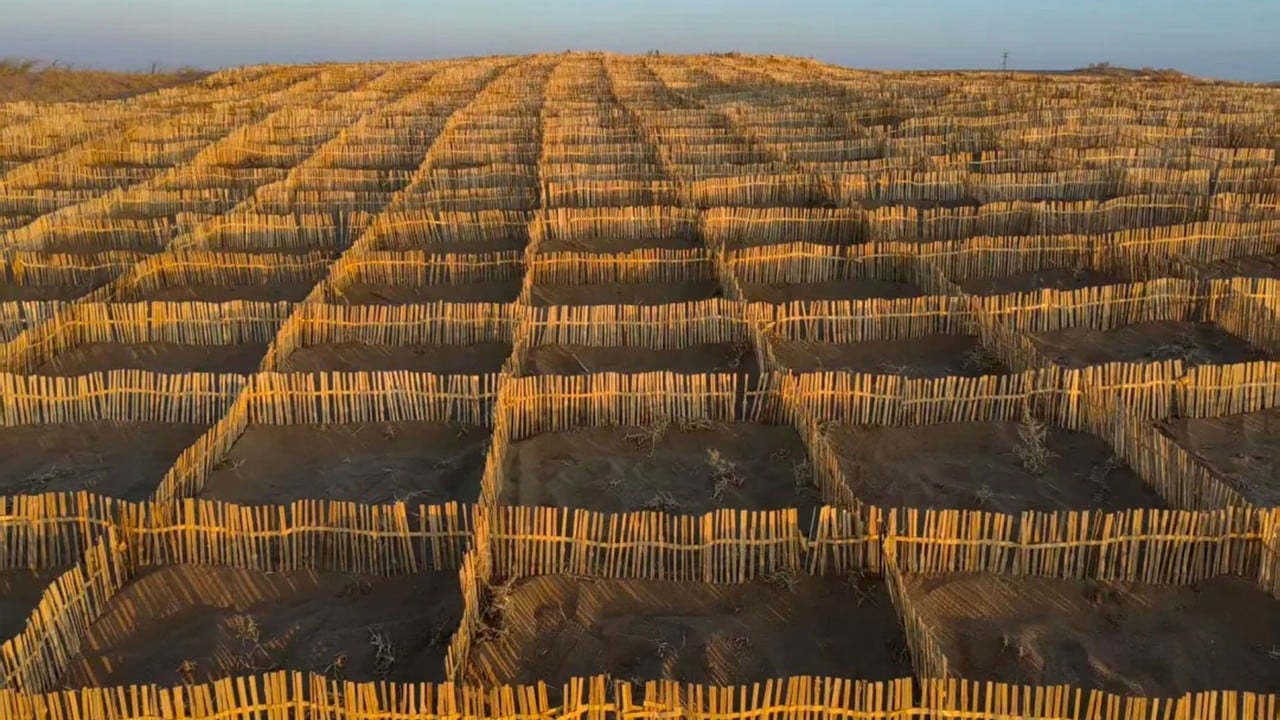
On the ecological front, researchers are tackling desertification with an unexpected tool: bamboo. Instead of traditional straw and plastic barriers used for decades in the north, scientists are planting one of the planet's fastest-growing, most resilient materials to anchor the shifting sands of the Great Green Wall.
Transforming Waste and Medicine
We generate over 460 million tonnes of plastic waste globally every year. Most of it sits in landfills or floats in oceans. A recent study shows a low-cost method to convert that stubborn plastic waste directly into jet fuel. If scaled effectively, this single technological shift bridges aviation needs with environmental cleanup.
At the same time, the scientific community mourns losses while welcoming new blood. Top medical minds like cancer researcher Sun Fanglin paved critical roads in understanding how cells age and form tumors before passing away at 58. Meanwhile, international heavyweights like diabetes specialist Shen Yang are moving their labs to institutions like Westlake University.
Stop viewing these stories as random trivia. They represent a compounding wave of infrastructure, talent, and heavy capital investment reshaping what is possible in modern science.