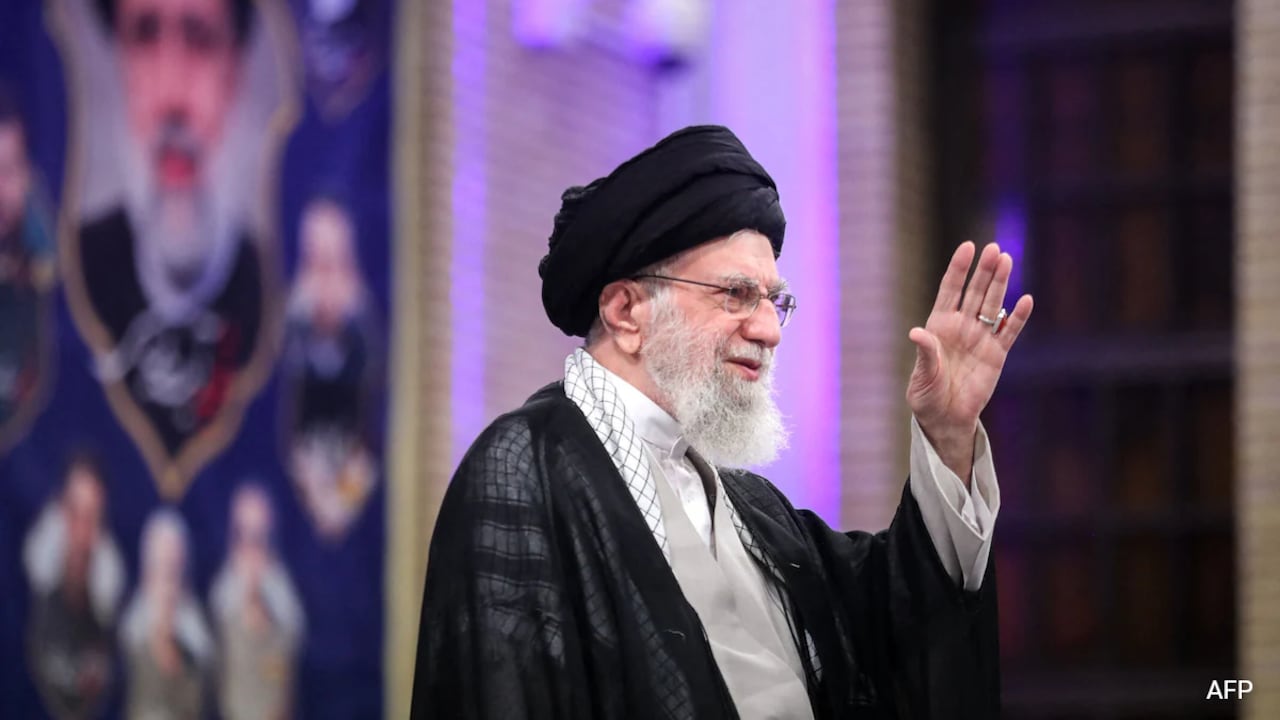
Ali Khamenei is dead. For nearly 36 years, the ultimate direction of the Islamic Republic sat in his hands. But ever since the devastating US-Israeli airstrikes in Tehran targeted his compound, the western narrative has been predictably obsessed with a single, simplistic question: who gets to sit in the Supreme Leader's chair?
People naturally look at the public figures. They eye the President, Masoud Pezeshkian. They look at the upcoming state funeral processions planned for Mashhad, and they spot the late leader’s son, Mojtaba Khamenei, heavily featured in state propaganda. Everyone wants a clear, singular successor.
But looking for one dictator to replace another means missing how power actually functions in Iran today.
The truth is, nobody runs Iran alone anymore. The old model of a singular, all-powerful cleric micromanaging the state died in that rubble. What we're witnessing isn't a traditional transition of religious authority. It's a corporate takeover by a military-industrial complex. If you want to know who controls the country’s nuclear program, its oil revenues, and its regional proxies, you don’t look at the turbans. You look at the fatigue-clad generals who have spent decades quietly positioning themselves for this exact moment.
The Facade of the Clerical Successor
Western media loves a dynastic drama. That’s why you see endless speculation about Mojtaba Khamenei. It makes sense on paper. He’s been managing his father's vast financial empire and office for years. State media has even conveniently started plastering his face right next to his late father's ahead of the burial services.
But the Islamic Republic isn't a traditional monarchy, and the clerical establishment in Qom is deeply uncomfortable with the idea of hereditary rule. It completely contradicts the founding anti-monarchical spirit of the 1979 revolution.
More importantly, the clerical class itself has lost its grip on actual power. The Assembly of Experts—the body officially tasked with choosing the next Supreme Leader—is essentially a rubber stamp. They can name Mojtaba, or another high-ranking cleric, as the formal successor. But that person will be a figurehead.
The real authority has shifted entirely to the Islamic Revolutionary Guard Corps (IRGC). Over the last two decades, the IRGC evolved from a raw, ideological militia into a massive state within a state. They control major construction firms, telecommunications networks, shipping ports, and black-market smuggling operations. They don’t need to abolish the office of the Supreme Leader. They just need a compliant character in the seat who won't interfere with their business model.
The Real Power Brokers in the Shadows
If you're tracking who actually holds the keys to the state right now, stop looking at the religious seminaries. You need to look at three specific centers of gravity that are keeping the regime functional during this chaotic period.
1. The IRGC High Command
The Revolutionary Guard operates the ballistic missile program, dictates regional strategy from Iraq to Yemen, and holds the ultimate veto over domestic politics. While the world watched the military conflict heat up, the IRGC spent months managing internal security to prevent a domestic uprising. They're the ones who decided to wait four months to hold the official state funeral. They wanted to ensure the streets were entirely locked down, foreign conflict risks were stabilized via temporary agreements, and internal dissent was completely paralyzed.
2. The Supreme National Security Council (SNSC)
This is where the actual policies are hammered out. Watch the movements of figures like Ghadir Nezamipour, the SNSC's Deputy Secretary for Defence Affairs. When the regime needs to execute high-level diplomatic maneuvers—like traveling to New Delhi for BRICS meetings or coordinating with Russia and China—it relies on the SNSC apparatus, not just the formal foreign ministry. This body bridges the gap between the civilian government and the intelligence services.
3. The Economic Oligarchs of the Bonyads
Iran's economy is dominated by massive, tax-exempt religious foundations called Bonyads. These organizations control billions of dollars in assets, ranging from industrial factories to agricultural land. They answer to no one except the top echelon of the regime. The IRGC relies on these foundations to launder money, bypass sanctions, and fund foreign operations. Whoever controls these financial spigots holds the leverage over everyday governance.
What Happens to the Office of the President
Where does President Masoud Pezeshkian fit into all this?
He’s currently the public face of the state, sending out invitations to world leaders for the July funeral and managing short-term diplomatic files. Following a recent memorandum of understanding with the United States, his administration even secured a brief 60-day waiver on oil import sanctions.
But don't mistake diplomatic visibility for genuine power. In the Iranian political structure, the president is basically a chief operating officer, while the Supreme Leader—and the military apparatus backing him—acts as the chairman of the board. Pezeshkian was brought in to manage the bureaucracy, stabilize a cratering economy, and present a professional face to international partners like India, China, and Russia. He doesn't command the military, he doesn't control the judiciary, and he doesn't have the final say on regional posture.
The Next Steps for Global Observers
If you're trying to figure out how Iran’s new power dynamic impacts global energy security, regional stability, or international trade, stop waiting for state media to announce a new dictator. Instead, watch these three specific indicators over the coming weeks:
- The Distribution of Oil Revenues: Watch whether the temporary 60-day US sanctions waiver leads to increased funding for domestic infrastructure or if the funds flow directly into IRGC-controlled bank accounts and regional proxy networks.
- The Composition of the Security Council: Keep a close eye on any leadership shuffles within the SNSC and the IRGC high command following the burial ceremonies in Mashhad. This will reveal which internal military factions won the post-strike power struggle.
- Strategic Infrastructure Projects: Monitor the development of critical economic lifelines, such as the Chabahar Port partnership with India. Factions that prioritize keeping these corridors open are focused on regime survival through trade, while more ideological factions may favor renewed regional escalations.
The old Iran, run by a charismatic, absolute religious jurist, is gone. The new Iran is a junta disguised as a choice.