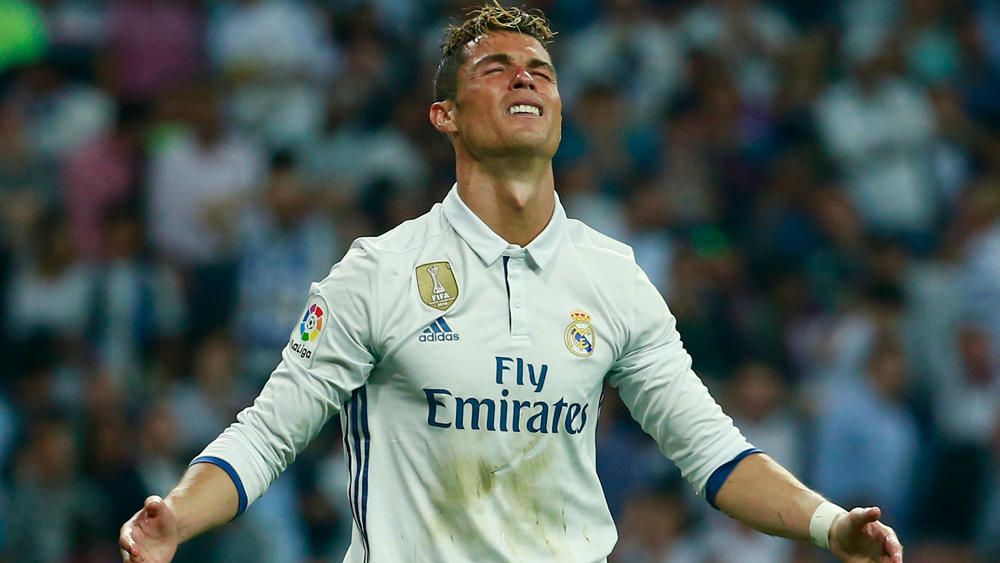
The internet is losing its mind over a few seconds of footage from the 2026 World Cup. You've probably seen it by now. Portugal is playing Croatia in a high-stakes Round of 32 knockout match. The tension is thick enough to cut with a knife. Cristiano Ronaldo steps up to take a crucial 68th-minute penalty with his team trailing 1-0. The camera zooms in on his face. He takes a deep breath, and his lips move right before he runs up and buries the ball into the back of the net.
Millions of fans across social media are entirely convinced they know exactly what he muttered. To a massive portion of the global football audience, it looked like he repeated the Arabic phrase "Bismillah" twice. That means "in the name of God." If you enjoyed this piece, you might want to check out: this related article.
But things aren't always what they seem on a grainy broadcast feed.
While the video sparked instant celebrations and intense debates online, a completely different explanation is making the rounds in Lisbon and Madrid. Portuguese fans and local media outlets are rolling their eyes at the viral rumor. They claim he was simply speaking his native tongue, saying "vais marcar" to give himself a quick jolt of confidence. In Portuguese, that translates to "you're going to score." For another perspective on this development, check out the recent coverage from NBC Sports.
So what's the actual story here? Let's break down why this clip went viral, the reality of the linguistics, and what this whole saga says about the massive cultural footprint of modern football.
The Tale of Two Phrases
When you watch the footage closely, it's easy to see why the internet split down the middle. Human lips move in remarkably similar ways when pronouncing certain vowels and consonants across different languages.
If you're looking for the phrase "Bismillah," your brain easily maps those syllables onto his mouth movements. The labial "B" sound followed by the soft sibilant "s" and the nasal "m" matches up surprisingly well with a quick, whispered invocation. For millions of Muslim fans, seeing the most famous athlete on earth use a foundational Islamic phrase in a moment of supreme pressure felt like a massive crossover event.
On the flip side, look at it through a Portuguese lens. The phrase "vais marcar" starts with a soft labial friction that can easily look like a "B" or "V" on camera. The rhythm of the words matches the exact same cadence. Ronaldo has spent his entire 21-year professional career talking to himself on the pitch. He's a master of self-motivation. Telling himself "you are going to score" is exactly the kind of hyper-focused psychological trigger he's used hundreds of times before.
Without official audio or a direct statement from the man himself, it's impossible to be one hundred percent certain. He hasn't said a word about it, and honestly, he probably never will. He's currently focused on pushing Portugal deeper into the tournament after Gonçalo Ramos scored a dramatic 94th-minute winner to seal a 2-1 victory over the Croatians.
The Saudi Arabian Connection
This entire debate didn't just drop out of thin air. The main reason the Arabic theory gained so much traction is because of where Ronaldo has spent the last three and a half years of his life.
Ever since he signed with Al-Nassr in January 2023, he hasn't just played football in Riyadh. He's completely immersed himself in the culture of Saudi Arabia. We've seen him use common Arabic phrases like "salam alaikum" during press events and shout "shukran" to adoring crowds. He even celebrated a goal in 2023 by performing the Sujud, the traditional Islamic prostration of gratitude, which absolutely thrilled local supporters.
Former teammates have also added fuel to the fire over the years. Former Al-Nassr goalkeeper Waleed Abdullah once mentioned on a Saudi television program that Ronaldo showed a genuine interest in Islamic traditions, regularly respecting the call to prayer during training sessions. Rumors even floated around that his former Real Madrid teammate Mesut Özil used to teach him basic Quranic verses back in Spain.
When you spend years surrounded by an environment where "Bismillah" is spoken before meals, before driving a car, and before taking on any difficult task, it's not totally crazy to think a bit of that vocabulary might slip into your vocabulary. Athletes are highly superstitious creatures. They pick up habits from their environments constantly.
The Reality of High Pressure Rituals
Whether he said it in Arabic or Portuguese, the real lesson here is about how elite performers manage extreme stress. Taking a penalty in a World Cup knockout match is arguably the most lonely, nerve-wracking job in all of sports. The entire world is watching. One slip of the foot changes your legacy forever.
In those seconds before the referee blows the whistle, players don't think about tactics. They think about focus. They use specific words to quiet the chaos in their own minds.
True Islamic tradition dictates that saying "Bismillah" isn't a good luck charm. It isn't a magical phrase meant to guarantee that the ball flies past the keeper. Instead, it's an act of dedication and mindfulness, a way to center oneself and remember a higher purpose before starting a task. Funny enough, self-talk scripts like "vais marcar" serve a similar psychological purpose for secular or Western athletes. They block out the external noise and anchor the mind to the immediate action.
Ronaldo didn't get to the top of the football world by accident. His pre-penalty routine is legendary. The deep breaths. The wide stance. The internal monologue. What we saw against Croatia was a masterclass in psychological grounding.
How to Apply Elite Focus to Your Own Goals
You might not be stepping up to take a penalty in front of eighty thousand screaming fans, but you definitely face high-pressure moments in your own life. It could be a massive exam, a job interview, or a difficult presentation.
Instead of just scrolling past this viral clip as another piece of football trivia, you can actually use the exact same techniques Ronaldo uses to conquer your own challenges. Here is how you can build your own routine for high-stakes moments.
First, create a physical anchor. Before Ronaldo kicks the ball, he always takes the exact same number of steps back, plants his feet wide, and puffs out his chest. This tells his brain that it's time to perform. Find a physical cue that works for you. It could be adjusting your watch, sitting up perfectly straight, or rolling your shoulders back.
Second, control your breathing. Watch the video again. Notice how his shoulders rise and fall drastically right before his lips move. He's taking a deep diaphragmatic breath to lower his heart rate and clear out adrenaline. When panic starts to creep in, take three slow, deep breaths through your nose and exhale through your mouth.
Third, lock in your internal script. This is where the whole debate comes full circle. It doesn't matter if you choose a phrase that focuses on faith, or a direct self-instruction like "you've got this." The key is consistency. Pick a short phrase that brings you comfort or confidence, and repeat it every single time you feel the pressure rising.
Stop worrying about what other people think of your routine. Find what grounds you, stick to it, and execute when it counts.