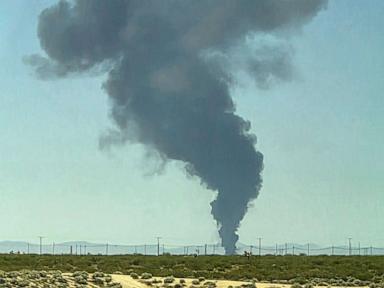
The tragic loss of eight crew members aboard a Boeing B-52 Stratofortress at Edwards Air Force Base isn't just another military mishap. It's a stark reminder of the razor-thin margins in aerospace developmental testing. On Monday, June 15, 2026, at approximately 11:20 a.m., the massive bomber rolled down the runway in Southern California's Mojave Desert. It lifted off, remained airborne for a horribly brief moment, and slammed back down onto the airfield. The impact completely destroyed the airframe.
Initial reports from the 412th Test Wing confirmed that the incident was entirely unsurvivable. The crew was a mixed group of uniformed military personnel, government civilians, and defense contractors. Boeing confirmed that two of its own team members were among the dead. One of the victims was publicly identified by his wife as Jeromy Smith, a dedicated Department of Defense flight test engineer.
While mainstream news outlets focus solely on the shock of the timeline, they miss the broader context. This wasn't a standard training mission. The crew wasn't practicing bomb runs. They were executing high-risk developmental testing for the Air Force's Radar Modernization Program. To truly understand why a legendary aircraft with eight engines could fall out of the sky so quickly, you have to look closely at the hidden mechanics of flight testing.
The Brutal Reality of Flight Testing the Stratofortress
When a regular military or commercial flight encounters an emergency, the pilots rely on established procedures. Flight testing doesn't give you that luxury. Aviation safety expert Jeff Guzzetti, a former investigator for both the Federal Aviation Administration and the National Transportation Safety Board, pointed out that the flight path indicates an immediate, catastrophic issue with controllability.
The bomber crashed roughly halfway down the base's massive 15,000-foot runway. Radar tracking data revealed a sudden, drastic descent. The aircraft initially climbed toward the northeast, began a gradual northern turn, and then abruptly hooked northwest before plunging at a terrifying rate exceeding 5,000 feet per minute.
Aviation professionals know that a rapid loss of control right after takeoff typically points to a few specific, high-consequence failure modes:
- Asymmetric Thrust: The B-52 flies with eight Pratt & Whitney TF33 engines paired in four twin-pods. If an outboard engine pod fails catastrophically during a critical climb phase, it generates severe aerodynamic imbalance. If the pilots don't pull back the throttles on the opposite side fast enough to stabilize the aircraft, the plane will yaw violently and roll into the ground.
- Mechanical Control Rigging Errors: The aircraft had recently undergone heavy maintenance and modernization modifications. If the mechanical flight control linkages or cables were rigged incorrectly during servicing, the pilot's inputs could have produced unintended, unrecoverable control surface movements.
- Experimental Hardware Malfunctions: Flight testing regularly pushes new systems to their operational limits. A structural or electrical failure of the specialized modification equipment could have disrupted the aircraft's center of gravity or jammed primary control surfaces.
Why We Are Flying 70 Year Old Bombers in 2026
It seems absurd to the general public that the U.S. military relies on an airframe that entered service in 1955. The youngest B-52H in the fleet left the factory in 1962. Yet, the Air Force plans to keep this fleet operational until at least 2050. That means these airframes will fly for nearly a century.
The reason is simple economics and structural durability. The B-52 is a robust, versatile heavy lifter. It features a massive payload capacity that modern stealth bombers simply can't match. It serves as a highly efficient standoff platform, launching cruise missiles from well outside the reach of enemy air defenses.
However, keeping an ancient fleet viable requires constant tech updates. The specific mission on June 15 was part of an ongoing effort to replace the bomber's antiquated mechanical radar with a modern Active Electronically Scanned Array (AESA) system. Boeing delivered the first modernized test aircraft to Edwards Air Force Base back in late 2025. The flight test schedule for 2026 was designed specifically to validate this new radar architecture before launching full-scale production.
The Air Force is currently facing immense structural strain. Operations across the globe have forced a shrinking, aging fleet to maintain high operational tempos. Experts like retired Lt. Gen. David Deptula have continually warned that the military cannot keep asking decades-old hardware to meet expanding national security needs without facing severe hardware fatigue and maintenance backlogs.
What Happens Next in the Investigation
Col. James Hayes, deputy commander for the 412th Test Wing, stated that a complete investigation could take up to six months. Military accident investigation boards operate with extreme precision, utilizing a two-step process to ensure absolute transparency and systemic correction.
First, an Interim Safety Board secures the physical wreckage and logs all telemetry data. Investigators will analyze the charred debris field to verify the positions of the flight control surfaces at the moment of impact. They will teardown all eight turbine engines to see if they were actively producing power when the plane hit the runway.
Second, the formal Accident Investigation Board will review the entire maintenance history of this specific tail number. They'll scrutinize every modification blueprint, software log, and pre-flight inspection report connected to the radar modernization installation.
Practical Steps for Aviation Analysts and Observers
If you follow military aviation or analyze defense technology, don't jump to early conclusions based on social media speculation. Follow these steps to monitor the situation accurately as the official probe moves forward.
- Monitor Official Military Channels: Avoid speculative forums. Wait for official updates from the Air Force Materiel Command and the 412th Test Wing public affairs office.
- Look for Safety Standard Changes: Watch for immediate, fleet-wide maintenance bulletins. If the Air Force grounds the rest of the B-52 fleet or orders urgent inspections of specific flight control components, it will tell you exactly what system investigators suspect failed.
- Track the AESA Radar Program Milestones: Keep an eye on defense procurement updates regarding the B-52 radar modernization program. The timeline for the system's production decision will show whether the crash was caused by the new radar hardware or an unrelated mechanical failure.