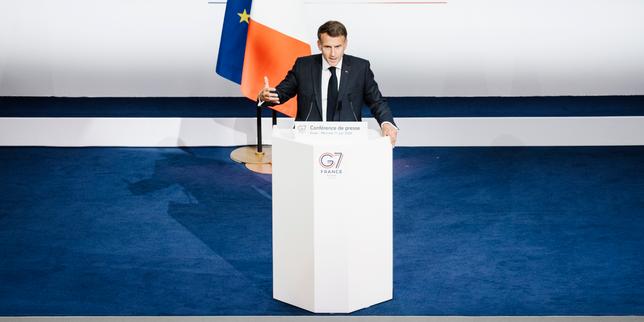
Emmanuel Macron just walked into the studios of France 2 to address a world that looks fundamentally different than it did just a few weeks ago. The context was massive. The United States and Iran had just signed a surprise Memorandum of Understanding. Everyone is talking about peace, lower gas prices, and a sudden end to years of crushing geopolitical anxiety. The mainstream media is running with a triumphant narrative. They are painting this as the definitive end of a dark era.
They are missing the real story.
If you watched the French President closely on June 18, 2026, you saw a leader who flatly refuses to pop the champagne. Macron explicitly warned viewers that thinking this war is completely over is a massive mistake. He did not mince words. He backed the American diplomatic push because dialogue is always better than an unchecked military escalation, but he is not buying the hype. Instead of jumping on the triumphalist bandwagon, Macron laid out a deeply cautious, calculating French position. It is a strategy built on cold verification, regional leverage, and economic reality.
Understanding what actually happened during that prime-time broadcast requires looking past the glossy headlines. Here is the unvarnished breakdown of what Macron really meant, what he got right, and where the French strategy faces its harshest reality check.
The Sixty Day Illusion
The biggest takeaway from Macron's appearance is his intense focus on the next two months. The signed memorandum between Washington and Tehran is not a final treaty. It is a starting gun. Macron emphasized that a strict 60-day negotiation window is now open. This period will determine whether the deal holds any real water or if it is just a temporary political band-aid.
During these crucial weeks, the international community has to figure out the actual mechanics of the agreement. We are talking about the fate of enriched uranium stocks, strict limits on future enrichment, and the exact role the International Atomic Energy Agency will play on the ground. Macron made it clear that France expects absolute transparency.
The French position hinges on a simple question. Will Iran emerge from this sequence less dangerous than it was before?
Macron thinks Iran is currently in a weaker position both militarily and nuclearly. That is his justification for talking to them now. He believes the balance of power has shifted enough to make negotiations viable. But he is also realistic enough to know that agreements on paper mean absolutely nothing without aggressive verification. If the inspectors cannot get total access within these 60 days, the entire diplomatic house of cards collapses.
Calling Out Netanyahu on Lebanese Sovereignty
The most explosive segment of the interview had nothing to do with Washington or Tehran directly. It was aimed squarely at Jerusalem. Macron used his platform to issue a blunt public warning to Israeli Prime Minister Benjamin Netanyahu.
He called on Netanyahu to show responsibility and rationality.
Think about that choice of words for a second. It is a direct critique of Israel's current military posture in southern Lebanon. Macron explicitly stated that Israeli security cannot be bought through the conquest or long-term occupation of neighboring territory. This is where the French line separates itself entirely from the American approach. Paris recognizes Israel's legitimate right to defend itself against Hezbollah or Iranian proxies, but it draws a hard line at the creation of permanent buffer zones.
The timing of this warning could not have been more urgent. On the exact day of the interview, June 18, Israeli strikes tragically killed three people in southern Lebanon. This happened despite the regional framework supposedly pushing for de-escalation. Macron knows that if Israel insists on maintaining a military footprint inside Lebanon, the broader regional deal will disintegrate.
France has a deep, historical connection to Lebanon. Macron laid out a three-part plan to protect Lebanese sovereignty during this transition phase.
First, Paris is using its diplomatic weight within the United Nations Security Council and the G7 to ensure that Lebanese territorial integrity is baked into any final regional settlement. Second, France wants to actively rebuild and support the Lebanese Armed Forces. The goal here is simple. The official Lebanese state must regain a complete monopoly on weapons, especially in the south. Third, France plans to commit civilian aid to rebuild destroyed villages and help displaced families return home.
It is an ambitious plan. It is also incredibly fragile. If Hezbollah refuses to discuss its own massive arsenal after any potential Israeli withdrawal, Lebanese sovereignty remains a total myth. Macron knows this, even if he did not emphasize it quite as loudly as his critique of Netanyahu.
The Real Reason Your Gas Is Getting Cheaper
Let's pivot to something that hits closer to home for the average citizen. Gas prices.
Macron spent a significant portion of his interview connecting these abstract Middle Eastern diplomatic maneuvers directly to the wallets of French drivers. The closure and constant threats surrounding the Strait of Hormuz have been driving energy markets crazy for months. With the US-Iran memorandum signed, there is finally a path toward reopening this vital global shipping lane.
The markets have already reacted. Earlier this week, fuel prices in France dropped below the €2 per litre mark for the first time since early March. Diesel is sitting at an average of roughly €1.99. That is a welcome relief compared to the terrifying peaks we saw back in April, where prices soared more than 30 cents higher.
But Macron offered a reality check here too. He warned that even if the Strait of Hormuz reopens immediately, global supply chains do not adjust overnight. It takes weeks for shipping logistics, existing stock levels, and distribution contracts to realign.
Public Accounts Minister David Amiel has already stated that letting distributors drag their feet for months is unacceptable. The government is actively pressuring fuel companies to pass savings down to the pump immediately. Still, Macron was honest enough to admit that prices are going to stay above pre-crisis levels for the foreseeable future. The economic wounds of this conflict are going to take a long time to heal completely.
The Overlooked G7 Agenda
While the Middle East dominated the broadcast, Macron also used the interview to tie his domestic goals to the recent G7 summit outcomes in Evian-les-Bains. He wants to project the image of a France that is leading the global conversation on future technologies and societal protections.
The President highlighted several key areas where he claims France is driving the international agenda.
- Artificial Intelligence: Pushing for global regulatory standards that protect jobs while encouraging innovation.
- Protection of Minors: Securing international agreements to crack down on digital harms affecting children across social media networks.
- Industrial Transitions: Aligning G7 economic policies to fund green technology without destroying local manufacturing bases.
He also reiterated France's unwavering commitment to Ukraine. Even with the massive distraction of the Iranian conflict over the last few months, Macron insisted that pressuring Russia remains a top priority. He noted his efforts to keep Donald Trump aligned with European security interests during their recent meetings at Versailles and the G7 summit.
The Verdict on Macron's Performance
So, what is the real takeaway here?
Macron's France 2 interview was a masterclass in managing expectations. He successfully avoided the trap of American-style triumphalism while still defending the utility of diplomacy. By focusing on the 60-day verification window, he shifted the burden of proof entirely onto Iran and the international inspectors. By calling out Netanyahu, he protected France's historic role as the defender of Lebanon and signaled to Arab partners that Paris will not blindly validate every Israeli military action.
It was a pragmatic, calculating performance. But pragmatism only works if the other actors play by the rules. If Netanyahu ignores the call for rationality, or if Iran uses the next 60 days to hide its nuclear progress, Macron's carefully constructed diplomatic framework will look less like statesmanship and more like wishful thinking.
Watch the pump prices. Watch the borders of southern Lebanon. The next two months will tell us if Macron's caution was justified or if he was still being far too optimistic. Keep a close eye on the official government fuel tracking tools this week to see if distributors are actually lowering your local prices, and monitor the UN updates out of Lebanon. The real test of this interview starts right now.