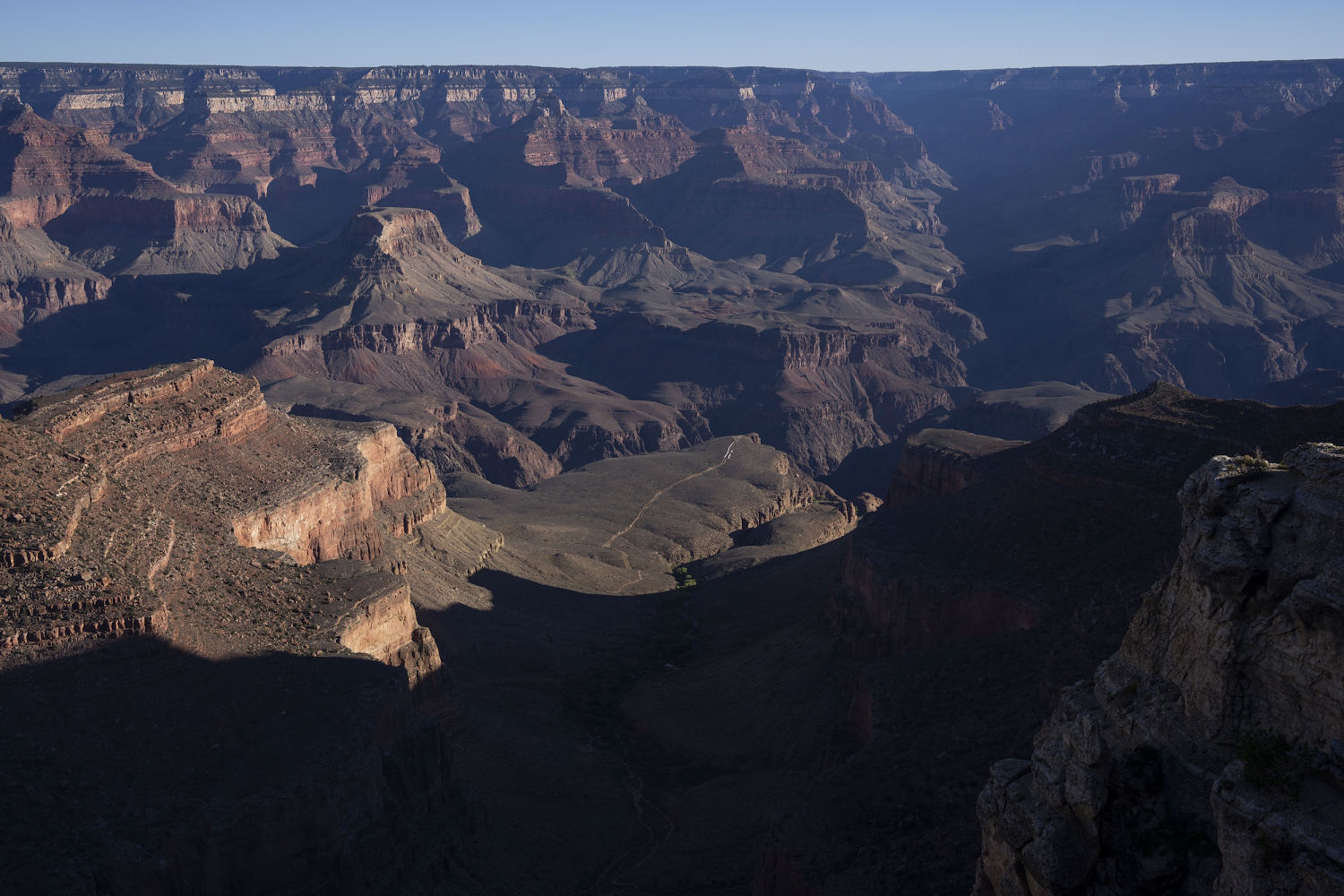
You stand at the rim, looking down into the massive, breathtaking expanse. It feels cool up here, breezy even. So you pack a couple of water bottles, lace up your boots, and head down the trail. That is the exact moment the trap snaps shut.
Recently, 3 people die from apparent heat-related illnesses at Grand Canyon National Park within a single week. It's a tragedy that keeps repeating every summer, yet most tourists still treat this place like a regular walk in the woods. It isn't. The geography of this canyon creates a brutal, inverted weather system that catches even experienced hikers completely off guard. If you liked this piece, you might want to read: this related article.
If you think a summer hike to the bottom is just a matter of sweating it out and drinking when you're thirsty, you are fundamentally wrong. Here is what is actually happening down there, why the canyon is an unforgiving environment, and how to survive your next trip.
The Inverted Mountain Illusion
When you climb a normal mountain, the higher you go, the colder it gets. The Grand Canyon works backward. The rim sits at a high elevation, often between 7,000 and 8,000 feet, where the air is thin and relatively crisp. But as you drop into the inner gorge, you are descending into a furnace. For another angle on this event, check out the recent coverage from Travel + Leisure.
For every 1,000 feet you drop, the temperature jumps by about 5.5 degrees Fahrenheit. By the time you reach Phantom Ranch at the very bottom, you are standing in a desert basin that routinely clears 115 degrees Fahrenheit in the shade. Exposed rocks under the direct sun can heat up to over 140 degrees. You are effectively walking down into an oven, and the hardest physical work of your day—climbing back out—happens when you are already exhausted, dehydrated, and trapped in the hottest zone.
The recent spike in deaths shows exactly how fast things go wrong. On June 12, a 72-year-old man collapsed and died on the South Kaibab Trail. Just four days later, on June 16, a 67-year-old man and a 68-year-old woman lost their lives on the North Kaibab Trail. All three were hit by rapid, severe symptoms of heat-related illnesses at Grand Canyon National Park before rescue teams could even reach them.
Why Sweat Can Deceive You
In a humid environment, you sweat, your clothes get soaked, and you realize you are overheating. The desert plays a much meaner trick. Because the air inside the inner canyon is incredibly dry, your sweat evaporates the exact millisecond it hits your skin.
You might feel bone-dry and think you aren't working that hard. In reality, your body is draining its water reserves at an alarming rate. You can easily lose up to a quart of water every hour just trying to stay cool.
When you lose that much water, your blood volume drops. Your heart has to pump faster and harder to push blood to your skin to release heat. If you are only drinking plain water to fix this, you might trigger a dangerous condition called hyponatremia. This happens when you dilute your body's sodium levels, leading to brain swelling, confusion, seizures, and eventual collapse.
The Myth of the Quick Rescue
Many hikers carry a satellite messenger or a cell phone thinking that if things get too tough, they can just call for a helicopter. That is a fantasy.
When the inner canyon hits extreme temperatures, the air becomes less dense. Helicopters rely on dense air to create lift. When it gets too hot, rescue choppers literally cannot fly safely, or they have to carry dramatically less weight. If you collapse at 1 p.m. on a 118-degree day, a helicopter might not be able to launch for hours.
Park rangers are also stretched thin during peak season. They cannot be everywhere at once. A rescue that looks short on a map can take hours of grueling foot travel for first responders. You are your own rescue team.
How to Actually Survive the Inner Canyon
If you are going to hike below the rim during the summer months, you have to throw out standard hiking logic.
First, own the clock. Park officials urge visitors to stay off inner canyon trails between 10 a.m. and 4 p.m. This is not a casual suggestion. The smart move is to start your hike at 4 a.m. or 5 a.m., get to a shaded rest area or water station by mid-morning, and literally sit still until the worst of the heat passes.
Second, change how you hydrate. Carry at least a gallon of water, but do not drink it all plain. Mix in electrolyte powders. Eat salty snacks like pretzels, chips, or salted nuts continuously. If you aren't eating, you aren't replacing the sodium you are losing.
Finally, use the water to cool your body externally. Don't just drink your water; pour it over your head, your shirt, and your hat. Wetting your clothes creates an artificial cooling vest that drops your skin temperature significantly as it evaporates. If you pass a creek or a water spigot, submerge your shirt completely.
The Grand Canyon demands absolute respect. It looks beautiful from the top, but the environment inside cares nothing about your fitness level, your hiking resume, or your vacation schedule. Pack smart, hike early, and know when to turn around.