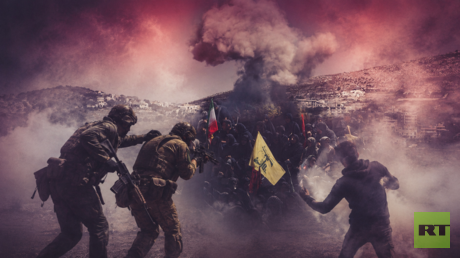
Whenever you hear about a new truce in the Middle East, a healthy dose of skepticism is required. The recent agreement between Israel and Hezbollah is no exception. While headlines trumpet a breakthrough deal under US guidance, the reality on the ground tells a completely different story.
You see, hours after negotiators announced this partial ceasefire, the bombs were still falling. Air raid sirens wailed across northern Israel, and smoke billowed over southern Lebanese towns. It makes you wonder what a ceasefire actually means when neither side stops shooting.
The Mirage of a Partial Truce
The core of this agreement sounds decent on paper. Israel agrees to spare the Lebanese capital of Beirut from devastating airstrikes. In exchange, Hezbollah agrees to halt its direct attacks on Israeli territory.
To help enforce this, both sides agreed to set up pilot zones. In these specific areas, the official Lebanese Armed Forces (LAF) are supposed to take full control and clear out any non-state armed groups. It builds on previous diplomatic frameworks from April and May, attempting to create a buffer.
But there's a massive, glaring catch.
Hezbollah's leadership isn't buying it. Hezbollah Secretary-General Naim Qassem openly slammed the Washington-backed framework, calling it a roadmap for the annihilation of his people. From Hezbollah's perspective, a deal that protects Beirut but leaves southern Lebanon exposed is dead on arrival.
What the Competitors Aren't Telling You
Many mainstream outlets focus purely on the high-level diplomacy happening in Washington. They want you to think a few signatures can instantly erase decades of deep-rooted animosity. They miss the brutal mechanics of how this conflict actually operates.
Israel has established a self-declared forward defense zone in southern Lebanon, which now covers roughly 6% of Lebanon's territory. The Israeli military insists this zone is vital to shield its northern communities from rocket fire. But for the Lebanese people living there, it means mass evacuation orders and villages turned into no-go zones.
Look at the data from the ground immediately following the announcement:
- At least eight people were killed in overnight Israeli strikes in southern Lebanon, including a father and his two children.
- Israel issued fresh evacuation orders for Nabatieh, one of the largest cities in the south.
- Hezbollah targeted Israeli tanks operating inside Lebanese territory and launched drones into northern border towns like Kiryat Shmona.
This isn't a peace deal. It's a managed conflict. Both sides are adjusting their boundaries and testing how far they can push before the entire framework collapses entirely.
The Regional Strings Attached
You can't look at Lebanon in isolation. This entire escalation tied back to a wider regional chessboard involving Iran and the United States.
Iran has made it clear that any broader diplomatic understanding with Washington must include a permanent cessation of hostilities in Lebanon. When negotiations stall or progress, the intensity on the border shifts like a volume knob. For example, international oil prices briefly eased by just under 1%, with crude hovering near $100 a barrel, simply on the hope that this partial deal might signal a broader regional cooling.
But hope doesn't hold a front line. Israel retains what it calls the right to active self-defense. In practice, that means if Israeli intelligence detects Hezbollah moving assets or preparing a launch, the strikes resume instantly. Hezbollah operates under a similar mindset, claiming its actions are purely defensive responses to Israeli occupation.
The Fragile Next Steps
If you're tracking this situation to see where it goes next, ignore the political victory speeches. Watch these three indicators instead:
- The LAF Deployment: Watch whether the Lebanese Armed Forces actually deploy to the pilot zones in the south. If they lack the political will or firepower to displace Hezbollah fighters, the deal is functionally over.
- The Beirut Buffer: Keep an eye on the capital. If Israel holds its fire on Beirut's southern suburbs, the partial nature of the deal might survive, even if the south remains a combat zone.
- The Evacuation Maps: Track whether Israel expands or contracts its "Forward Defence" zones. If the no-go areas keep growing, expect Hezbollah to step up its drone and rocket strikes regardless of what was agreed to in Washington.
The diplomacy is moving fast, but the facts on the ground are stubborn. Don't expect the sirens to fall silent anytime soon.