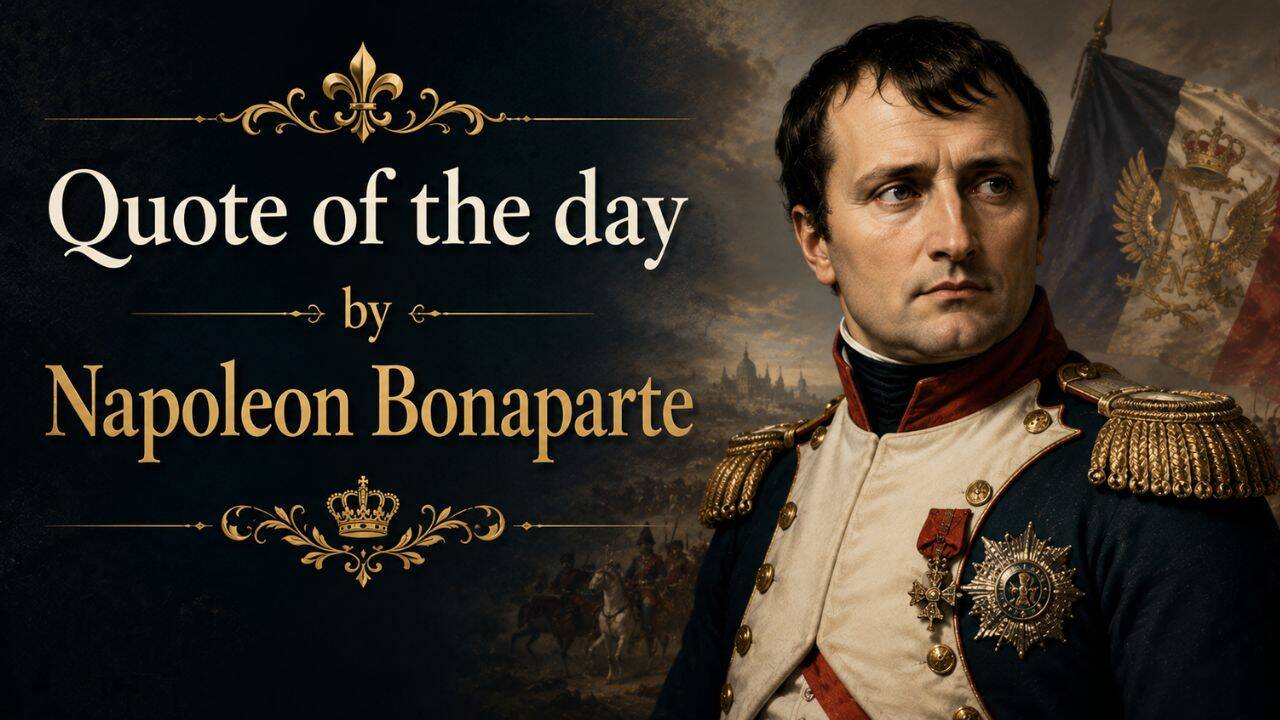
History loves a loud villain. We obsess over tyrants, brutal conquerors, and the dramatic moments where bad actors tear down societies. But a famous quote often attributed to French Emperor Napoleon Bonaparte turns this entire perspective upside down. The line says that the world suffers a lot, not because of the violence of bad people, but because of the silence of the good people.
It is a brutal slap in the face. It tells us that watching bad things happen without saying anything is not a neutral position. It is active participation. Most people read this quote and nod along, thinking about grand historical events or distant political corruptions. They assume it applies to someone else. They are wrong. This quote is about you, your workplace, your group chats, and the tiny daily compromises that slowly erode our collective culture.
Understanding why this quote remains so relevant requires looking past the surface level. We have to examine how silence works as a force multiplier for harm. When we unpack the mechanics of inaction, we find a messy mix of psychology, history, and modern sociology that explains why standing by is often easier than standing up.
The Psychology of the Silent Onlooker
Why do decent people stay quiet when things go wrong? It is easy to label them as cowards, but human psychology is much more complicated than that. In any group setting, a powerful mental shift happens the moment trouble starts.
Why Good People Shut Up
We like to think we have an internal moral compass that dictates our actions regardless of the environment. Decades of social science show that our surroundings heavily dictate our behavior. When people witness an injustice, whether it is harassment in an office or bullying in a schoolyard, a wave of social anxiety kicks in.
The fear of social isolation is an evolutionary trait. For early humans, getting kicked out of the tribe meant literal death. That ancient brain wiring still fires today. Speaking up means risking your status within the group. It means making things awkward. It means turning the spotlight onto yourself. For most people, the immediate comfort of fitting in outweighs the abstract desire to do the right thing.
The Bystander Effect is Real
Social psychologists Bibb Latané and John Darley famously proved this through their research on the bystander effect. They discovered that the more people who witness an emergency, the less likely any single individual is to help. This happens because of a phenomenon called diffusion of responsibility.
Everyone in the crowd looks at everyone else to see how they should react. If no one moves, everyone assumes that inaction is the correct response. You tell yourself that someone else will handle it. You assume someone more qualified or more powerful will step in. When everyone thinks this way, absolutely nothing happens. The silence becomes deafening, and the bad actor gets a free pass to continue.
How Inaction Shapes History
Look closely at the man who allegedly spoke these words. Napoleon Bonaparte was not exactly a peaceful saint. He was a ruthless military genius who plunged Europe into decades of bloody conflict. His entire career was built on exploiting the hesitation and silence of his rivals.
The Irony of Bonaparte's Relentless Action
There is a massive double standard here. Napoleon rose to power out of the bloody chaos of the French Revolution. He saw firsthand how the indecision of moderate, well-meaning French citizens allowed radical factions to seize control of the country. He recognized that a disorganized, quiet majority is completely powerless against a tiny, highly motivated minority of extremists.
Napoleon did not just observe this dynamic. He weaponized it. He knew that if he moved faster and more aggressively than his political opponents, the public would default to compliance. They would wait and see. By the time the average citizen realized what was happening, Napoleon had already crowned himself emperor. His life proves that silence creates a vacuum, and power always rushes to fill a vacuum.
Exploiting the Vacuum
Every major historical shift relies on this vacuum. Dictators do not take over countries overnight through pure force alone. They manage it because the institutional guardrails and the general populace hesitate at critical moments.
Think about corporate disasters, political scandals, or community crises throughout history. The warning signs are almost always there. Dozens, sometimes hundreds, of people notice that something is wrong months before the explosion. They choose to look away because speaking up feels too expensive personally. They worry about their jobs, their reputations, or their safety. This collective silence provides the cover that bad actors need to operate out in the open.
Modern Silence in the Workplace and Society
We do not live in nineteenth-century France, but the rules of silence have not changed one bit. Today, the battlefield of inaction has shifted to our professional lives and digital spaces.
The Corporate Mute Button
Talk to anyone who has worked in a toxic corporate environment. They will tell you that the worst part isn't the lone bad manager or the corrupt executive. The worst part is the sea of blank faces looking down at their laptops during a meeting while someone gets publicly humiliated.
Organizations frequently pay lip service to transparency and ethics. In reality, the incentives often reward keeping your head down. Whistleblowers face massive professional retaliation, social ostracization, and legal battles. The message sent to employees is clear: protect the machine, protect your paycheck, and stay quiet. When good employees see their peers get punished for honesty, they quickly learn to mute their own moral code.
Social Media Inaction
The internet has scaled this problem to an terrifying degree. Digital platforms are built to maximize outrage and division. We see massive waves of targeted harassment, misinformation, and cruelty every single day.
Most users look at these digital pile-ons and feel a sense of quiet discomfort. They do not agree with the cruelty. They might even feel deep empathy for the victim. But what do they actually do? They scroll past. They close the app. They stay silent because entering the digital arena means risking becoming the next target. This passivity allows toxic subcultures to dominate online discourse, giving an aggressive minority the power to dictate societal norms.
Breaking the Silence Pattern
If silence is the engine that drives collective suffering, then vocal resistance is the only way to stop it. Breaking this cycle requires moving away from passive agreement and moving toward active intervention. It means developing moral courage as a practical skill, not an abstract ideal.
You can start changing this dynamic by practicing immediate, small-scale interventions in your daily life. When you notice a colleague getting cut off or dismissed in a meeting, speak up immediately to return the floor to them. If a friend makes a derogatory comment in a casual conversation, call it out directly instead of laughing uncomfortably to keep the peace.
Stop assuming that someone else will fix a broken situation or report an issue in your neighborhood or workplace. Document misconduct when you see it happen so that victims have verifiable evidence instead of just their word against someone else's. Finally, build alliances with other people who value accountability so that you do not have to stand alone when challenging unfair systems.
Waiting for a perfect moment of safety before you speak up ensures that you will stay silent forever. True moral courage means accepting the immediate discomfort of speaking out because you know the long-term cost of your silence is far too high for the world to bear.