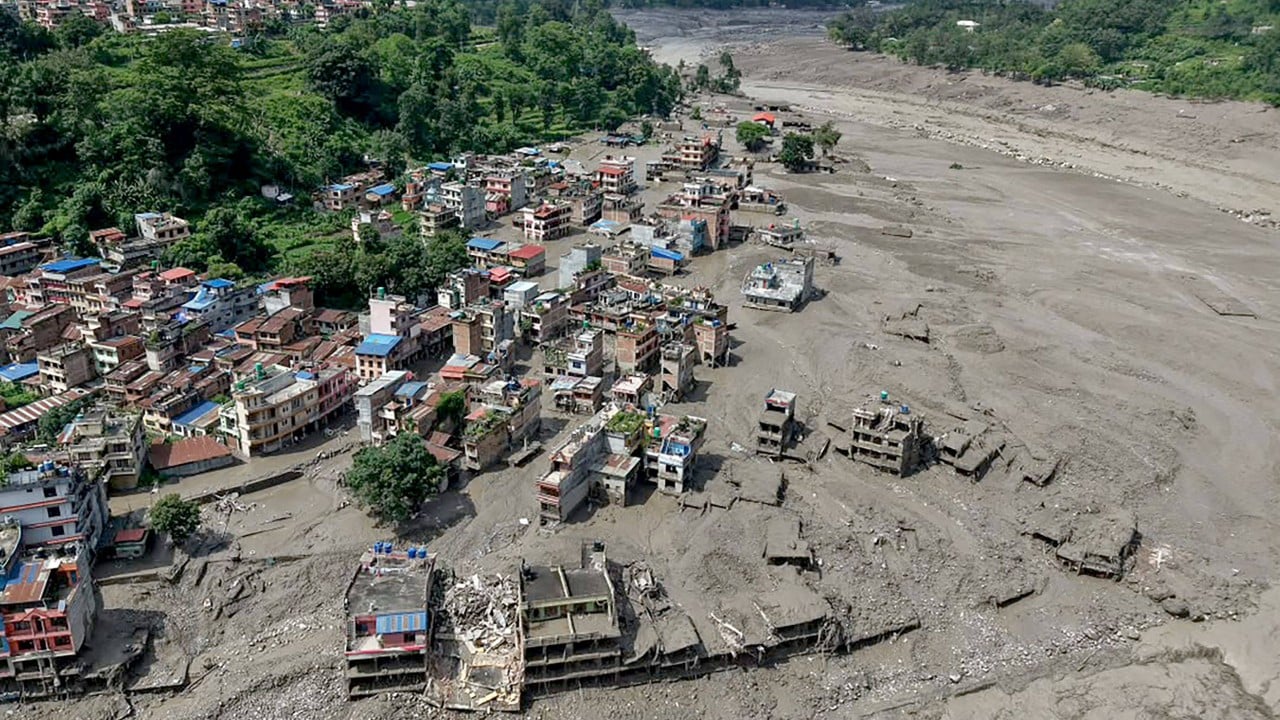
A sudden and violent wall of water tore down the Bhote Koshi river corridor, wiping out entire mountain settlements, knocking out critical energy infrastructure, and leaving hundreds of travelers unaccounted for near the Nepal-Tibet border.
Initial reports often mischaracterize these disasters as routine monsoon overflow. They aren't. What hit Nepal's Rasuwa district wasn't driven by local rainfall. It was a catastrophic upstream surge originating across the border in Tibet, catching pilgrims, tourists, and local residents completely off guard.
If you are following the crisis or have family traveling through the region, here is what is actually happening on the ground and why recovery operations are running into immediate roadblocks.
The Scale of the Devastation
The numbers coming out of the Himalayan border region are grim. Authorities report that the death toll has climbed past thirty, while a preliminary list from the Nepal Tourism Board counts roughly 384 travelers missing. Among those missing are over a hundred Indian nationals, many of whom were scheduled to cross the border as part of the Kailash Mansarovar pilgrimage.
Villages like Syapru Besi and Timure took the brunt of the impact. Local health workers and district administrators report that entire riverside settlements simply vanished under meters of churning mud and debris.
Crucial infrastructure has taken a massive hit as well. The disaster severely damaged several regional hydropower projects, wiping out more than twelve percent of Nepal's total national electricity generation capacity. Vital trade routes and bridges connecting Nepal to China's Gyirong port have been fractured, cutting off communications and trapping rescue teams.
Why Rescue Efforts Are Stalling
When a flash flood of this magnitude hits a steep mountain valley, standard emergency responses fail instantly.
The Nepal Army deployed helicopters and disaster response squads immediately, but pilots faced an impossible situation. High water levels, unstable banks, and raging currents meant chopper crews couldn't safely land in the hardest-hit zones around Rasuwa. Ground transport is equally paralyzed because access roads have been washed away or blocked by landslides.
Prime Minister Balendra Shah ordered local authorities to evacuate lower-lying areas along the Trishuli and Gandak river basins. Emergency response units are relying on drones, sniffer dogs, and specialized medical camps set up further downstream in safer areas while they wait for water levels to drop.
The Real Culprit Behind the Surge
Local weather stations confirmed that no heavy rain fell in Rasuwa district to trigger this deluge. Instead, scientists and disaster management authorities are pointing upstream toward high-altitude glacial dynamics in Tibet.
This disaster follows a similar catastrophe on the exact same river corridor. Climate experts note that rapid warming in the Himalayas frequently destabilizes high-altitude ice and glacial lakes. When a supraglacial lake suddenly drains or an ice-rock avalanche blocks a narrow gorge like the Lhende River, it creates an enormous natural dam. When that dam inevitably bursts, a massive wall of water rushes down the valley with almost no warning.
China's leadership has called for expanded early-warning systems, but monitoring remote, high-altitude transboundary river sources remains an immense engineering challenge.
What You Need to Do Now
If you have loved ones traveling in Nepal or planning to cross into Tibet, do not rely on assumptions or fragmented social media updates.
- Check official notices issued by the Nepal Tourism Board or your respective embassy for verified lists of tracked travelers.
- Avoid all travel to the Rasuwa, Nuwakot, Dhading, and Chitwan river corridors until official alerts are lifted.
- If you reside anywhere along the Trishuli or Gandak downstream basins, heed local evacuation orders and move to higher ground immediately.