The idea that the moon is a distant, romantic target belongs to the previous century. Right now, it's a clock ticking down. Washington and Beijing are locked in a dead sprint toward the lunar south pole, and the finish line is much closer than most casual observers realize.
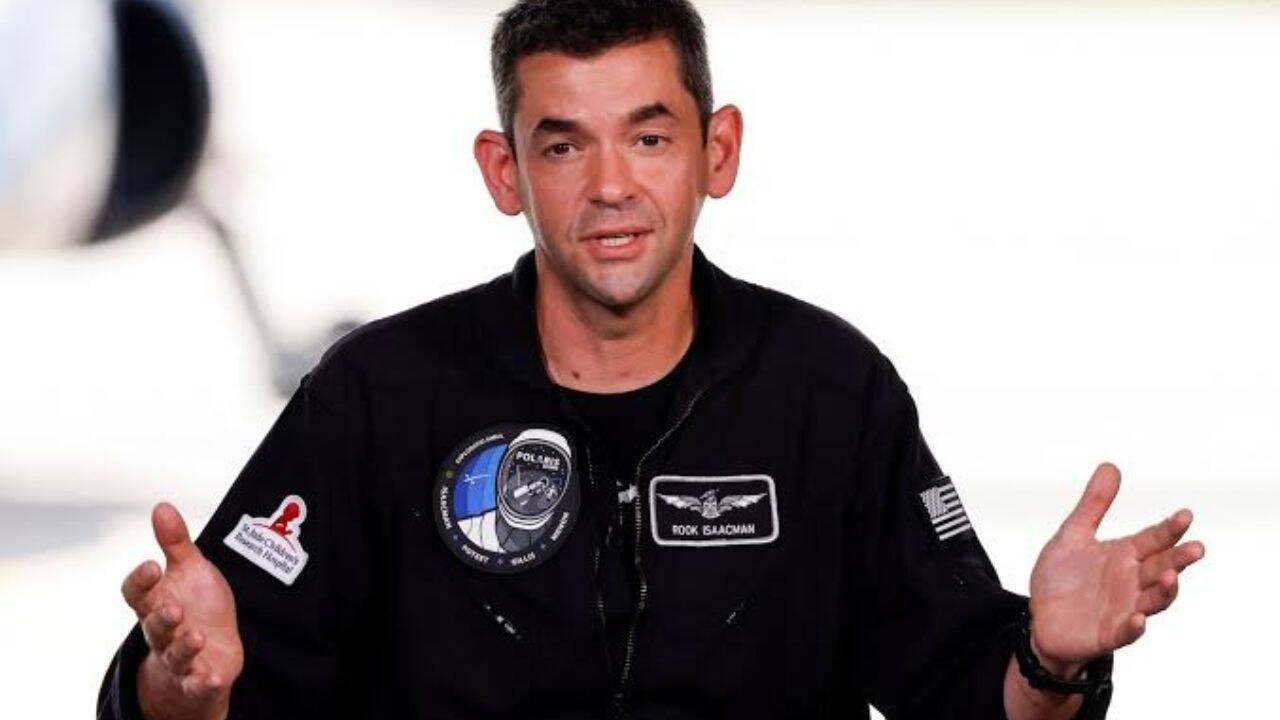
When NASA Administrator Jared Isaacman took to the microphone on CBS' "Face the Nation," he didn't mince words. He made it clear that the United States is in an active, high-stakes space race with China. This isn't a hypothetical competition for the history books. It's a grinding, month-by-month scramble where the gap between American boots on the ground and Chinese taikonauts claiming territory has shrunk down to a razor-thin margin. If you found value in this article, you might want to look at: this related article.
The public narrative often frames this as a relaxed American timeline leading up to a distant target. That's a dangerous misunderstanding. China is moving with staggering speed, backed by massive state funds and an ironclad political will. If the United States stumbles even slightly during the upcoming test phases, the geopolitical fallout will ripple across Earth for decades.
The Margin Is Months Not Years
Look closely at the current official schedules. NASA officially targets the tail end of 2028 for its next crewed lunar landing during the Artemis IV mission. Meanwhile, the China Manned Space Agency has publicly pointed toward 2030, though internal milestones suggest they are pushing hard for 2029. For another look on this development, refer to the latest coverage from TIME.
A year or two sounds like a comfortable cushion. It isn't. Isaacman pointed out that when you factor in launch windows, engineering bottlenecks, and the sheer unpredictability of deep-space hardware, that gap effectively vanishes. We are talking about a difference measured in months.
Every single milestone over the next three years matters. There's no room for bureaucratic foot-dragging or systemic delays. The Chinese program has spent the last two decades systematically checking off every box on its checklist. They don't have to debate budgets in a fractured parliament every twelve months. They set a plan, they fund it, and they execute it.
Why This Isn't the 1960s All Over Again
People love to compare this moment to the Cold War battle against the Soviet Union. That comparison is flawed. The Soviets ran out of steam, money, and technological steam during the late stages of their N1 rocket development. Their system fractured under its own weight.
China is a completely different adversary. They possess a colossal, highly capable industrial base and a civil space program that has experienced an uninterrupted upward trajectory. Since 2014, their cumulative investment in space technologies has skyrocketed, climbing from a few billion annually to nearly twenty billion dollars a year by 2024.
They aren't trying to pull off a desperate, one-time stunt. They have proven their technical capability through a brilliant series of robotic missions. They landed on the far side of the moon with Chang'e 4. They brought back samples with Chang'e 5. They even executed a highly complex sample return from the lunar far side during the Chang'e 6 mission. They know exactly what they're doing.
The architecture they're building for human landings mirrors the American plan in its sheer ambition. China plans to utilize two separate Long March 10 rockets for a single mission. One rocket lifts the crew inside the Mengzhou spacecraft, while the second carries the Lanyue lander. The two vehicles meet and dock in lunar orbit before the crew steps into the lander and moves down to the surface. It is a precise, dual-launch strategy that bypasses the need for a single, impossibly massive rocket.
Building Houses Instead of Planting Flags
The true prize of this modern conflict isn't bragging rights or a grainy television broadcast. It's about who builds the enduring foundation for future operations. During the Apollo era, astronauts stayed for a few days, collected rocks, and left. This time, the goal is survival and dominance.
NASA's strategy hinges on putting infrastructure in place before the crews even arrive. The agency plans to start dropping heavy equipment onto the lunar surface as early as 2027. This includes automated cargo drops and a highly advanced lunar terrain vehicle designed to give astronauts mobility across kilometers of harsh terrain. By the time Artemis IV touches down in 2028, the surface won't be an empty desert. It'll be a functional construction site.
Isaacman envisions a future where the moon takes on a role similar to the International Space Station by the early 2030s. It will be a continuously occupied laboratory, a refueling station, and a testbed for human adaptation to low gravity.
China's vision runs parallel. They are actively spearheading the International Lunar Research Station project. Their timeline calls for a basic operational base at the lunar south pole by 2035, with plans to expand it into a sprawling facility by 2045. This isn't just about science. It's about establishing presence.
The Battle for the Lunar South Pole
Why is everyone obsessed with the south pole? Water. Deep inside the permanently shadowed craters of the lunar south pole lie vast deposits of water ice.
Water means life support for astronauts. More importantly, water can be broken down into hydrogen and oxygen to manufacture rocket fuel. Whoever controls these ice deposits effectively controls the gas stations of the solar system. If a single nation establishes exclusive operational zones around these critical resource pools, they dictate the terms of deep-space exploration for everyone else.
The legal frameworks governing space are dangerously outdated. The Outer Space Treaty of 1967 bans nations from claiming sovereignty over celestial bodies, but it doesn't clearly resolve who owns extracted resources or who gets to declare a "safety zone" around their base. The nation that gets there first, sets up the hardware, and begins utilizing the ice will write the rules. Everyone else will just have to follow them.
The Complicated Balance of Private Power
One massive advantage the United States possesses is its dynamic commercial sector. NASA no longer builds everything in-house. They buy services from private giants like SpaceX and Blue Origin. This public-private approach drives down costs and accelerates development through rapid prototyping.
However, it introduces a whole new layer of complexity. Relying on commercial entities means NASA's timelines are tied to the successes and failures of corporate entities that operate outside traditional government structures. If a commercial lander suffers a setback, the entire national timeline slips.
Isaacman has been a vocal advocate for evolving the Artemis architecture to incorporate more commercial launch systems as they mature. He knows that government bureaucracy alone can't outpace a determined nation-state. The American strategy relies entirely on the agility of its private partners to close the gap.
What Happens If the US Loses the Race
It is entirely possible that American citizens will wake up one day to see live feeds of Chinese taikonauts setting up a permanent outpost at the lunar south pole while Artemis is still dealing with launch delays. The blow to American prestige would be severe.
The geopolitical consequences would extend far beyond national pride. Leadership in space translates directly to leadership in technological standards, international alliances, and terrestrial defense capabilities. If Beijing demonstrates that its system can out-engineer, out-fund, and out-execute the combined force of the American government and its private tech titans, global alliances will shift.
Countries looking to join lunar partnerships will sign onto China's International Lunar Research Station instead of the US-led Artemis Accords. The rules governing the exploitation of space resources, orbit allocations, and satellite communications will be written in Beijing, not Washington.
The Immediate Milestones to Watch
To understand who is actually winning this race, stop listening to political speeches and look at the upcoming engineering gates. The next twenty-four months are critical.
First, keep a close eye on the Artemis III mission. While it won't land on the surface under the revised schedule, it serves as the ultimate live-fire test for the critical technologies needed to keep humans alive and functioning in deep lunar space. It will verify orbital maneuvering, docking procedures, and life support longevity.
Second, watch the development of China's Long March 10 rocket. Their state contractors are currently pushing through structural and propulsion tests at an aggressive pace. Any successful test flight of their new crew capsule or lander prototype signals that they are hitting their targets with terrifying precision.
Third, track the deployment of the initial commercial cargo missions to the lunar south pole. These uncrewed missions are the scout teams. They need to verify the landing conditions, map the ice distributions, and prove that private landers can reliably touch down on the rugged polar terrain without flipping over.
The race isn't a vague future event. It's happening right now in cleanrooms, test stands, and launchpads across both hemispheres. The clock is running out, and the moon is waiting.