Volodymyr Zelenskyy just shook up his wartime cabinet again. If you're reading standard mainstream news coverage, you probably think Ukraine is in a state of political panic. On July 12, 2026, the Ukrainian president announced that Prime Minister Yulia Svyrydenko is stepping down after just one year in office. He also signaled a sweeping cleanup of top law enforcement heads.
It looks chaotic from the outside. It isn't.
This isn't a sign of collapse or desperation. It's a calculated, structured pivot in how Kyiv plans to handle the fifth year of this war. Western commentators love to frame every single cabinet shift in Kyiv as a political crisis, but they constantly miss the bigger picture. This reshuffle is about a fundamental shift from general economic defense to hyper-targeted, individual diplomatic pressure campaigns.
Understanding why Svyrydenko is stepping down requires looking past the surface level headlines. Kyiv isn't failing. It's specializing.
Why Yulia Svyrydenko is Out and What It Actually Means
Yulia Svyrydenko took the job back in July 2025. She replaced Denys Shmyhal during what was, at the time, the largest shake-up since the 2022 full-scale invasion. Her background was pure economics. She served as the first deputy prime minister and economy minister, and her crowning achievement before taking the top spot was hammering out a massive, highly strategic US-Ukraine critical minerals agreement.
That agreement locked American economic and industrial interests directly into Ukraine's long-term survival. It was brilliant strategy for 2025.
But 2026 demands something entirely different. Zelenskyy explicitly laid out his new reasoning on social media, stating that Ukraine is changing its political strategy. The era of broad, sweeping diplomatic appeals is over. Kyiv is moving toward a system where single, highly experienced officials are personally assigned to manage individual foreign policy portfolios.
We aren't talking about generic ambassadorial roles. We are talking about dedicated czars for specific, high-stakes tasks.
Zelenskyy needs individual power players who do nothing but eat, sleep, and breathe specific diplomatic targets. One official will handle nothing but the proposed European antiballistic project. Another will focus exclusively on the United States and bilateral security. Others will take on the European Union accession bid, ties with neighboring countries, the Middle East and Gulf states, and relations with China.
Svyrydenko isn't being exiled or punished for a bad job. Zelenskyy openly thanked her for her steady work and revealed he offered her a major new position overseeing relations with one of Ukraine's most vital international partners. Her skill set is being reallocated where it can do the most damage to Russian diplomatic efforts.
The Hidden Mechanics of Ukrainian Wartime Law
To understand how this plays out over the next few weeks, you have to look at how Ukrainian law handles a prime minister's exit. It isn't as simple as switching out a CEO.
Under the Ukrainian constitution, parliament must vote to officially accept the resignation of the prime minister. Once the Verkhovna Rada votes to accept Svyrydenko's departure, the entire Cabinet of Ministers is legally forced to resign along with her.
How the New Government Formally Takes Power
- Parliament votes to accept the current Prime Minister's resignation.
- The entire existing cabinet enters caretaker status.
- The President submits a new nominee for Prime Minister to parliament.
- Parliament votes to approve the new Prime Minister.
- The new Prime Minister, in coordination with the President, submits a full list of cabinet nominees for parliamentary confirmation.
Don't expect a massive political standoff in parliament over this. While Ukrainian politics used to be famously fractious and full of intense backroom bickering, wartime realities changed everything. Ever since martial law went into effect, parliamentary factions have largely coalesced around Zelenskyy's defense agenda. Lawmakers occasionally grumble about the centralization of power in the Office of the President, but they don't block his core administrative choices. The vote will go through cleanly.
Shaking Up Law Enforcement Ahead of a Hard Winter
The prime minister's office is only half the story. Zelenskyy also confirmed that big changes are coming to the leadership of several domestic law enforcement agencies. He didn't drop specific names yet, but the timing is highly telling.
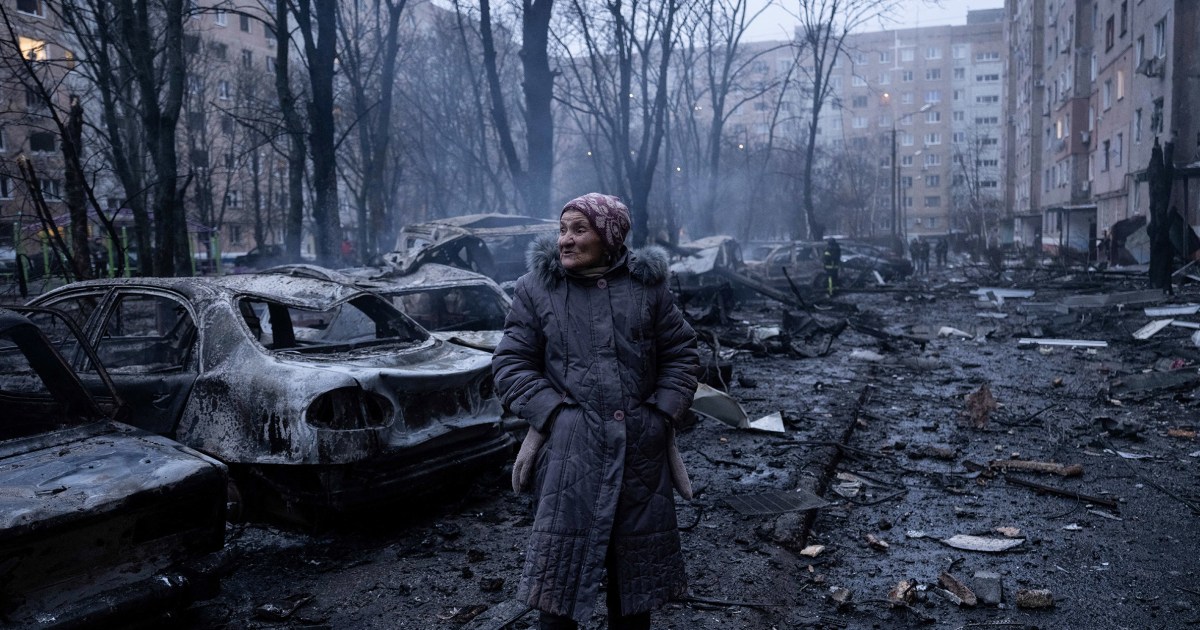
Ukraine is looking at another grueling winter. The domestic focus of this new political strategy is explicitly aimed at securing the frontline and border regions, ramping up domestic weapons production, and stabilizing the energy infrastructure. Russia has spent the last several months fiercely bombarding Ukrainian power grids and port infrastructure in Odesa and Chornomorsk.
Managing a country under constant infrastructure strain requires flawless internal security. Any corruption, logistical bottleneck, or administrative incompetence in the law enforcement sector can directly cost lives when the temperature drops below freezing. By replacing law enforcement heads now, Zelenskyy is clearing out bureaucratic dead weight before the winter crisis hits.
This isn't a random housecleaning. It's a proactive security hardening.
The Reality of Zelenskyy's Centralized Management Style
Let's address the elephant in the room. This will be the fourth major reorganization of the Ukrainian government since the full-scale war began. Critics love to point to this frequency as a sign of institutional instability. They claim that Zelenskyy struggles to build a stable, long-term governing team.
That critique misses how wartime leadership actually works in Kyiv.
Zelenskyy treats his cabinet like a battlefield commander treats military units. If a specific phase of the war requires economic consolidation and mineral treaties, he brings in an expert like Svyrydenko. When the war shifts to intense, localized diplomatic maneuvering over air defense networks and European anti-ballistic integration, he restructures the entire apparatus to fit that specific operational need.
It is a highly corporate, result-oriented style of governance applied to a brutal war of attrition. If an official isn't perfectly suited for the exact challenges of the next six months, they get moved to a slot where they are, or they get replaced entirely.
What Happens Next for Ukraine's Western Allies
If you are tracking Western support for Ukraine, this reshuffle tells you exactly where Kyiv is focusing its energy. They aren't asking for generic packages anymore. The strategy is now hyper-focused on securing concrete, long-term co-production agreements.
Just last week, US President Donald Trump pledged to give Ukraine a license to produce Patriot air-defense systems locally. This is a massive strategic shift for Kyiv. However, getting a license on paper is completely different from actually manufacturing complex surface-to-air missiles in a country under daily drone and missile bombardment.
The upcoming cabinet will be filled with people whose sole job is turning these political promises into functioning domestic factories. Zelenskyy is currently in Paris meeting with dozens of European leaders from the Coalition of the Willing to discuss building joint anti-ballistic air defense systems. The new ministers will be the ones tasked with executing those highly technical, multi-billion-dollar defense projects.
Actionable Next Steps to Track This Transition
If you want to understand where the war goes next, stop watching the front lines for a moment and watch these specific political markers over the coming days:
- Watch the parliamentary vote: Track how quickly the Verkhovna Rada accepts Svyrydenko's resignation and notice which political factions offer any rhetorical resistance. This will show you the exact state of domestic political unity.
- Identify the new foreign policy czars: Look closely at who gets appointed to the specific portfolios Zelenskyy mentioned, especially the US, EU, and China desks. Their personal backgrounds will tell you exactly what kind of deals Kyiv plans to push for.
- Monitor the law enforcement appointments: Watch who takes over the security agencies. If they come from deep military or counter-intelligence backgrounds, expect a much harsher domestic crackdown on black markets and infrastructure mismanagement.
Kyiv is changing its operational model because the nature of the war changed. This isn't a crisis of leadership. It's an aggressive optimization strategy designed to survive a long-term conflict.