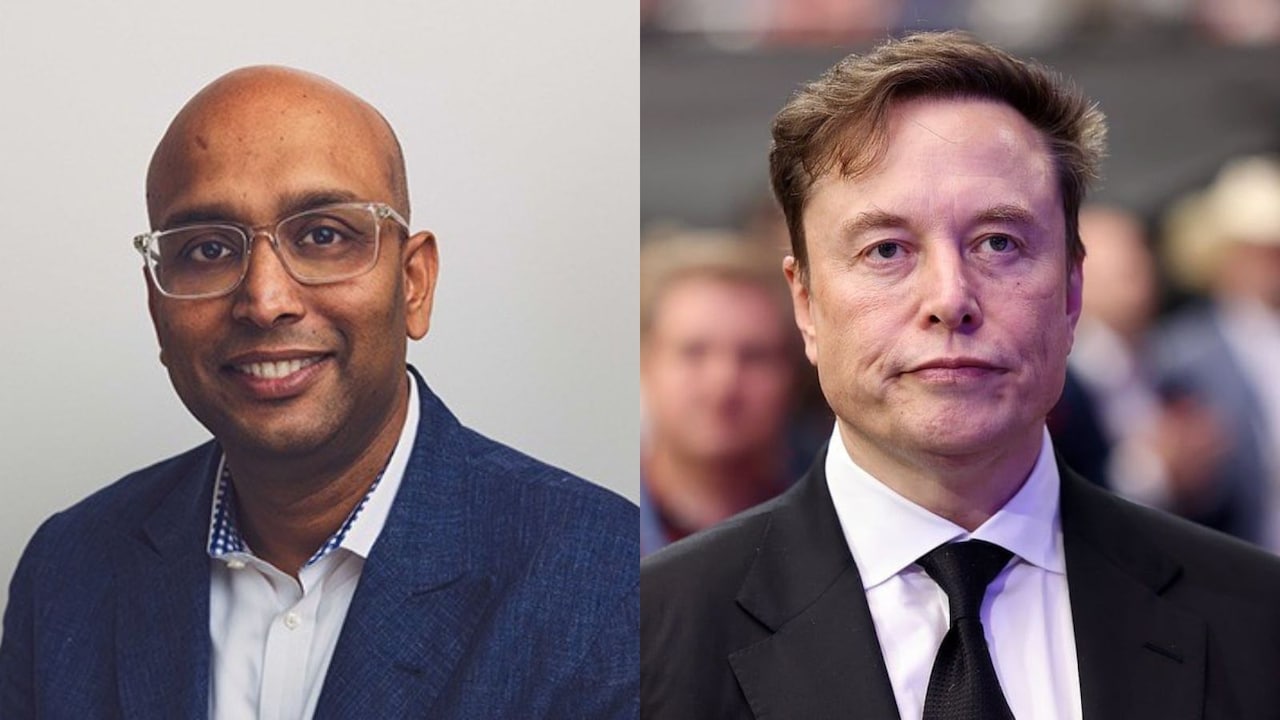
Corporate boards love handing out mind-boggling numbers to top bosses. But when the latest Wall Street Journal executive compensation scorecard dropped, one name forced everyone to pause. It was not a tech titan from Silicon Valley or a legendary hedge fund titan. It was Shankh Mitra.
Mitra is the chief executive officer of Welltower, a massive Ohio-based real estate investment trust that owns senior housing and medical facilities. In 2025, his total compensation package hit an astonishing 821 million dollars. That is around 7,000 crore rupees. It immediately positioned him as the second-highest-paid corporate leader on earth, sitting right behind Tesla chief Elon Musk, who commanded a staggering 158 billion dollar package.
Naturally, the internet exploded with outrage. Mainstream news channels blasted the massive figure across headlines. Critics complained about corporate greed, arguing that no single executive deserves that much money for managing real estate.
But if you look closely at the fine print of the regulatory filings, you realize that the narrative floating around is completely wrong. Mitra did not walk away with a mountain of cash. He is not sitting on 821 million dollars in his bank account. When you strip away the sensationalized headlines, you find a masterclass in long-term corporate governance and performance-linked equity design.
The Illusion of the 821 Million Dollar Annual Salary
Let's smash the biggest misconception right away. Mitra does not take home a massive monthly paycheck. His actual base salary is incredibly modest for an S&P 500 chief executive. He pulls in just 110,000 dollars a year in base cash salary. Think about that for a second. The leader of a multi-billion dollar enterprise earns less cash than a mid-level software developer in California.
So where does the rest of that massive 821 million dollar number come from.
It comes from equity. Nearly 99 percent of the entire pay package consists of stock grants. In October, Welltower issued him a massive equity award valued at 789 million dollars at the time of the grant. Because Welltower stock continued to climb through the end of the year, those paper shares quickly appreciated to over 1 billion dollars by December.
This is not a guaranteed payout. It is a massive bet on his continued success. If Welltower stock craters tomorrow, that 821 million dollar figure completely evaporates. Corporate boards use these structures because they align the executive's personal wealth directly with the financial interests of regular retail investors and institutional shareholders. If the owners of the company win, the manager wins. If the owners lose, the manager gets practically nothing.
Golden Handcuffs and the Ten Year Lock
The public often assumes that CEOs can cash out their stock awards immediately, buy a superyacht, and retire to a private island. That is simply not how high-level corporate compensation functions in modern America. Mitra's mega-grant is locked behind incredibly strict time and performance requirements.
He cannot touch the vast majority of this money for a decade.
To receive roughly half of those shares, Mitra must remain the chief executive of Welltower until 2031. It is a classic retention play. The board knows that replacing an elite capital allocator is incredibly difficult and expensive. By stretching out the vesting schedule over a ten-year span, they ensure he stays focused on the long-term horizon rather than chasing quick quarterly profits to juice the stock price for a fast exit.
The remaining half of the equity grant is tied to strict financial performance metrics. Mitra does not get those shares just by showing up to work and drinking coffee. To unlock them, Welltower must expand its total market value by at least 45 percent over a five-year period. On top of that, the company has to outperform multiple major stock market indices.
If the broader real estate market booms but Welltower lags behind its direct competitors, Mitra loses a massive chunk of his compensation. The bar is exceptionally high. He has to beat the market, beat his peers, and sustain that growth for years.
The Secret Rise of a Kolkata Engineer
To understand why the Welltower board felt compelled to authorize such an unprecedented equity package, you have to look at the unique trajectory of Mitra's career. He did not grow up in the elite circles of American high finance.
His journey started in Kolkata, India.
He studied instrumentation and electronics engineering at Jadavpur University, developing a disciplined, analytical foundation. Like many ambitious Indian engineers, he recognized that his analytical skills could be applied to global financial markets. He moved to the United States to earn an MBA in Applied Value Investing from Columbia Business School, which is famous for teaching the disciplined investing philosophies of Benjamin Graham and Warren Buffett.
His early career was a grind through intense corporate environments. He spent five years developing his financial foundational skills at PwC. In 2009, right as the global financial crisis was reshaping the world, he joined Fidelity Investments as an analyst. That experience proved invaluable. He learned how to spot mispriced assets when everyone else was panicking.
He moved on to elite hedge funds like Citadel and Millennium Management. In those high-pressure environments, he sharpened his expertise in commercial real estate securities and complex portfolio management. He became a specialist in a niche sector that most general investors ignored.
Turning Senior Housing Into a Money Machine
When Mitra joined Welltower in 2016 as a senior vice president, the company was stable but lacked an aggressive investment edge. He brought the cutthroat analytical rigor of a hedge fund manager to a traditional real estate investment trust.
The board quickly noticed his knack for capital allocation. He was promoted to chief investment officer in 2018. By October 2020, during the chaotic depths of the global pandemic, he took over as chief executive officer.
It was a terrifying time to run a senior housing company. Facilities were dealing with unprecedented health crises, occupancy rates were plunging, and investors were fleeing healthcare real estate in droves.
Mitra saw an incredible opportunity. While other companies panicked, he went on an aggressive buying spree. He cleaned up the company's balance sheet, restructured underperforming partnerships, and acquired prime senior housing assets at steep discounts.
The strategy worked perfectly. Between October 2020, when he took the reins, and October 2025, Welltower stock price tripled. During 2025 alone, the stock surged by 40 percent. He took a company operating in a struggling sector and turned it into an absolute juggernaut. Regular investors who held Welltower stock saw their portfolios skyrocket because of his decisive wartime leadership during the pandemic.
The Shareholders Strike Back
Despite the incredible financial returns Mitra delivered, the sheer size of the 821 million dollar package triggered a massive backlash inside the corporate boardroom. Investors love making money, but they absolutely hate feeling like the chief executive is taking too big a piece of the pie.
In May 2026, Welltower held its annual shareholder meeting, featuring a standard Say-on-Pay vote. These votes give investors a non-binding voice to approve or reject executive compensation strategies.
The results were a total disaster for the board.
Only 18.9 percent of shareholders voted to support Mitra's pay package. It was one of the most severe shareholder revolts of the entire corporate voting season. For context, most S&P 500 companies pass their executive compensation votes with over 90 percent approval. Falling below 50 percent is considered an embarrassing public reprimand for a corporate board.
Why were investors so furious if the stock price tripled?
It comes down to a structural anomaly in Welltower's executive pay. The board did not just hand a massive package to Mitra. They gave nine-figure compensation packages to three other top executives at the company during the same year. Welltower became only the second public corporation in an entire decade to award four separate executives pay packages worth over 100 million dollars each in a single fiscal year.
Shareholders felt the board was acting like an ATM for insiders. Even though Mitra is widely recognized as a brilliant operator, the sheer concentration of wealth at the top of the company created a massive public relations headache that Welltower is still trying to clean up.
The Broader Trend of Extreme CEO Payouts
Mitra is not the only executive pulling down historic numbers. The 2025 financial year marked a massive, aggressive rebound in executive compensation across corporate America. After a brief slowdown caused by rising interest rates and economic uncertainty, corporate boards went completely wild with mega-grants.
More chief executives crossed the 100 million dollar threshold than in any year since 2021. Nearly a dozen corporate leaders broke past the 200 million dollar mark. Take a look at some of the other massive packages that dominated the corporate landscape recently.
George Kurtz pulled in 248 million dollars. Hock Tan of Broadcom secured a package valued at 205 million dollars, explicitly tied to his ability to scale the company's artificial intelligence infrastructure revenue. David Zaslav took home 165 million dollars, while Stephen Schwarzman scored 126 million dollars.
Indian-origin talent continues to dominate the upper echelon of global corporate leadership. Alongside Mitra, Nikesh Arora ranked eighth on the global list, bringing in a massive 100 million dollar compensation package from Palo Alto Networks.
When you compare Mitra's 821 million dollars to those figures, it looks wildly disproportionate. But none of those other companies saw their stock price triple in the exact same manner during a historic macroeconomic crisis. The Welltower board looks at the situation through a simple lens. If an executive creates tens of billions of dollars in real shareholder value, giving him a massive piece of equity to protect that value is a logical business decision.
Next Steps for Savvy Retail Investors
If you are tracking executive compensation to find great investment opportunities, do not just look at the shocking headline numbers. You need a systematic way to evaluate whether a CEO is worth the cost. Follow these practical steps next time you read about a massive executive payout.
First, pull up the company's annual proxy statement on the SEC Edgar database. Look up the specific section called Pay Versus Performance. This section shows the actual realized compensation of the executive compared to the total shareholder return over a three-year and five-year period. If the executive's pay is skyrocketing while the stock price is flat, drop the stock immediately.
Second, check the equity mix. Ensure that at least 80 percent of the compensation is delivered in performance-based stock awards rather than cash or time-based options. You want to make sure the chief executive faces real financial downside if the business underperforms.
Third, look at the results of the Say-on-Pay vote. If support drops below 70 percent, it means big institutional investors like BlackRock and Vanguard are worried about corporate governance. A disgruntled shareholder base often leads to activist investors stepping in, shaking up the board, and forcing changes that can unlock immediate short-term value for regular investors.
Ignore the superficial media outrage. Analyze the underlying equity structures, look at the long-term track record of capital allocation, and invest in leaders who tie their own survival to the value of your shares.