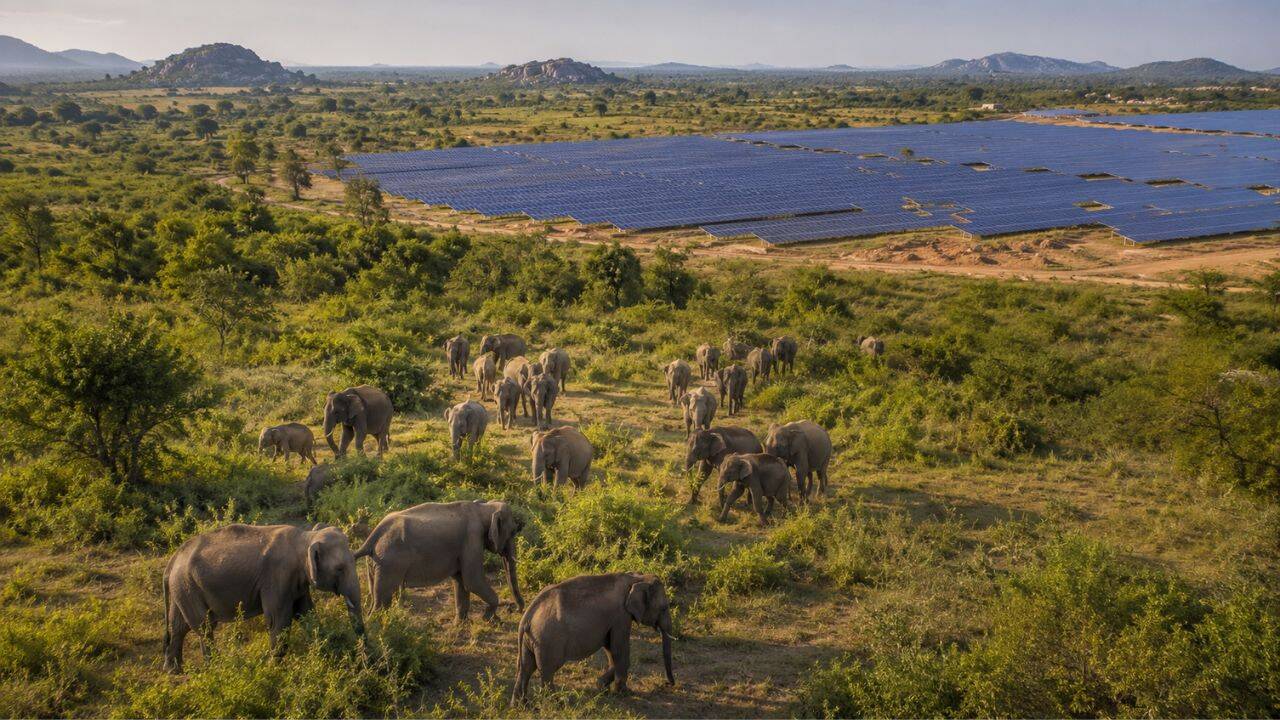
Green energy is supposed to save the planet. But what happens when saving the climate destroys a local ecosystem? In Sri Lanka’s southern dry zone, a massive renewable energy push has triggered an unexpected crisis. Planners want clean power, but they are building it right on top of home turf for over four hundred wild elephants.
If you look at Hambantota on paper, it makes total sense for solar. The sun beats down relentlessly, rainfall is low, and vast tracts of open scrubland look empty to bureaucrats sitting in air-conditioned offices in Colombo. Except that land isn't empty. Thorny bushes, coarse grass, and scattered trees form a living pantry for a massive elephant population. When you pave over their dinner plate with solar panels, the animals don't just disappear. They move into nearby villages.
The Loophole of Seventeen Small Projects
The core controversy centers around how the government approved a massive 150-megawatt solar initiative. Instead of pushing one colossal mega-project through a rigorous, transparent Environmental Impact Assessment, authorities sliced the park into seventeen smaller units handled by different companies.
Why does this matter? Bureaucracy loves technicalities. Smaller units can bypass heavy environmental hurdles by going through initial examinations rather than full-scale reviews. Each individual slice looks modest on its own.
Herd animals do not care about bureaucratic paperwork. An elephant doesn't stop walking because plot number twelve belongs to a different corporate entity. When you string together seventeen separate clearings, add miles of security fencing, and carve out heavy access roads, you fragment an entire ecosystem. Environmental campaigners point out that hundreds of hectares of vital scrub habitat are vanishing piece by piece.
Why Scrubland Looks Like Wasteland to Developers
Most people picture wildlife conservation through the lens of lush tropical rainforests or deep jungles. Dry zone scrubland looks scruffy, dusty, and neglected to the untrained eye. Developers look at it and see wasted space ready for industrial conversion.
Conservation scientists who track animal movements tell a completely different story. Renowned researchers note that this exact scrub vegetation serves as primary feeding grounds for dry-zone elephants. Stripping away these feeding patches forces hungry animals to roam further. They bump into newly erected fences, lose their traditional migratory routes, and get squeezed straight into smallholder farming communities.
The district already suffers from severe human-elephant conflict. Adding industrial construction sites right next to the Hambantota Managed Elephant Range pours gasoline on an already burning fire. Thousands of local farming families now deal with damaged crops, broken livelihoods, and daily threats to their physical safety.
Irony of the Carbon Equation
Activists from groups like the Centre for Environmental Justice and the Movement for Land and Agricultural Reform argue that destroying natural carbon sinks to build solar farms defeats the ultimate purpose of green energy. Forests and native scrub absorb carbon naturally. Bulldozing and clearing thousands of acres of living vegetation releases stored carbon right back into the atmosphere.
When renewable transition strategies ignore local ecological realities, they create new disasters while trying to solve old ones. True sustainability requires looking at the full picture instead of chasing quick energy quotas on paper.
Protecting energy independence is vital for Sri Lanka's economic survival, but compromising wildlife corridors and rural safety nets creates long-term social costs that no amount of clean electricity can offset.
Map out proper ecological buffers before breaking ground on the next green energy corridor.