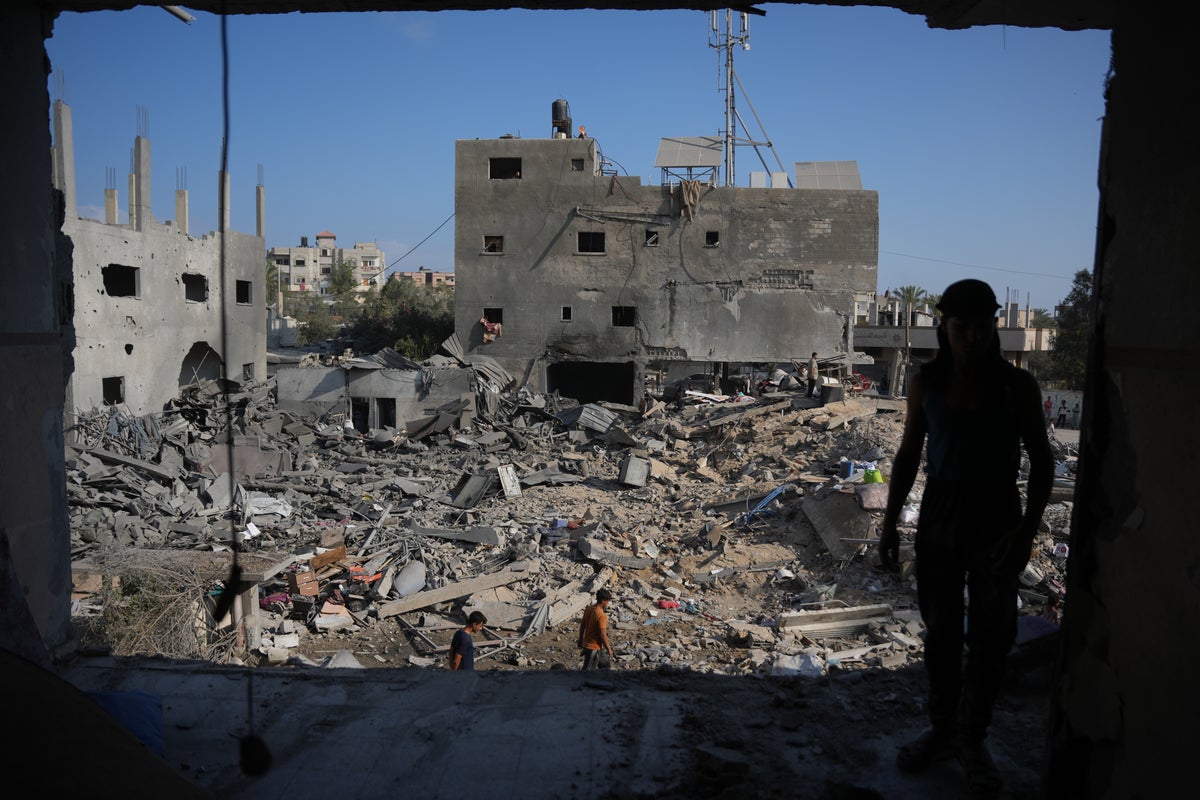
Donald Trump wants to run Gaza like a corporate real estate development. The Trump Board of Peace Gaza plan promises a glossy, high-tech wonderland rising from the Mediterranean coast, funded by global billionaires and managed by a hand-picked corporate board. But if you look past the slick marketing videos and the grand speeches delivered at international economic forums, you find a completely different reality. The entire project is fundamentally stuck. While planners draft blueprints for luxury high-rises and tech hubs, hundreds of thousands of displaced Palestinians are still living in muddy tents and makeshift refugee camps, entirely cut off from basic infrastructure.
The core problem isn't just a lack of funding or typical bureaucratic delays. The real breakdown stems from a massive disconnect between top-down corporate ambition and the brutal realities of a post-war conflict zone. You can't simply apply standard free-market capitalism to a population that lacks clean drinking water, sovereign rights, or basic freedom of movement. Recently making waves recently: What Most People Get Wrong About The Iran Return To War.
The Blueprint for a Corporate Monopoly in Gaza
The structure of this new international entity looks less like a diplomatic peacekeeping mission and much more like the corporate hierarchy of a private luxury conglomerate. Established formally on the sidelines of the World Economic Forum, the organization bypasses traditional United Nations oversight entirely. Instead of building consensus through traditional international diplomacy, the system consolidates absolute control within a tight, corporate-style command structure.
Life Chairman and Absolute Control
At the top of the pyramid sits Donald Trump himself, officially designated in the charter as the chairman for life. He holds sole authority over who gets invited to join the board and who gets kicked off. He can unilaterally create, alter, or completely dissolve the executive committees. Even if the member nations vote by a simple majority to pass a resolution, the chairman retains absolute veto power. More insights on this are explored by Reuters.
The organization operates across four distinct levels:
- The Chairman: Donald Trump holds permanent tenure with the exclusive right to name his own successor, independent of whoever happens to be sitting in the White House.
- The Board Proper: A group of roughly sixty national leaders invited personally by the chairman to provide international backing.
- The Executive Board: A core team of seven political and financial figures focused entirely on managing international investment and diplomatic leverage.
- The Gaza Executive Board: Led by High Representative Nikolay Mladenov, this body directly manages the National Committee for the Administration of Gaza, a group of Palestinian technocrats tasked with handling day-to-day municipal services.
This setup treats an active humanitarian crisis like a distressed asset acquisition. Jared Kushner openly championed this philosophy, pointing out that eighty-five percent of Gaza’s historic economic activity relied on international aid. The new strategy aims to replace that aid model with aggressive free-market principles, using corporate tax incentives and special economic zones to spur growth. But attempting to build a tech-driven metropolis before establishing basic civilian security or political self-determination creates an impossible foundation.
The Structural Flaws of Absolute Legal Immunity
The most controversial element of the strategy came to light through leaked internal documents labeled sensitive but unclassified. A four-page draft resolution revealed that the organization intends to grant its own personnel sweeping legal protections that effectively place them entirely above local and international law.
Total Immunity from Local Prosecution
The leaked draft explicitly shields all board members, administrative staff, foreign contractors, and international military personnel from any form of arrest, detention, or legal proceedings within the courts of Gaza. Legal experts and international human rights organizations quickly raised alarms over this provision. They argue that it creates an isolated legal bubble with zero external oversight. If a private contractor or a foreign security officer commits an abuse against a local resident, the local judicial system has absolutely no authority to intervene or prosecute.
Free Land Seizures Without Compensation
The draft resolution contains a section regarding the premises of the administration and its security forces. It mandates that the organization shall be provided, completely free of charge, with any public premises and facilities needed to carry out its operations.
Because the text fails to specify exactly who is responsible for providing this land—whether it is Israel, the Palestinian Authority, or local municipal bodies—it leaves a massive loophole. Critics note that this gives the administration the unilateral power to take over Palestinian public property, land, and buildings without the consent of the local population, without financial compensation, and without any mechanism for legal redress. Instead of protecting local property owners, it mimics an aggressive eminent domain policy run by an unaccountable foreign corporation.
The Reality Check from the Refugee Camps
While designers present models of gleaming seaside towers, the immediate security situation on the ground remains incredibly fragile. The plan requires total demilitarization, the destruction of all underground tunnels, and a massive weapons buy-back program. To enforce this, the administration has arranged for an International Stabilization Force made up of twenty thousand soldiers pledged by nations including Albania, Indonesia, Kazakhstan, Kosovo, and Morocco. Additionally, Egypt and Jordan have agreed to train a new local police force of twelve thousand officers.
But sending twenty thousand foreign troops into a densely populated, war-torn coastal strip is an logistical nightmare. The administration needs to construct a massive five-thousand-person military base and multiple complex logistics hubs just to house and sustain its own forces.
[ Proposed Security Infrastructure ]
  │
  ├── International Stabilization Force: 20,000 Troops (Albania, Indonesia, Morocco, etc.)
  │
  ├── Trained Regional Police: 12,000 Officers (Trained by Egypt & Jordan)
  │
  └── Administrative Base: 5,000-Person Military Hub & Logistics Centers
This creates a bizarre paradox. The very resources, heavy machinery, and land needed to build shelter for displaced civilians are being redirected to build high-security military compounds for the foreign administrators.
The financial math doesn't add up either. The administration proudly announced that its members had pledged seven billion dollars for the reconstruction of the territory. Seven billion sounds like an enormous sum of money. Honestly, it is a drop in the bucket. International economic agencies estimate that repairing the utter destruction of housing, water plants, electrical grids, and medical centers will cost tens of billions of dollars more. A large chunk of that initial seven billion will inevitably be swallowed up by the sheer cost of maintaining a foreign army and building secure corporate compounds.
Why Top Down Real Estate Planning Fails in Conflict Zones
You cannot build a functional economy by pretending the political environment does not exist. The developers behind this project are treating the territory like a blank piece of coastal real estate, ignoring decades of deep-rooted national, historical, and political struggles.
- Sidelining Local Voices: The National Committee for the Administration of Gaza is made up of technocrats, but they operate entirely under the thumb of the foreign executive board. Local residents have no democratic say in how their neighborhoods are rebuilt or who owns the new infrastructure.
- The Lack of a Political Horizon: The plan offers only a vague, highly conditional path toward eventual self-determination. It completely avoids the core question of actual Palestinian statehood, focusing instead on economic management and border security.
- Isolationist Policies: By ignoring traditional regional frameworks and seeking to replace UN agencies, the administration alienates major European allies and humanitarian organizations that have spent decades managing the local logistics of aid distribution.
When you treat a population purely as a workforce for a future corporate free-zone, you invite resistance. People want rights, sovereignty, and security, not just promises of entry-level construction jobs under the supervision of a foreign stabilization force.
Actionable Steps to Fix a Stalled Reconstruction Plan
If the international community wants to move past this real estate fantasy and actually help the millions of people stranded in temporary camps, the strategy must change immediately.
- Strip the Absolute Immunity Clauses: The administration must subject its contractors, security forces, and officials to transparent legal accountability. True stability requires a legitimate justice system, not a corporate entity that operates completely outside the law.
- Prioritize Basic Survival Over Luxury Infrastructure: Stop drawing up plans for tech parks and luxury hotels while people lack clean water. Every dollar of the initial reconstruction funds should go directly toward rebuilding municipal water networks, basic housing, and functional hospitals.
- Include Local Leadership in the Decision Loop: Give local community leaders, independent Palestinian planners, and regional experts direct veto power over land use. If the local population does not own the reconstruction process, the project will always be viewed as an unwelcome foreign occupation.
- Establish a Clear Political Path: Economic development cannot succeed in a vacuum. There must be a transparent, binding commitment to long-term political sovereignty and self-determination. Without that, no serious international corporation will ever risk investing long-term capital into the region, no matter how prestigious the board claims to be.
The dream of a futuristic metropolis makes for great press releases and impressive presentations at economic summits. But until the planners address basic human rights, local legal accountability, and the immediate needs of the people living in the dirt, the entire plan will remain frozen exactly where it is today—completely stalled on the edge of a refugee camp.