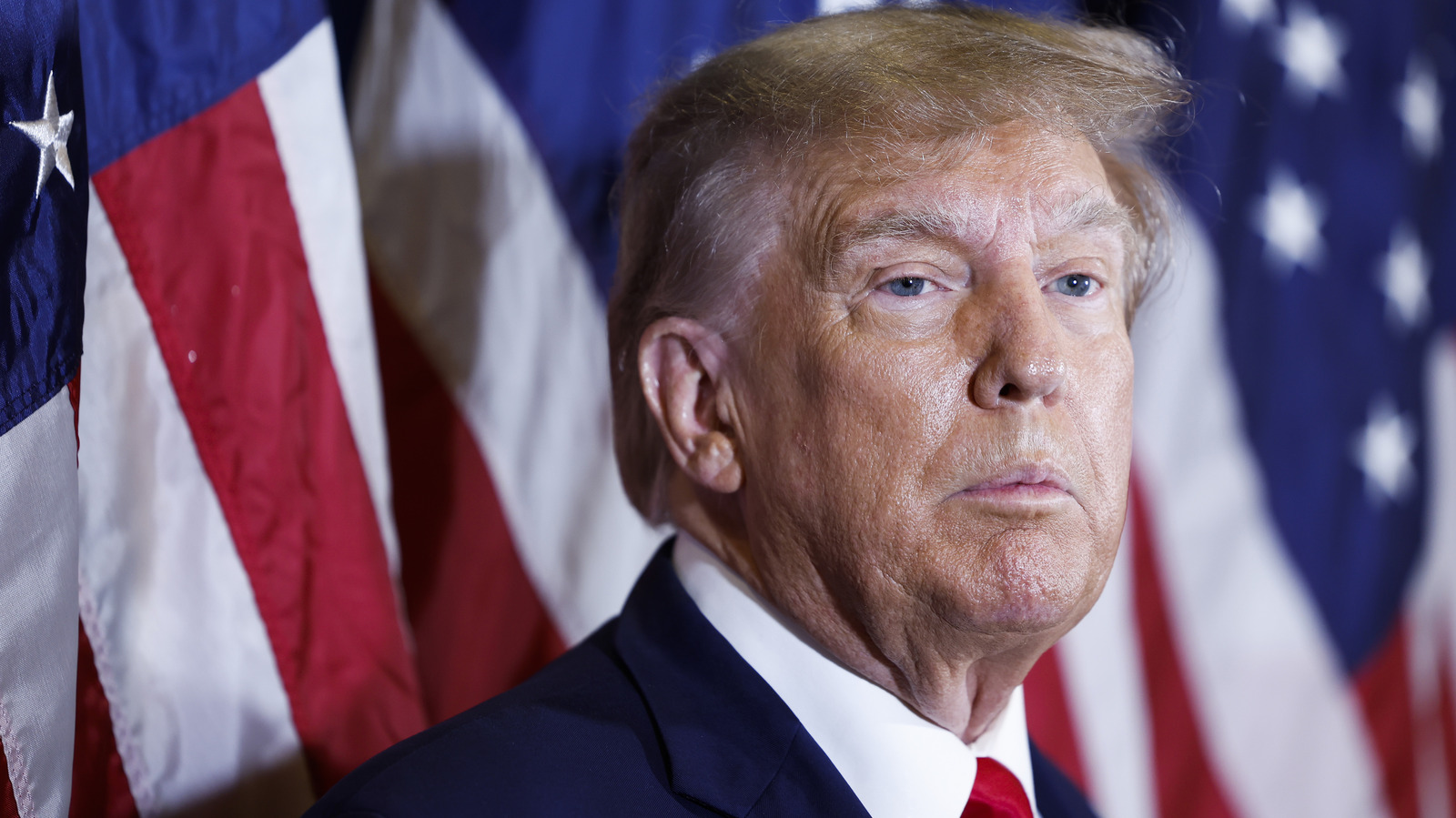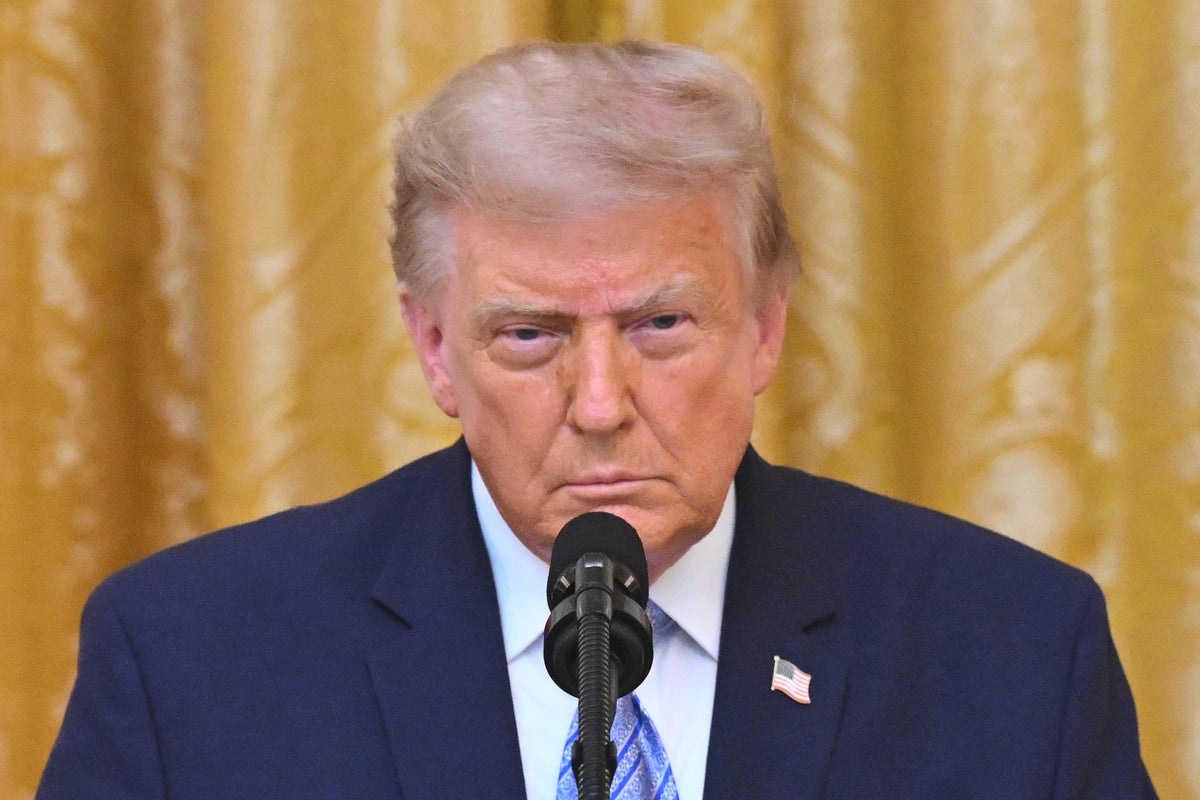
Donald Trump just dropped a political bombshell from the White House. In a sudden, twenty-eight minute primetime address, he revived claims that the 2020 presidential election was stolen. This time, he pointed the finger squarely at Beijing. He claimed Chinese intelligence executed the largest compromise of election data in history, illegally snatching 220 million American voter files. The timing isn't an accident. With the crucial November midterm elections right around the corner, mainstream commentators are screaming that this is just another classic attempt to re-litigate the past. They're missing the entire point.
Trumps China conspiracy isn't a desperate backward glance at a bygone race. It's a calculated, forward-looking strategy designed to reshape the battlefield for the upcoming midterms and change how Americans vote forever.
If you think this speech was just about vanity, you're misreading the entire play. Look at the mechanics. By declassifying a cache of heavily redacted intelligence documents, Trump isn't just venting on social media. He's weaponizing the machinery of the state to build a specific narrative. The real target isn't the 2020 result, which is set in stone. The target is the voter psychology of the midterms, creating a pre-emptive defense mechanism for his party while forcing a massive showdown over federal voting rules.
The Real Goal Behind Trumps China Conspiracy
The standard political playbook says a leader facing tough midterms should talk about the economy. Inflation, jobs, and pocketbook issues usually dominate the airwaves. Yet Trump chose to spend a prime television slot talking about server breaches and foreign intelligence units. Why? Because fear of foreign meddling is an incredibly potent tool for voter mobilization.
When a political base believes the system is actively under attack by a foreign adversary, complacency vanishes. It converts a standard legislative election into an act of national defense. Trump explicitly stated that the intelligence community actively suppressed and downplayed info about Beijing's sinister election meddling. By framing the bureaucracy as complicit, he creates an us-against-them dynamic that bypasses traditional policy debates.
This strategy solves a major problem for the ruling party during midterms. Historically, the president's party takes a beating during these off-year elections. Voters get bored, or they get angry about local issues. By elevating the stakes to a global cyber war with China, local grievances suddenly feel small. You aren't just voting for a congressman anymore. You're voting to protect the republic from external hacking. It's a brilliant, if highly dangerous, way to supercharge voter turnout among the faithful who might otherwise stay home.
Breaking Down the Declassified Files
To understand why this narrative holds such power, you have to look at what was actually released alongside the speech. The White House dropped a series of intelligence memos. They want people to see smoke, even if there's no fire.
Trump focused heavily on a claim that China amassed a massive trove of voter data, including names, addresses, phone numbers, and party affiliations. He called it an unprecedented security nightmare. Let's look at the facts. Voter registration data is, by its very nature, largely public or easily acquired. Political campaigns buy and sell these exact files every single day. A foreign power possessing a list of registered voters doesn't mean they can change the votes inside a digital ballot box.
The administration pointed to older assessments to back up the claim. For instance, they highlighted a CIA note from mid-2018. That document stated the Chinese Communist Party's policy was to leverage elements opposed to the administration to reduce votes and hurt re-election chances. They also brought up a National Intelligence Council assessment from August 2020 which noted Beijing preferred that Trump lose.
None of this is new information. The intelligence community openly acknowledged years ago that China had a preference. But preferring an outcome and successfully rigging an election are two completely different things. The official 2021 unclassified Intelligence Community assessment concluded with high confidence that China considered but did not deploy influence efforts intended to change the election outcome.
Trump is leaning hard on the minority view within that same report. Back then, the National Intelligence Officer for Cyber argued that China did take some steps to undermine the administration, mostly via social media manipulation and public statements. By focusing entirely on this minority viewpoint and ignoring the broader consensus, the White House creates an illusion of a massive, covered-up conspiracy.
Why the Midterm Narrative Strategy Works
Every political campaign needs a villain. Inflation is an abstract concept. Bureaucrats are boring. China, however, is a tangible geopolitical rival that both sides of the aisle already distrust. By tying election integrity doubts to Beijing, the narrative gains immediate traction.
It also serves as a perfect pre-emptive shield. If his party performs poorly in the November midterms, the narrative infrastructure is already built to explain away the loss. It wasn't bad policy or unpopular candidates; it was sophisticated foreign interference that the deep state refused to stop. Conversely, if his party wins big, they can claim they overcame both the foreign hackers and the domestic establishment. It's a win-win scenario for the White House communications team.
This approach completely flips the script on traditional media fact-checking. When journalists point out that the declassified files don't show any altered votes, the administration can simply claim the files are heavily redacted because the full truth is too explosive for the public to handle. It's a closed loop of logic. The lack of evidence becomes proof of the cover-up.
How This Moves the Needle on Voting Laws
The most immediate, practical application of this speech isn't about rhetoric at all. It's about legislation. Trump used the back half of his address to demand that Congress immediately pass sweeping changes to federal voting regulations.
He wants a total ban on mail-in voting. He's pushing for mandatory photo identification and strict proof of citizenship at every polling place across the country. He explicitly warned that anyone voting against these measures simply wants to cheat.
By tying these voting restrictions directly to the threat of Chinese hacking, the administration changes the entire debate. Passing these laws is no longer about making it harder for certain demographics to vote. It's framed as a national security necessity. It forces opposition lawmakers into a tight corner. If they oppose the strict identity checks, they get labeled as soft on national security and indifferent to foreign espionage.
We've seen this play out before, but never with the full weight of declassified intelligence documents used as a backdrop. It puts intense pressure on moderate lawmakers who face tough re-election battles in purple states. They don't want to explain to their constituents why they voted against a bill meant to protect American data from foreign adversaries.
Next Steps for Voters Filtering the Noise
When you're trying to make sense of this political circus, you need a clear framework to separate real security threats from campaign theater. The noise is only going to get louder as November approaches.
First, look at the actual mechanisms of our elections. Security experts consistently point out that U.S. election infrastructure is highly decentralized. Voting machines aren't hooked up to a central internet server that a hacker in Beijing can crack open with a single line of code. Every state, and even individual counties, run their own systems with pre-election testing, strict physical chains of custody, and extensive post-election audits.
Second, distinguish between influence and interference. Influence happens constantly. Foreign state media outlets tweet things. Troll farms make memes. They try to inflame existing cultural divisions. That sucks, but it's fundamentally different from hacking into a voting machine and flipping a tally from one candidate to another.
Stop looking at this speech through the lens of the past. It has nothing to do with reversing previous losses. Start looking at it as the opening salvo of a high-stakes midterm campaign.
Don't let the dramatic presentation distract you from the actual text of the documents released. Read the redacted pages yourself. Look for specific actions, not vague descriptions of foreign desires. If you want to keep your head straight over the next few months, evaluate every single announcement by asking one simple question: how does this help the person saying it win an election three months from now? Focus on that, and the political fog clears up pretty fast.