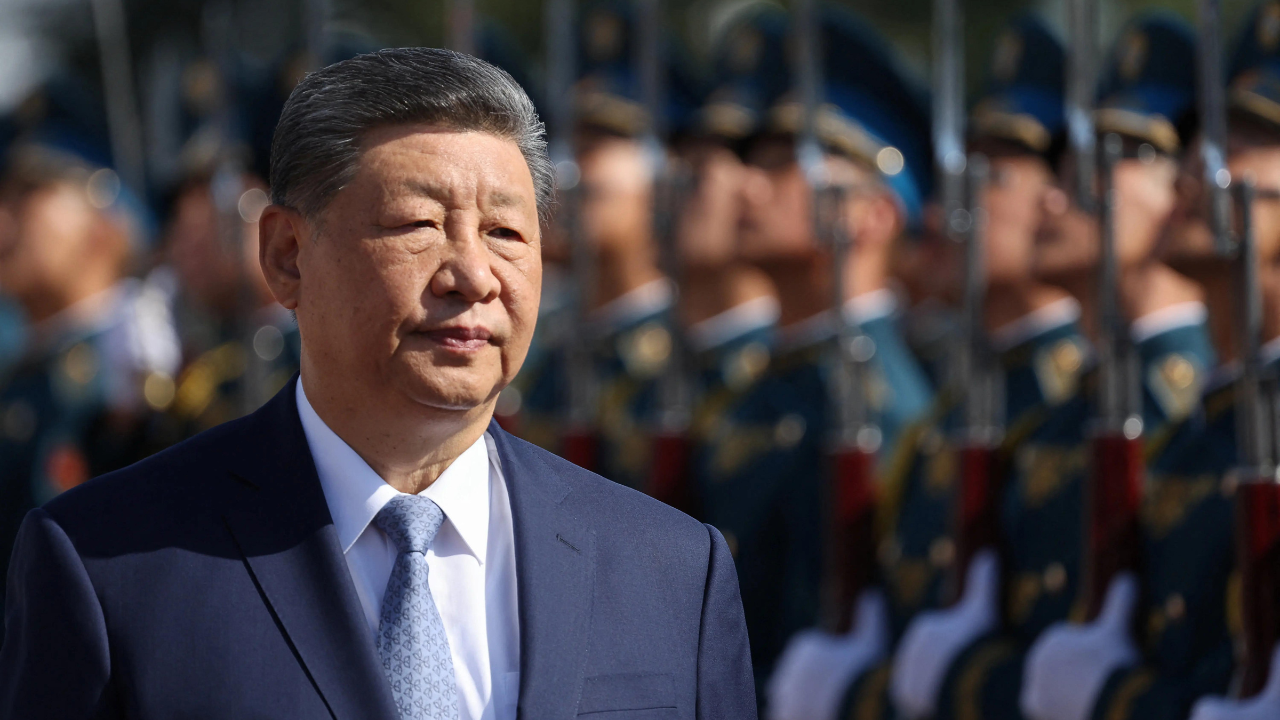
Chinese President Xi Jinping recently stood inside Beijing's Great Hall of the People and delivered a line that global markets and defense analysts parse word for word: Beijing will never leave any room for Taiwan independence separatist activities in any form.
If you only read mainstream headlines, you'd think an amphibious invasion is scheduled for tomorrow afternoon. But zoom out past the saber-rattling rhetoric and look at the actual mechanics of what Beijing is saying. Xi framed this latest push during a speech marking the 160th birth anniversary of Sun Yat-sen, carefully tying the goal of territorial integration to historical destiny rather than an immediate military timetable. For a different look, read: this related article.
Here is what most casual observers misunderstand about the cross-strait standoff. The rhetoric isn't just about a sudden military trigger; it is a long-term ideological campaign designed to suffocate political space over decades.
The Historical Framing Game
When Beijing invokes Sun Yat-sen, it isn't an accidental choice. Sun is the rare historical figure revered on both sides of the Taiwan Strait. By wrapping the current Chinese Communist Party narrative around the 1911 revolution that ended imperial rule, Beijing attempts to position itself as the sole legitimate inheritor of modern Chinese nationalism. Further reporting on the subject has been shared by The New York Times.
Taipei sees right through the maneuver. Taiwan's Mainland Affairs Council regularly pushes back, noting that Beijing routinely distorts historical legacies to serve a modern unification agenda. Yet, the ideological tug-of-war matters immensely because it shapes domestic tolerance for political compromise.
Most people think public opinion in Taiwan is split down the middle between immediate formal independence and swift integration. It isn't. Reliable polling consistently shows that the overwhelming majority of citizens in Taiwan prefer to maintain the status quo. They enjoy de facto self-governance, hold free elections, run their own economy using the New Taiwan Dollar, and maintain a distinct democratic identity.
Why the "One Country, Two Systems" Model Fails to Sell
Beijing frequently points to the "one country, two systems" framework as the blueprint for absorbing the island, mirroring the arrangement used for Hong Kong. In Taipei, that pitch is a non-starter. Events over recent years across the South China Sea shattered any remaining appeal that model might have held for voters or politicians across Taiwan's political spectrum.
No major political party in Taiwan endorses the formula. When Beijing insists that the tide of history cannot be stopped and that complete reunification must be realized, it runs headfirst into a population that views its democratic institutions as non-negotiable.
This creates a dangerous political paradox. Beijing views any step toward formal institutional separation or international recognition as a red line that invites severe economic pressure or military drills. Meanwhile, voters in Taiwan view Beijing's relentless pressure campaigns as proof that they must keep their distance.
The Economic and Geopolitical Reality Check
An outright military conflict in the Taiwan Strait would shatter global supply chains within hours. Look at semiconductor manufacturing alone. Taiwan Semiconductor Manufacturing Company (TSMC) produces the vast majority of the world's advanced logic chips. A disruption there would instantly freeze automotive lines, consumer electronics, and artificial intelligence development worldwide.
Washington walks a tightrope defined by strategic ambiguity. Under the Taiwan Relations Act, the United States supplies defensive weapons to the island while officially acknowledging Beijing's claim under its One China policy. That policy prevents Washington from offering formal diplomatic recognition to Taipei, yet it mandates enough military backing to ensure the island can defend its sovereign space.
When Xi doubles down on rejecting independence, he is also sending a direct message to external powers—chiefly the United States—warning them to stay out of what Beijing views as an internal domestic affair.
What Happens Next in Cross-Strait Relations
You shouldn't look for a sudden cinematic climax to the Taiwan question. Instead, expect a grinding war of attrition. Beijing will continue utilizing daily air defense identification zone incursions, naval patrols, economic restrictions, and intense cyber operations to wear down Taiwan's administrative resilience.
Taipei will keep expanding asymmetrical defense capabilities, deepening unofficial diplomatic ties with Western allies, and reinforcing the message that its democratic system operates independently of Beijing's mandate.
The standoff remains the most volatile geopolitical flashpoint on earth, driven by two entirely incompatible visions of sovereignty that leave very little room for compromise.