Two plastic bags of burned-looking wood pulled from nine meters underground in eastern Turkey just lit up every Noah's Ark forum on the internet. Carbon dating puts the samples right around 4,300 years old. That number lines up neatly with popular flood chronologies around 2348 BC or 2304 BC, which is why headlines are practically screaming about a massive breakthrough.
Hold on. A date on a piece of charcoal isn't the same thing as finding a ship.
If you've been following the Durupınar formation near Mount Ararat, you know the story usually swings between breathless excitement and cold geological pushback. Right now, researchers led by Sivas Cumhuriyet University archaeologist Prof. Dr. Cenker Atila and Noah's Ark Scans founder Andrew Jones have real physical samples in hand from work at the boat-shaped site. Jones told CBN News they got fast-tracked lab results back on November 18 placing the charred wood around 4,300 years ago, with reported date ranges spanning roughly the 25th to 22nd centuries BC depending on the sample and outlet reporting. Some fragments even show what Atila describes as flattened surfaces or possible tool marks.
Honestly, that's genuinely interesting. Yet if you stop at "4,300-year-old wood matches the flood timeline," you're missing half the story and all of the hard questions that actually settle whether this means anything.
Why 4,300-year-old wood at the Durupinar site doesn't settle the debate
Let's be clear about what radiocarbon dating actually measures. When a lab tests charcoal or ancient wood, it tells you roughly when the tree stopped taking in carbon—not when someone cut it down, not when it burned, and certainly not whether it belonged to a giant vessel. A piece of timber could have grown around 2300 BC, sat around, burned in a brushfire or hearth centuries later, and washed down a slope over millennia.
There's also a basic chain-of-custody and verification issue right now. The initial results came through Noah's Ark Scans and Atila's team from a U.S. lab in Florida, with screenshots shared rather than a peer-reviewed paper in a mainstream archaeological or radiocarbon journal. That doesn't make the numbers fake. It just means independent scientists haven't vetted the methodology, calibration curves, or lab margins of error yet.
Even among people who take biblical flood accounts seriously, there isn't a single agreed-upon calendar. Chronologies built on the Masoretic text often land in that roughly 24th to 23rd century BC window, which explains why Jones and Atila highlight the overlap. Other traditions, such as the Septuagint, point much earlier. Meanwhile, some creationist researchers like Andrew Snelling of Answers in Genesis have argued in past work on earlier site samples that authentic ark wood would need to be older—or that single-lab results need much tighter verification.
So before anyone declares victory or writes the whole thing off as a hoax, it helps to look at how the Durupinar site got famous in the first place.
How a boat-shaped hill near Mount Ararat became a flashpoint
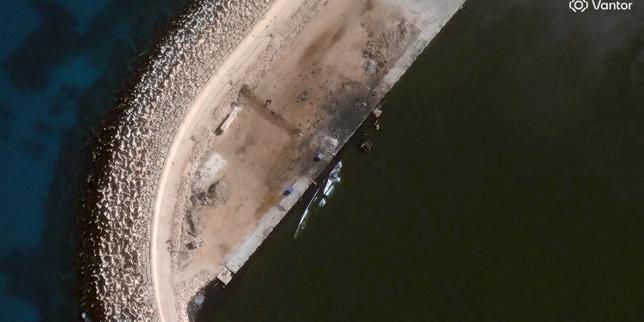
Back in 1959, Turkish Army cartographer Captain İlhan Durupınar spotted a distinct boat-shaped feature in aerial survey photos roughly 30 kilometers south of Mount Ararat. From above, its sweeping hull-like outline looks uncanny. Once you've seen aerial shots of it, your brain immediately wants to see ribs, planks, and a keel.
Geologists have been pushing back on that visual impression for decades. A well-known 1996 paper in the Journal of Geoscience Education by geologist Lorence Collins and ark researcher David Fasold argued that the Durupınar formation is a natural geological structure shaped by erosion and rock folding rather than a petrified boat. In eastern Turkey's rugged terrain, tilted strata, mudflows, and differential erosion regularly carve dramatic shapes out of hillsides.
On the flip side, teams working on the site point to ground-penetrating radar (GPR) scans showing linear or right-angled anomalies beneath the surface, along with large stones in the surrounding area that proponents call drogue stones. Excavating nearly 30 feet (nine meters) down into the southern slope and pulling out charred wood changes the conversation from pure surface geometry to actual material recovery. You can't touch a radar blip, and you can't carbon-date an aerial photo. You can test a piece of wood.
What happens next will make or break the claim
Right now, the most important evidence isn't the headline date—it's the follow-up lab work. Samples have been sent or slated for additional testing in Switzerland and at TÜBİTAK, Turkey's national scientific research council, alongside wood species identification.
That species check is huge. If researchers identify the wood type—say, whether it's softwood, hardwood, or a specific species—and compare it against the surrounding soil matrix and purported tool marks, we'll get a much sharper picture of context. As Atila himself has noted in coverage of the dig, questions remain about how the wood ended up nine meters deep and whether the marks on the sample truly reflect human shaping.
A few practical things to watch over the next few months if you want to separate signal from noise:
- Look for full lab documentation and cross-lab agreement: Check whether results from Switzerland and TÜBİTAK match the Florida lab's date ranges once published.
- Watch for wood species and microscopic analysis: Knowing what kind of tree the charcoal came from matters far more than a standalone date.
- Separate wood age from vessel identity: Even confirmed 4,300-year-old worked wood only proves ancient human activity or organic material in that spot—not that the whole Durupınar formation is a ship.
- Wait for the broader expedition reporting: Teams have pointed toward fuller findings emerging in spring 2027, which should give context that early news clips can't.
Until independent labs publish full data and researchers explain the geological context around those nine-meter-deep samples, treat the 4,300-year date for what it really is: an intriguing clue in a long, messy investigation, not the final word.