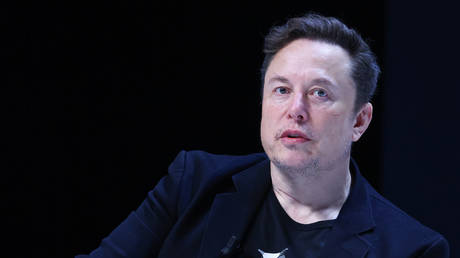
Dario Amodei spent years warning the world about the dangers of super-smart machines, and on November 19, 2026, he rang the Nasdaq opening bell for one of the biggest public offerings in market history.
That contrast makes a lot of people squint. How do you build a business valued around $1.5 trillion—raising over $81 billion in the process—while repeatedly telling lawmakers, investors, and the public that frontier AI could cause serious harm, economic shockwaves, or even catastrophic risks?
Honestly, if you treat Amodei like a typical hype-chasing tech founder, his whole career looks like a contradiction. Once you read his actual physics-trained thinking, the contradiction disappears. He doesn't view AI as magic or destiny. He treats it like a physical force that moves fast, follows predictable rules, and breaks things if engineers get sloppy.
Why Dario Amodei Thinks About AI Like a Physicist
Before leading Anthropic, Amodei studied physics at Stanford and earned a Ph.D. at Princeton. You can see that training in almost every argument he makes.
Software engineers tend to treat code like something they built and fully control. Amodei has long treated big neural networks more like complex physical systems—closer to weather or thermodynamics—where behavior emerges from scale and interaction rather than neat lines of human logic. Back in 2020, he co-authored landmark work on scaling laws for neural language models, showing how model performance improves smoothly and predictably as you pour in more compute, data, and model size.
Predictability changes how you plan. If you know capabilities are climbing along a steep curve, waiting until a crisis happens to think about safety is a terrible bet. That's why he tends to talk less about vague sci-fi buzzwords and more about concrete capabilities, such as what he described in his October 2024 essay Machines of Loving Grace as a "country of geniuses in a datacenter"—systems capable of high-level reasoning across many domains at massive speed.
I've watched plenty of tech leaders talk about "long-term vision" right before launching half-baked features. Amodei's version is different. He looks at scaling curves and asks what happens when models get good enough to help bad actors with cyberattacks or biological risks, or when AI starts helping build the next generation of AI faster than humans can audit it.
The Tension Between Safety Promises and Wall Street Reality
Going public in late 2026 puts Amodei's philosophy under a harsh spotlight. Anthropic isn't a tiny research lab tucked away in a corner anymore. With thousands of employees and massive infrastructure commitments stretching out over years, public shareholders expect growth, margins, and momentum.
Critics and lawmakers haven't been shy about pointing out the friction here. Some observers have noted that Anthropic eased earlier self-imposed pause commitments in 2026, and critics like Senator Elizabeth Warren have raised alarms about selling shares to the public—and indirectly into millions of index funds and retirement accounts—while the company's own risk disclosures warn of severe societal and technical hazards.
That criticism isn't crazy. Public markets reward quarterly execution. Safety engineering sometimes means slowing down a release, running extra evaluations, or saying no to a lucrative deployment.
At the same time, Amodei's argument has stayed consistent: he thinks safety and capability aren't opposites. In his view, if the industry rushes ahead without solid guardrails and causes a major disaster, public trust collapses and heavy-handed rules hit everyone at once. Compare that to aviation or medicine. Nobody says safety checks ruined airplanes; safety checks are the reason billions of people actually get on them.
Still, you don't have to take Amodei's word on faith. Watch what happens over the next few quarters when commercial pressure clashes with a hard safety threshold. Talk is easy when a model is still in the lab; real discipline shows up when revenue is on the line.
Constitutional AI and Looking Inside the Black Box
One of the biggest mistakes people make when reading about Anthropic is thinking "safety" just means putting a polite filter over a chatbot's mouth.
Amodei's team pushed two major ideas to go deeper than surface-level refusals:
- Constitutional AI: Instead of relying purely on human reviewers to label every harmful or tricky response, models are trained using an explicit set of written principles—drawing on ideas like human rights and clear ethical rules—to critique and revise their own outputs. It makes the rules more transparent and easier to scale than manual labeling alone.
- Mechanistic interpretability: Since we can't just peek inside a giant neural network by reading source code, researchers try to map out which internal features and circuits actually light up when a model reasons, deceives, or follows instructions.
Is interpretability solved? Not even close. Even Amodei has openly acknowledged that researchers still understand only a tiny fraction of what happens inside these models. Calling that out matters because too many companies pretend they have total X-ray vision into their systems. They don't.
Big Upside, Real Blind Spots
What makes Amodei worth listening to—even when you disagree with him—is that he doesn't flatten the story into pure utopia or pure doom.
On the bright side, he's been vocal about how fast AI could accelerate science, medicine, and economic output. Compressing decades of biomedical research or material discovery into a much shorter window isn't a small deal. If AI helps cure stubborn diseases or boosts productivity across healthcare and education, the upside for everyday people is huge.
On the flip side, there are real blind spots and debates where smart people push back hard:
- Speed vs. governance: In essays like Policy on the AI Exponential, Amodei has argued that AI progress is moving way faster than government policy. Fair point. Yet debates over export controls, chip rules, and federal versus state oversight get messy fast, and industry leaders naturally have skin in the game when shaping those rules.
- Economic disruption: White-collar work, entry-level jobs, and wealth concentration are already sore spots. Even with co-founder pledges to give away large chunks of personal equity, a massive concentration of AI wealth and compute power raises tough questions for society.
- Self-improvement loops: When AI systems start assisting heavily in AI research and coding, human oversight gets stretched thinner. That's one of the trickiest problems in the entire field, and nobody has a neat, finished answer yet.
Practical Ways to Read AI News Without Getting Played
If you're following Anthropic, Dario Amodei, or the broader AI race—whether as an investor, a builder, or just someone trying to figure out how this tech affects your job—don't get swept up in headlines from either cheerleaders or doomers.
Here's how to cut through the noise right now:
- Read primary essays and filings, not just hot takes: Look up Amodei's own writing on his site or read actual risk disclosures rather than relying on second-hand summaries that strip out nuance.
- Separate capability demos from real-world reliability: A model acing a benchmark or writing slick code in a demo doesn't mean it handles messy edge cases in production without supervision.
- Track incentives, not just slogans: Whenever any AI company talks about safety, ask how its business model, compute spending, and shareholder pressure line up with that message.
- Build practical AI literacy in your own work: Instead of guessing whether AI will take your job or fizzle out, test where it genuinely saves you time today—and where its mistakes cost you more time to fix than doing the work yourself.
Intelligence is becoming something humans can engineer at scale, and the real test isn't a single bell-ringing ceremony—it's how we govern, deploy, and live with it once the spotlight moves on.
Dario Amodei's Machines of Loving Grace gives a clear, accessible breakdown of the optimistic scientific vision behind Amodei's thinking so you can weigh his long-term hopes alongside the risks.