Ecuador heads into local elections on November 29, 2026, with its main opposition party suspended, prominent mayors behind bars or barred from running, and President Daniel Noboa insisting the courts are simply fighting crime. It's a messy, high-stakes vote. You won't get a clean picture of what's happening in Quito, Guayaquil, or Cuenca if you treat this as a routine municipal contest.
Right now, two clashing stories define the race. Opposition leaders and rights critics argue the justice system and electoral rulings are clearing rivals off the board before voters even cast a ballot. The Noboa administration says prosecutors are chasing embezzlement, illicit enrichment, money laundering, and organized crime ties, and that nobody is above the law. Honestly, both claims collide with real facts on the ground, which makes reading the moment carefully essential.
Why Ecuador Local Elections Carry Such High Stakes
Voters across 23 provinces are choosing prefects, vice prefects, 222 mayors, roughly 5,500 council and parish board officials, and seven members of the Council for Citizen Participation and Social Control. That last body matters more than outsiders usually realize. It helps appoint key oversight and judicial officials, so control over it ripples straight through Ecuador's institutions.
The National Electoral Council moved the vote up from February 14, 2027, to November 29, 2026, citing El Niño weather risks like heavy rains and flooding. Meanwhile, Noboa's National Democratic Action movement is competing in local elections for the first time, trying to turn national office into municipal power.
Polling shows a deeply frustrated electorate. A Cedatos survey from October 2026 found 60 percent of Ecuadorians believed the country was on the wrong track, with roughly as many saying they remained undecided heading into election day. When people are tired of violence and economic strain, ballots get weird. Voters punish incumbents, sit out, or scramble for alternatives that aren't even on the ticket.
A Compressed Campaign After Heavy Legal Blows
Campaigning ran on a tight 15-day window from November 12 to November 29. For the Citizen Revolution movement linked to former president Rafael Correa, the ground shifted months earlier. Electoral authorities suspended the party over money-laundering allegations tied to 2023 campaign financing, and Ecuador's Constitutional Court upheld that suspension in July 2026, alongside suspensions affecting two allied parties.
That left opposition figures scrambling for alternative banners or sidelined altogether. If you're wondering how a major political force loses its party label right before regional races, that's the core shock behind this election.
Arrests, Suspensions, and the Fight Over Lawfare
Look at the names making headlines ahead of the vote, and the friction becomes unmistakable. Arrests, suspensions, and prosecutorial raids have reshaped who can run and who holds office.
- Luisa González: Noboa's two-time presidential runoff rival, who was running for prefect in Manabí province, has faced detention and prosecution amid allegations tied to organized crime financing, which she and her supporters condemn as political persecution.
- Mayors and local officials: Arrests and legal actions have hit several mayors and local figures across the country, including Guayaquil's Aquiles Alvarez and Pujilí's José Arroyo, while Cuenca mayor Cristian Zamora faced an electoral suspension over gender-based political violence that blocked his reelection bid alongside corruption probes.
- Municipal raids and cross-border arrests: Prosecutors raided Quito's municipality—led by reelection candidate Pabel Muñoz—over alleged contract irregularities, while mayoral candidate Jaime Estrada Bonilla and former assembly member Jaime Estrada Medranda were arrested in Panama on U.S.-sought charges including drug trafficking.
Critics call this selective prosecution timed to weaken rivals right before an election. Defenders of the government point out that individual cases involve distinct allegations—from alleged embezzlement and contract probes to international drug-trafficking warrants—and argue that sweeping claims of "persecution" lump legitimate criminal investigations together with political grievances.
That's where careful judgment comes in. You can't assume every indictment is fake just because a politician says so. You also can't ignore a pattern where opposition leaders, parties, and mayors are knocked out of contention right before a major vote. Both things can have real elements at once, and pretending otherwise leaves you blind.
Security, Austerity, and Shifting Alliances
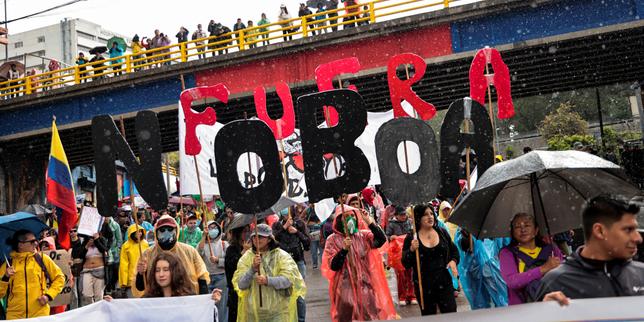
To understand why Noboa's government leans so hard on security and anti-corruption messaging, look at the pressure cooker he governs inside. Since declaring an internal armed conflict against designated criminal groups in early 2024, the administration has paired tough-on-crime rhetoric with fiscal discipline under a multi-billion-dollar International Monetary Fund program and fuel subsidy cuts that have sparked street pushback.
Yet violent crime hasn't simply vanished. Research from InSight Crime placed Ecuador's 2025 homicide rate at 50.9 per 100,000 residents, up 31 percent from 2024, while prison unrest and lethal multi-victim attacks continued into 2026. At the same time, ACLED data shows political violence incidents in 2026 running at roughly half the pace recorded during the 2023 local elections.
Washington has kept backing Ecuador's anti-narcotics and security push, including high-level visits in Quito in November 2026, while regional left-leaning groups and international observers have raised alarms over democratic norms and judicial independence. When security is bad and wallets are tight, governments often reach for strongman tactics—even when results on the street stay uneven.
What People Get Wrong About This Conflict
One common mistake is treating Ecuador's politics as a neat fairy tale of pure angels versus pure villains. It isn't. Organized crime has penetrated local politics, public contracts, and border routes in Ecuador for years, and corruption allegations in municipalities aren't invented out of thin air.
Another mistake is assuming that sidelining a major opposition party automatically hands every city to the president. A fragmented or angry electorate can split votes unpredictably, back local independents, or cast blank and null ballots in protest. Having fewer rivals on paper doesn't guarantee smooth governance in Quito or Guayaquil afterward.
Finally, don't confuse international headlines with local voter priorities. A voter in the highlands worried about diesel prices, jobs, and street safety often thinks differently from a commentator in Washington or Buenos Aires debating democratic backsliding. Local elections in Ecuador are always a tug-of-war between national narratives and neighborhood grievances.
Practical Next Steps If You're Following the Vote
If you want to track what happens on November 29 and in the weeks after without getting swept up in spin, take a few concrete steps:
- Read primary court and electoral records when available. Separate a party suspension or electoral ban from a criminal indictment, and check what stage each case is actually in.
- Track both national and municipal outcomes. Watch who wins big cities like Quito and Guayaquil alongside provincial prefectures and the Council for Citizen Participation and Social Control.
- Cross-check security and protest reporting across multiple outlets. Compare local Ecuadorian reporting with monitors like AS/COA, InSight Crime, and ACLED so you don't rely on a single partisan account.
- Watch post-election coalitions and institutional friction. Local mayors and prefects hold real administrative power, and clashes between city halls, the presidency, and oversight bodies will shape Ecuador's political climate well into 2027.