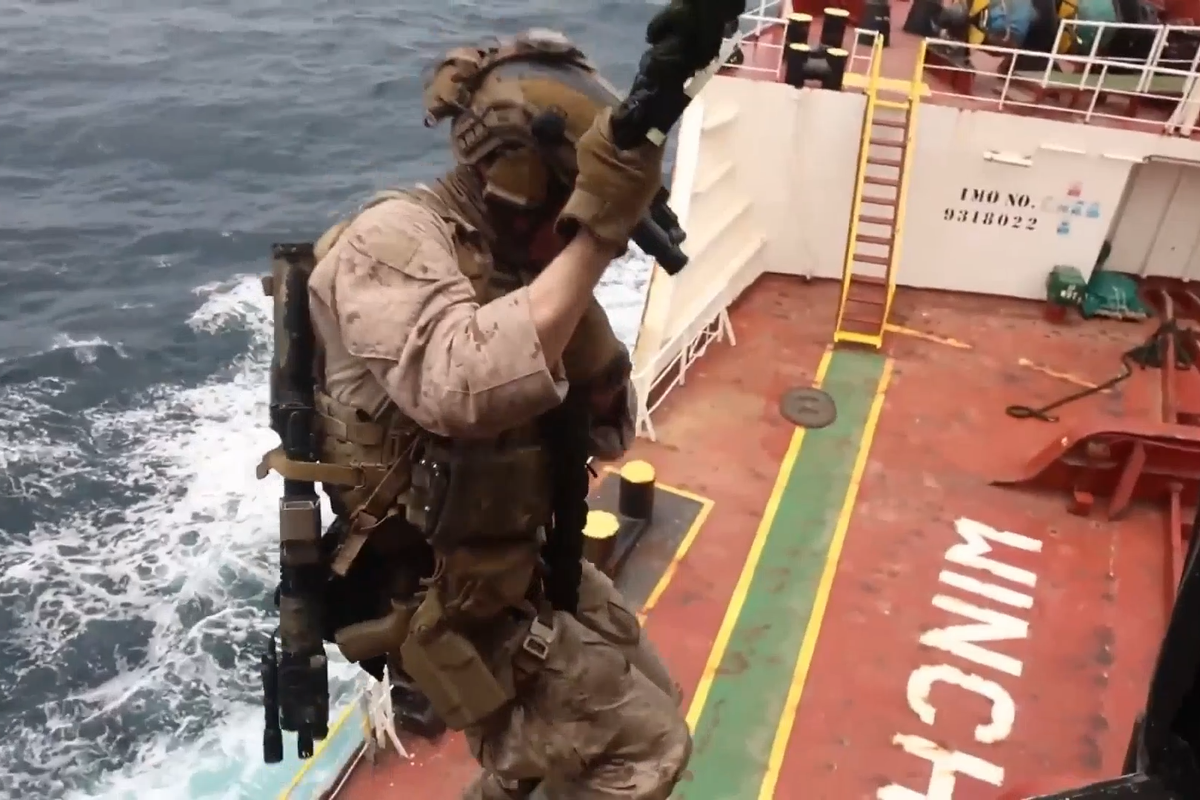
Videos of armed troops dropping onto commercial decks get clicks. But the grainy footage released by U.S. Central Command misses the actual mechanics of how a modern naval blockade works in tight choke points like the Gulf of Oman. You see heavily armed Marines. You see a massive oil tanker drifting in choppy water. What you don't see on camera are the days of electronic tracking, diplomatic warnings, and quiet standoffs that happen before a single helicopter ever leaves the flight deck.
Let's look at what's really happening on the water. Building on this theme, you can also read: Why Military Stockpiles Just Forced A Major Shift In Us Iran Strategy.
The Reality of Enforcing a Naval Blockade
Enforcing restrictions on maritime traffic isn't like putting up police tape. It's a high-stakes game of cat and mouse played across thousands of square miles of international shipping lanes. When U.S. forces targeted vessels like the commercial tanker M/T Wen Yao, they weren't just reacting on impulse.
According to CENTCOM reports, the operation involved multiple moving parts: Analysts at Wikipedia have provided expertise on this trend.
- Electronic surveillance: Tracking vessel transponders and satellite signatures long before interception.
- Non-compliant redirection: Forcing suspicious ships to alter course away from Iranian ports without firing a shot.
- Kinetic enforcement: Using targeted measures, such as disabling actions when vessels completely ignore warnings.
Most civilian observers think military forces just rush every ship they see. That's false. Boarding a moving commercial vessel in open water carries massive risks. One mistake can cause an environmental catastrophe or spark a localized firefight. That's why the military prefers redirection over boarding whenever possible.
Why the Strait of Hormuz Standoff Matters
Geography dictates every move here. The Strait of Hormuz is narrow, congested, and vital to global energy flows. When tensions spike between Washington and Tehran, commercial shipping becomes the primary chessboard.
Tankers play a dangerous role. Some operators try to slip through sanctions under false flags or turned-off tracking systems. When U.S. forces intercept them, they're attempting to choke off economic lifelines tied to regional proxies and illicit oil trades.
You have to ask yourself a simple question. Can a blockade of this scale actually stop illegal shipments long-term? History suggests smugglers always find secondary routes or shadow fleets. But short-term enforcement sends an unmistakable message.
Beyond the Viral Clip
Don't let sensationalized news clips fool you into thinking a full-scale war starts with every intercepted cargo ship. These boardings are calculated actions meant to enforce maritime law under strict rules of engagement.
If you want to track how these events actually unfold, look past the 30-second social media edits. Watch the official CENTCOM updates, monitor shipping intelligence reports from firms like Lloyd's List, and pay attention to how insurance rates for Gulf transit fluctuate. That tells the real story.
Keep your eyes on the logistics, not just the action footage.