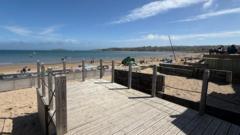
Imagine spending £200,000 on a property. You probably picture a decent three-bedroom semi-detached house in Lancashire, a smart town flat, or maybe a sprawling cottage in parts of western Wales. You definitely expect a front door, electricity, and a working toilet. Instead, a pocket of the British coastline just saw a wooden shack the size of a family car hit the market for exactly that price. It doesn't have a plug socket. It doesn't have a tap. If you want to flush, you walk down to the public blocks.
This isn't a joke, and it isn't an anomaly. It's the reality of the UK luxury seaside market in 2026. A newly built beach hut on the front lines of Abersoch Main Beach in Gwynedd has officially hit the market for a staggering £200,000.
For the critics, it's the ultimate symbol of a broken housing system. For the wealthy elite who frequent this particular corner of the Llŷn Peninsula, it's a rare chance to buy into a highly exclusive club. To understand why a wooden box with plastic-coated galvanized sheeting costs more than a family home, you have to look past the lack of plumbing and look at the strange, hyper-local economics of premium coastal real estate.
The Ridiculous Economics of Abersoch Beach Huts
The property in question is being sold by estate agents Beresford Adams. It measures just 11 feet by 11.5 feet. It's constructed with a timber frame and features an insulated, plywood-lined interior. It sits right on the sands of Abersoch, a seaside village nicknamed "Cheshire-by-the-sea" due to the overwhelming influx of affluent holidaymakers and second-home owners migrating down from the northwest of England every summer.
When you buy a luxury beach hut here, you aren't paying for square footage. You're buying a zip code and an unblocked view of Cardigan Bay and the St Tudwals Islands.
The premium comes down to artificial scarcity. Local planning authorities rarely allow new structures to be built right on the sand. The hut listed by Beresford Adams happens to be a brand-new, frontline freehold structure completed in May 2026. Because it's freehold, the owner actually owns the tiny footprint of land beneath it, which is incredibly rare for beach shacks in the UK. Most coastal huts are held on council leases or annual licenses, meaning the ground can be reclaimed or fees hiked at a moment's notice.
To see how wild this specific micro-market has become, look at the historical sales data for the area.
- In 2017, a nearby bathing hut set a record by selling for £160,000.
- By 2022, another shack on the same stretch of sand pushed the envelope with an asking price of £200,000.
- Now in 2026, the baseline entry fee for a premium frontline slot has officially cemented itself at the two-hundred-thousand-pound mark.
While local residents look on in absolute horror, the buyers aren't batting an eye. For someone driving a hundred-thousand-pound SUV down from Wilmslow or Alderley Edge for the weekend, writing a check for a beach hut is like buying a high-end accessory for their summer lifestyle.
The Hidden Costs Buyers Ignore
Most people looking at the headline price think the financial bleeding stops at the purchase contract. It doesn't. Owning a high-end beach hut is an ongoing financial commitment that sounds deeply unappealing to the average homeowner.
First, there are the local authority transfer fees. In many premium beach hut locations across the UK—like Mudeford Spit in Dorset, where larger huts routinely clear £400,000—buyers have to pay a massive slice of the purchase price directly to the local council just to change the name on the license. At Mudeford, that transfer fee can sit around £15,000. While Abersoch's freehold status changes the legal dynamic, owners still face annual maintenance liabilities that defy common sense.
You have to paint these properties constantly. The marine environment is brutal. Saltwater, gale-force winter winds, and shifting sands will rot timber and strip paint within months if left unmanaged. You're essentially paying thousands of pounds a year to maintain a structure that you're legally forbidden from sleeping in.
That's the detail that trips up outsiders. Under the strict terms of local bylaws and planning regulations, you cannot use these huts as overnight accommodation. They're day huts. You use them to store your paddleboards, brew a cup of tea using a bottled-gas camping stove, change out of your wetsuit, and sit on the deck with a glass of wine. Come nightfall, you have to leave. You're spending £200,000 on a piece of real estate that you can only legally use for about twelve hours a day, mostly between April and October.
Why the Wealthy Keep Buying Them Anyway
If you look at this purely as a real estate investment, the math looks completely unhinged. But the people buying these huts aren't comparing them to local three-bedroom terraces. They're comparing them to alternative luxury experiences.
Think about the logistical nightmare of a premium beach holiday for a wealthy family. You pack up the car, drive down to the coast, hunt for a parking space for an hour, drag windbreaks, deckchairs, coolers, and towels across a quarter-mile of crowded sand, and then sit exposed to the elements. If it rains, the day is ruined. If someone needs the toilet, it's a major trek.
Now look at the lifestyle of the beach hut owner. You park in the private owners' car park. You walk down to your locked, insulated cabin. Your deckchairs, premium gas grill, and windbreaks are already there. You have a private veranda elevated above the crowded beach, giving you a barrier between your family and the thousands of tourists fighting over towel space on the public sand. If a summer storm rolls in over Wales, you step inside, close the double doors, boil a kettle on your gas ring, and wait it out in comfort.
It's a status symbol. Walking down the beach and unlocking a brightly painted door that matches your aesthetic tells everyone on the sand exactly where you sit in the social hierarchy. It's the ultimate coastal flex.
The Toxic Ripple Effect on Local Communities
While wealthy vacationers view these shacks as harmless summer fun, the reality for the people who actually live on the Llŷn Peninsula all year round is bleak. The market inflation driven by these beach huts isn't contained to the sand; it bleeds directly into the local housing stock.
According to data from property portals, house prices in Gwynedd skyrocketed during the post-pandemic staycation boom, and they haven't come down. When a piece of wood on the beach costs £200,000, local landlords and sellers adjust their expectations for standard houses. Two and three-bedroom homes in nearby towns are listed for the exact same price as this tiny beach hut.
The result? Young local families are entirely priced out of their own hometowns. They can't compete with buyers who view a Welsh property as a tertiary asset for weekend trips.
This shift has fundamentally changed the social fabric of villages like Abersoch. The community has faced high-profile crises, including the closure of the local primary school, Ysgol Abersoch, because the relentless surge in second-home ownership meant there weren't enough full-time young families left in the catchment area to keep the classrooms populated. The village becomes a ghost town for six months of the year. In winter, the restaurants are shut, the luxury boutiques are boarded up, and the streets are empty. The lights are out because nobody actually lives there full-time anymore.
It creates a strange, bifurcated economy. For part of the year, the village thrives on the cash dropped by wealthy visitors buying champagne and paying premium rates at the beach cafes. For the rest of the year, the local economy starves.
How to Value a Beach Hut Without Losing Your Mind
If you're one of the few people genuinely looking to buy into this market, you have to ignore standard property valuation metrics. Forgetting about price per square foot is step number one. Instead, you need to evaluate a beach hut using a specific set of coastal criteria.
First, check the legal tenure. Freehold is the gold standard, which is why the Abersoch hut commands such a premium. If it's a leasehold or an annual license, you need to read the fine print from the local council. Look for clauses regarding termination notices, annual fee increases, and restrictions on structural modifications.
Second, analyze the exposure risk. Is the hut positioned in a spot that gets battered by winter storms? Some huts are built behind sea walls or sand dunes that offer natural protection. Frontline huts look spectacular in summer photos, but they bear the full brunt of winter Atlantic gales. Ask the estate agent for historical data on storm damage in that specific cluster.
Third, look at the amenities nearby. Since you don't have running water or electricity inside the structure, your comfort depends entirely on public infrastructure. How far is the walk to the nearest freshwater tap? Where are the public toilets, and are they well-maintained by the local authority? Is there a beach cafe within walking distance so you don't have to haul supplies every single morning?
What to Do Next if You are Eyeballing the Coastal Market
If you have a spare £200,000 and the idea of a private beach retreat still calls to you, don't rush into a purchase based on emotion. The market is highly illiquid, meaning these properties can be incredibly difficult to sell if the economy dips or if second-home tax regulations tighten up any further.
Start by renting a beach hut for a week or two in your target area. Many owners list their shacks on private forums or holiday rental platforms during the months they aren't using them. Spend a few days dealing with the realities of no power, hauling your own water, and using public facilities before you commit permanent capital.
Talk to the locals and independent estate agents who don't hold the listing. Get the real story on the local council's attitude toward beach huts. In recent years, several UK councils have discussed implementing higher premium taxes on non-traditional structures to fund local infrastructure. You want to make sure your tiny slice of paradise doesn't become a massive tax liability before the next summer season even rolls around.