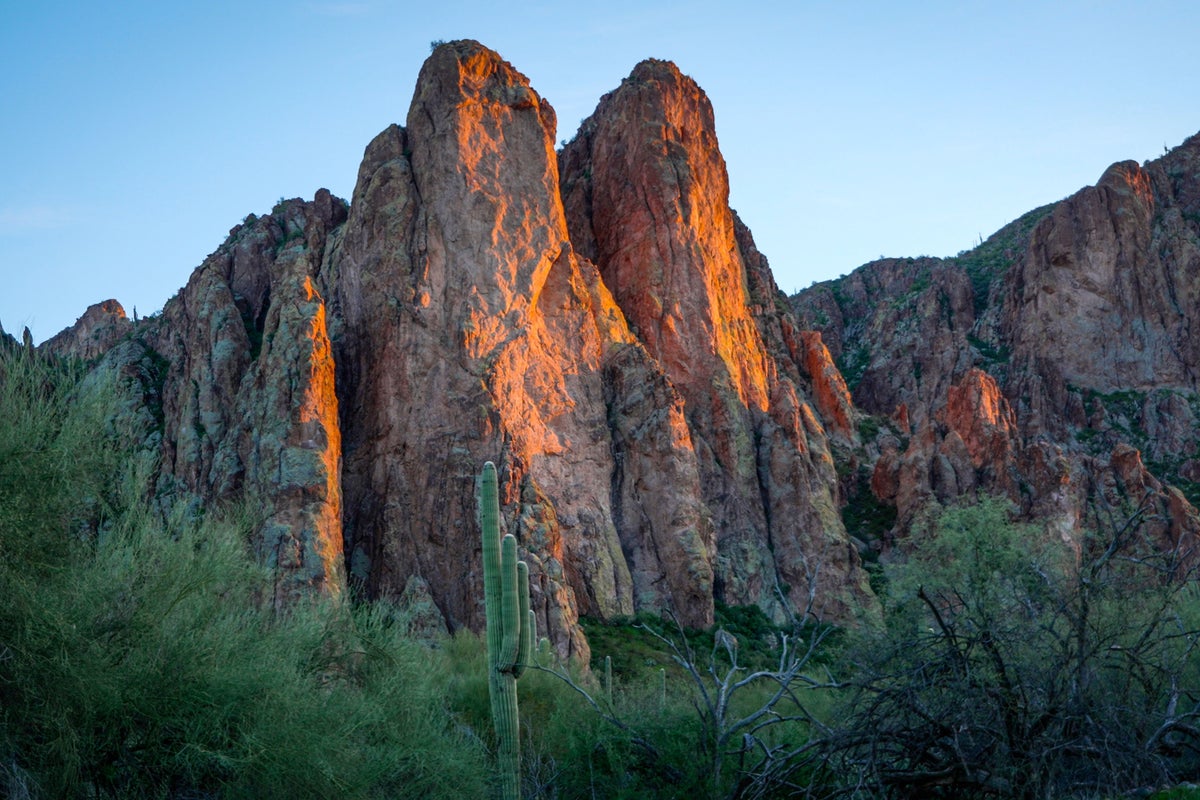
Imagine walking half a mile down an unmarked dirt trail in Arizona's Tonto National Forest, expecting pristine desert views, but stumbling instead into a full-scale junkyard. That's exactly what federal officers found.
Mark Aaron Gatz, a 65-year-old man, managed to live hidden inside the fifth-largest national forest in the United States for eight years. When authorities finally dismantled his camp, they hauled away roughly 1,000 pounds of garbage spread across a ruined half-acre of public land.
This isn't an isolated survivalist story. It's a massive, growing headache for public land managers across America. People are moving into the wilderness permanently, and the environmental toll is staggering.
The Shocking Reality of the 1,000-Pound Forest Camp
When U.S. Forest Service officers executed the arrest, they didn't just find a simple tent and a sleeping bag. Gatz had constructed an elaborate, permanent residential compound.
The site featured a massive canopy structure engineered to serve as a carport for his SUV. There was a fully operational cooking station equipped with a dozen frying pans. Officers noted a fireplace with active embers, a terrifying discovery given the strict fire restrictions in the arid Arizona climate.
The sheer volume of accumulated debris left veteran rangers flabbergasted. The official citation listed an astonishing inventory of hoarded goods scattered across the forest floor:
- Three ladders and multiple overfilled storage totes
- Five black 55-gallon drums
- Eight automotive tires and four bicycle frames
- Five gallons of leaked motor oil soaking into the soil
- Plywood, miscellaneous lumber, and mountains of aluminum cans
This wasn't a leave-no-trace camping trip. It was a long-term homestead built on protected public property. The accumulation of waste destroyed the local vegetation, compacted the soil, and created a severe public health hazard.
The Legal Battle and the 14-Day Limit
Public lands belong to everyone, but you can't just move in. Federal law is explicit about how long you can stay in a national forest.
Under U.S. Department of Agriculture rules, recreational campers face a strict 14-day limit within any 30-day period. Once your two weeks are up, you must pack up and move your camp a designated distance away. This rule ensures that ecosystems have time to recover and prevents individuals from monopolizing public spaces.
Gatz systematically ignored these rules for nearly a decade. He wasn't unknown to local law enforcement. Officers had encountered him multiple times over the previous year alone. He racked up at least six outstanding federal arrest warrants before his final apprehension. His offenses included building campfires during high-risk fire bans, constructing unauthorized structures, maintaining unsanitary conditions, and illegal residency.
After his arrest, Gatz faced a potential five-year prison sentence. He ultimately pleaded guilty to the residential use of a forest without a permit and violating fire restrictions. A federal judge sentenced him to time served along with three years of probation.
The Rising Crisis of Non-Recreational Camping
The phenomenon of long-term non-recreational camping is quietly swamping federal agencies. Forest Service officials acknowledge that unauthorized residency is a persistent problem, particularly in western states like Arizona, California, and Oregon where vast tracts of land offer easy concealment.
Why is this happening? The drivers are complex.
Some individuals are fleeing rising urban housing costs or escaping personal crises. Others are driven by a desire to live completely off the grid, detached from societal rules. For many, national forests become a safety net of last resort when traditional housing and shelter systems fail.
But the wilderness isn't built to handle permanent human occupation. National forests lack the infrastructure—like sewage systems, trash collection, and paved roads—required to support long-term living. When individuals set up permanent camps, the surrounding environment bears the brunt of the damage. Human waste contaminates local water sources. Unattended fires threaten millions of acres of timber and nearby communities. Scattered trash attracts wildlife, altering natural predatory behaviors and endangering animals.
How to Protect Public Lands During Your Own Trips
You can help prevent the degradation of these vital natural spaces. If you love utilizing national forests for legitimate recreation, practicing responsible habits keeps these lands open and healthy for everyone.
Know and Respect the Dispersed Camping Rules
Dispersed camping—camping outside of designated campgrounds—is a fantastic way to experience the wilderness, but it comes with strict responsibilities. Always check the specific ranger district rules before you head out. Stick rigidly to the 14-day limit. Never leave camp structures behind, and never dump household waste or gray water directly onto the ground.
Pack It In, Pack It Out
This fundamental rule of outdoor recreation cannot be overstated. Every single item you bring into the forest must leave with you. This includes food scraps, micro-plastics, and structural materials. Inspect your campsite meticulously before departing to ensure no trace of your stay remains.
Report Suspected Illegal Homesteading
If you encounter a campsite that looks permanent, features large accumulations of trash, or shows signs of long-term structural modification, don't investigate it yourself. Note the exact GPS coordinates or trail markers and report the site immediately to the local U.S. Forest Service ranger district office. Rangers rely heavily on public tips to identify and remediate damaged areas before they scale out of control.
Take action by downloading offline maps before your next backcountry trip, verifying local fire restrictions online, and keeping the contact number of the nearest ranger station programmed into your phone. Protecting public land requires constant vigilance from the entire outdoor community.