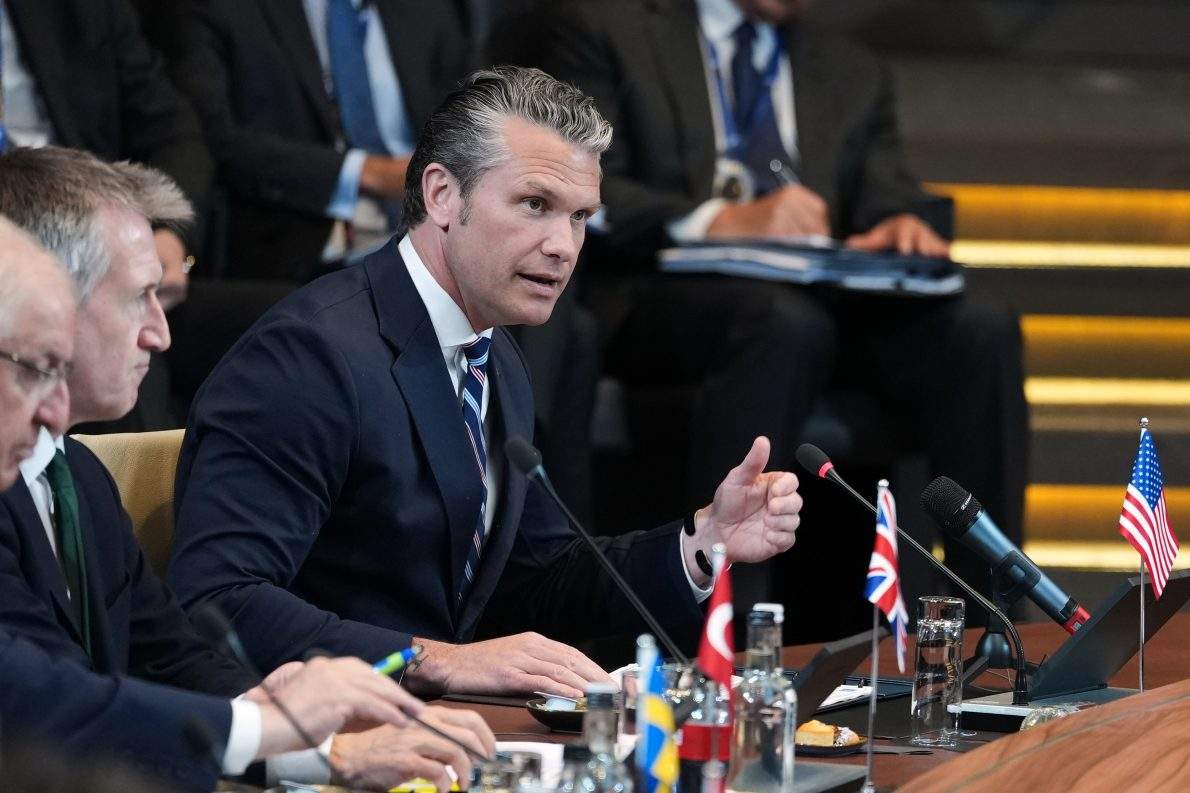
The era of hiding behind American military muscle while lecturing the world on rules-based order is officially over. If European allies and Canada didn't get the message before, U.S. Defense Secretary Pete Hegseth made it blindingly obvious in Brussels. He didn't just ruffle feathers at NATO headquarters. He basically threw a brick through the window.
By launching a sweeping six-month review of American forces and bases in Europe, Hegseth put a ticking clock on the continent's dependency. He bluntly warned that some countries will pass this review with flying colors, and others are going to fail. Hard.
If you're wondering why this matters right now, look at the panic behind closed doors. For decades, Western nations treated national defense like an optional luxury, spending pennies on the dollar while assuming Washington would always foot the bill and supply the heavy armor. Hegseth just took the keys to the vehicle. This isn't just standard political theater. It's a fundamental restructuring that will leave lagging nations completely exposed if they don't find a way to rebuild their hollowed-out militaries immediately.
The Myth of Middle Power Solidarity
Let's look at what triggered Hegseth's most biting remarks. He took a direct, albeit unnamed, aim at Canadian Prime Minister Mark Carney's recent rhetoric from the World Economic Forum, where Carney bragged about "middle powers" banding together so they wouldn't end up "on the menu."
Hegseth wasn't having it. He openly mocked the concept, pointing out the hypocrisy of wealthy nations that love to talk about international order but refuse to pay for the weapons to defend it. It's easy to preach global ethics from a podium when you aren't the one maintaining strategic bomber fleets or keeping aircraft carriers deployed in hostile waters.
The reality is that "middle power" solidarity is a comforting myth used to disguise a lack of actual military capability. Canada, for instance, has faced intense pressure from the Trump administration for failing to lay out a realistic roadmap to hit the alliance's updated spending goals. Washington wants allies targeting five percent of GDP by 2035, with a massive chunk dedicated to core combat capabilities. Ottawa isn't even close. The U.S. even paused a joint defense review board with Canada last month to signal its growing irritation. When the biggest player on the team stops talking to you, it's time to realize your speeches aren't working anymore.
NATO 3.0 Means Moving Past Freeriding
Hegseth's speech laid out a clear ideological shift toward what the Pentagon calls "NATO 3.0." According to the framework championed by figures like Undersecretary of Defense for Policy Elbridge Colby, this new era dictates that Europe must take primary responsibility for its own conventional defense.
Hegseth declared the previous era—NATO 2.0—to be an age of systemic freeriding. He argued that the alliance completely lost its way by focusing on social engineering, climate change, and domestic welfare states while letting defense budgets crater. In his view, the alliance needs to return to being a hard-edged warfighting organization focused on tanks, fighter jets, and air defense systems.
Consider the numbers to understand the scale of the shortfall. While NATO Secretary General Mark Rutte defended European efforts by pointing out a real-terms increase of $90 billion in defense spending over the past year, the Pentagon views this as too little, too late. The U.S. has already started pulling back. A brigade was removed from Romania. A planned deployment to Poland was halted. Five thousand troops were pulled from Germany. These aren't empty threats; the drawdowns have already begun.
The Battle Access Breaking Point
What really pushed the Pentagon to the edge wasn't just the accounting ledger. It was tactical betrayal during the recent conflict with Iran.
Hegseth labeled the behavior of several European allies as "shameful" because they restricted American access to European bases and denied overflight rights for missions targeting Iranian forces. While Britain permitted U.S. bombers to fly from its territory, nations like Spain balked, forcing American pilots to take longer, more dangerous routes.
To Washington, this was the ultimate betrayal. U.S. troops were actively in harm's way, and allies who benefit from the American nuclear umbrella were playing domestic politics with airspace access. The upcoming six-month military review, led by Air Force Gen. Alexus Grynkewich, will specifically look at access, basing, and overflight guarantees. If a country wants American protection, it has to grant unconditional operational access when the fire starts. If you block the runway, don't expect American troops to guard your border.
What Happens Next for Continental Defense
The immediate fallout of this policy shift is already causing chaos in European defense ministries. Because the U.S. is scaling back the list of crisis forces it pledges to NATO—including critical refueling planes, strategic bombers, and advanced fighters—Europeans are frantically trying to purchase equipment to plug the gaps.
But buying weapons takes years. You can't order a fleet of fifth-generation fighter jets on Amazon and expect them to arrive next week. European defense manufacturing lines are already severely strained, struggling with supply chain bottlenecks and low production capacity.
Furthermore, Hegseth threatened to slash America's direct financial contributions to NATO's common operating budget. The U.S. currently funds roughly 15 percent of that $5.75 billion pot. If Washington begins tying its dues directly to whether other nations meet their domestic spending targets, the central bureaucracy of the alliance will start running out of money fast.
If you are a policymaker or defense analyst in a non-compliant NATO state, the path forward requires immediate, uncomfortable action. Stop relying on diplomatic platitudes about shared values. You need to immediately reallocate national budgets away from domestic subsidies and directly into defense procurement. Prioritize heavy armor, deep-strike munitions, and independent logistics capabilities. The American safety net is being pulled back, and the countries that fail to adapt right now will find themselves utterly defenseless when the global security landscape fractures further.