Sixteen years of entrenched power don't evaporate quietly. When Péter Magyar took the oath as Hungary's prime minister, nobody expected a gentle transition. What we're witnessing instead is a high-speed dismantling of an entire political apparatus, executed with the exact same constitutional hammer Viktor Orbán built over nearly two decades.
The former strongman of Budapest now finds himself on the receiving end of a legislative steamroller. Orbán calls it tyranny. Magyar calls it sweeping out a state-sponsored mafia.
The reality sits right in the middle, and it's far more intense than standard European political drama.
The Supermajority Trap Turns Back on Fidesz
Orbán's greatest political achievement was the supermajority. By capturing two-thirds of parliament in election after election, his Fidesz party rewrote the constitution at will, stacked the judiciary, and built institutional guardrails designed to keep his inner circle untouchable.
Then came the April election shocker. Magyar's Tisza party didn't just win; they swept into power with 141 of 199 parliamentary seats thanks to the very same first-past-the-post rules Fidesz designed.
Magyar didn't waste a single day. Armed with a two-thirds majority, the new government began turning Orbán's favorite legal tools against Fidesz itself.
Earlier this month, parliament passed a sweeping constitutional amendment. In one fell swoop, the new law effectively terminated the term of President Tamás Sulyok—a die-hard Orbán appointee who refused calls to step down. Sulyok signed his own forced exit into law after holding out until the final hours, complaining bitterly that democratic principles were being trampled.
The amendment didn't stop at the president. It forced senior figures in top courts into early retirement, scrapped the controversial Sovereignty Protection Office, and imposed a hard 12-year term limit on all lawmakers and ministers.
That single 12-year cap instantly disqualifies most of Fidesz's veteran leadership—including Orbán himself—from standing in future elections. It's a calculated legal strike aimed squarely at the old guard.
Pulling the Plug on State Television
If you turned on Hungary's main state television channel, M1, on a recent Tuesday morning, you didn't see news anchors reciting government talking points. You saw a black screen.
The text displayed across the screen was astonishing: "Public service media cannot lie. We apologize for doing this for many years nonetheless."
Magyar's administration took the radical step of temporarily shutting down news broadcasts on public television and Kossuth Radio. The goal? A complete overhaul of what the new government terms Orbán's "propaganda factory." Top editors were dismissed overnight.
Critics argue that blacking out state broadcasts crosses a line, setting a dangerous precedent for government intervention in media. But Magyar's supporters point out that Hungarian state media had spent years running vicious smear campaigns against opposition figures, operating as a de facto mouthpiece for the ruling party.
Cleaning house required a total reset, not incremental tweaks. Whether Magyar can build a genuinely independent public broadcaster remains to be seen, but the old machine has been wiped clean.
Police Raids and the Culture Fund War
The battle has moved beyond legislative halls and TV studios directly into party headquarters.
Hungarian law enforcement recently raided the central Fidesz party headquarters in Budapest, seizing servers, hard drives, and financial documentation. The operation centers on a criminal corruption probe into the National Cultural Fund (NKA).
Prosecutors suspect the fund was used for years as a hidden slush fund, channeling public money to Orbán loyalists and funding off-the-books election operations.
Shortly after the raids, Prosecutor General Gábor Bálint Nagy resigned after being repeatedly slammed by Magyar as an Orbán puppet who blocked investigations into high-level graft.
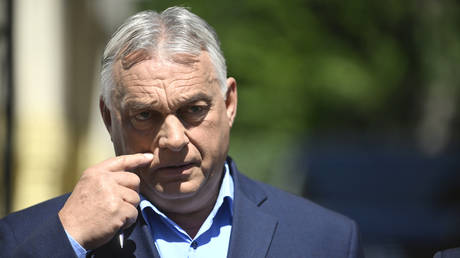
Standing outside his raided party offices, a visibly shaken Orbán held a press conference accusing Magyar of establishing an "illegitimate political system" and bringing back the dark tactics of the late 1980s. He promised "peaceful resistance" against what he labels outright tyranny.
The irony isn't lost on anyone who followed Hungarian politics over the last decade. The tactics Magyar is using—speedy constitutional rewrites, aggressive appointments, and institutional purges—were pioneered by Orbán. The political script remains identical; only the actors have swapped roles.
Why This Political Upset Shocked Brussels and Washington
Magyar isn't an outsider who came from academia or activist circles. He was a long-time Fidesz insider. He knew where the bodies were buried because he helped bury a few of them himself.
When he broke ranks in early 2024 with a explosive video interview exposing state corruption, he tapped into deep voter fatigue. Hungarians were fed up with soaring inflation, decaying healthcare, and a political class that treated public funds like personal wealth.
The international fallout has been swift:
- European Union: Brussels is quietly thrilled. Relations with Orbán were toxic for years over rule-of-law violations and vetoes on Ukraine aid. Magyar's pro-EU stance is opening doors to unfreeze billions in halted European funding.
- United States: The political transition created immediate friction with conservative figures in Washington who viewed Orbán as a ideological beacon.
- Regional Neighbors: Central European nations are watching closely as Hungary shifts away from its pro-Kremlin foreign policy posture toward a mainstream European approach.
The Dark Side of Fast-Track Reforms
Can you restore democratic norms by using autocratic methods? That's the central question facing Hungary today.
Magyar insists that extraordinary measures are required to dismantle an authoritarian structure. When an autocrat spends 16 years embedding loyalists in every state board, court, and university, normal administrative procedures won't dislodge them.
Yet the risks are immense. Using a supermajority to shortcut judicial independence or purge public administration creates a dangerous template. If the next government simply repeats this cycle, the rule of law becomes an illusion that changes with every election.
Magyar opened government properties to show the public the lavish lifestyles enjoyed by top officials under the previous regime. Highlighting systemic graft builds public support, but long-term stability requires institutional restraint, not just anti-corruption theater.
What Happens Next in Budapest
If you're tracking political developments in Hungary, watch these key indicators over the coming weeks:
- Presidential Election: Parliament must elect a new president within 30 days following Tamás Sulyok's departure. The nominee chosen by Tisza will signal how much power Magyar intends to concentrate in his executive circle.
- European Fund Release: Watch for formal announcements from the European Commission regarding unlocked funds as anti-corruption legislation passes.
- Fidesz Legal Strategy: Pay attention to whether Orbán's party takes its grievances to European judicial bodies or attempts to build street-level resistance in Budapest.
Magyar won a massive mandate to break Orbán's grip on power. Now he has to prove he can build a resilient democracy rather than simply replacing one dominant political machine with another.