The global energy market just fractured, and the shockwaves landed straight on the rooftops of Manila. When the military conflict in the Middle East broke out in late February 2026, most analysts focused on oil tankers and stock indices. They missed the real story developing in Southeast Asia. The Philippines is currently leading a massive, chaotic sprint toward solar energy.
This isn't about saving the planet. It's about economic survival.
Between March and May 2026, the country imported a staggering $407 million worth of solar panels. That represents a 145 percent surge compared to the exact same period last year. For a developing nation navigating a severe national energy emergency, this level of spending is unprecedented. It marks a complete shift in how regular people view their power supply.
You can trace this entire panic back to the closing of the Strait of Hormuz. The Philippines depends heavily on imported crude oil and liquefied natural gas from the Middle East to run its grid. When those supply lines choked, local power costs exploded.
Climate nonprofit 350.org estimates that fuel price spikes drained over $600 million from Filipino consumers and businesses in the first 60 days of the conflict alone. People opened their monthly utility statements and saw numbers that simply didn't make sense. When your electricity bill doubles overnight, solar stops looking like an eco-friendly luxury. It becomes an emergency escape hatch.
The Brutal Reality of a Fragmented Grid
To understand why this rush is happening so violently in the Philippines, you have to look at how the country gets its power. It doesn't have a single, unified national grid. Instead, the nation is carved up into fragmented island networks. When global fuel markets twitch, these isolated systems feel the pain immediately.
Manila already suffered from some of the highest electricity rates in Asia long before the current crisis. The local pricing mechanism links retail power rates directly to international fossil fuel benchmarks. If coal or gas prices surge in Europe or the Middle East, a family in Quezon City pays for it on their next bill through automatic fuel cost adjustments.
Then came the rolling blackouts. State-owned utility structures and private distributors have struggled to keep the lights on as supply margins grew dangerously thin. The combination of unpredictable blackouts and predatory pricing pushed consumers to a breaking point.
Data from clean energy group New Energy Nexus highlights the sheer velocity of this shift. Before the war broke out, customer inquiries for residential solar sat at a modest 115 per month. By mid-April, that number cleared 450. Average weekly installations across surveyed solar firms jumped from roughly 29.5 to 68.6. That is a 170 percent increase in actual physical setups happening on roofs every single week.
Homeowners like Jaime Quemado in Manila represent the typical buyer driving this trend. He bought a rooftop system immediately after seeing his first post-war energy statement. He needed to escape the volatility. The sun shines constantly in the archipelago, making it a reliable asset when the grid fails.
The Bottleneck Nobody Wants to Talk About
This massive surge in demand has exposed deep structural flaws within the local solar ecosystem. Everyone wants panels, but getting them up and running is turning into a logistical nightmare.
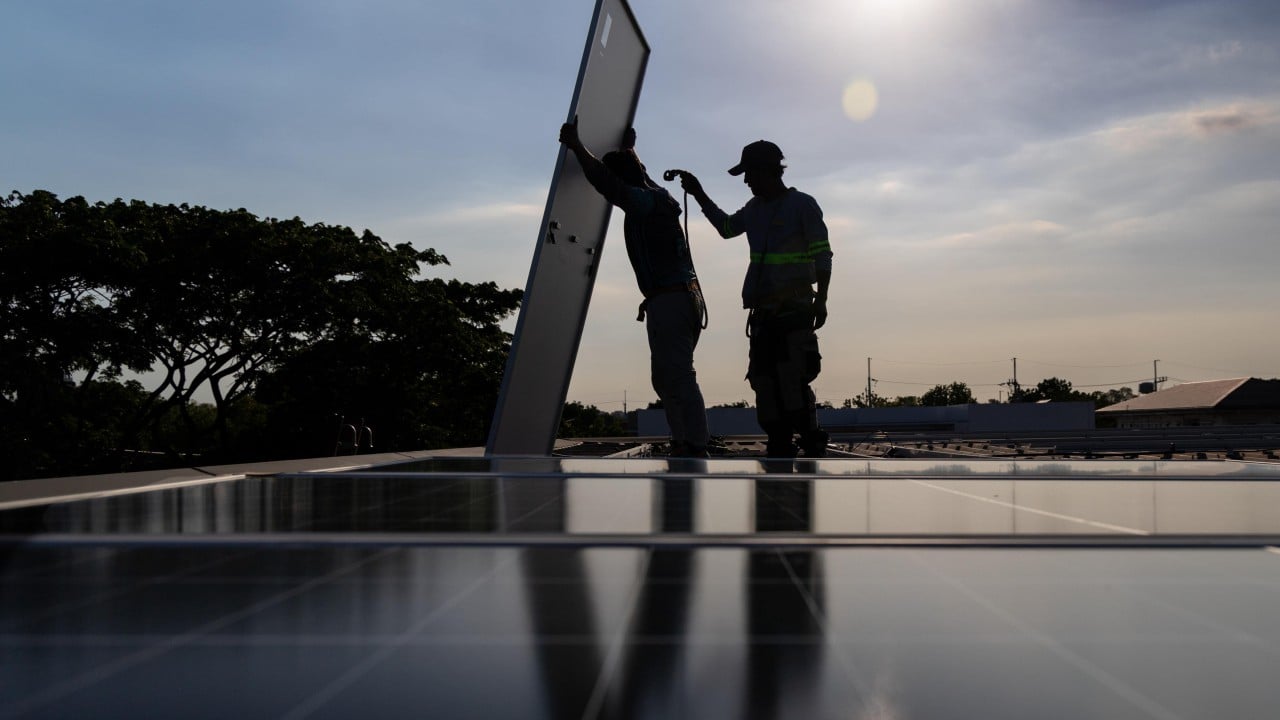
The industry is facing a severe shortage of qualified technical workers. It takes specialized engineering knowledge to safely install an 18-kilowatt system with 28 panels and heavy lithium-ion battery storage units. Right now, there aren't nearly enough certified technicians to handle the workload.
Smaller regional installation companies are getting crushed by their own success. Consider SPARC Solar, an installer operating in the province of Albay within the Bicol region. They recorded a 150 percent increase in customer inquiries since the crisis began. Yet, they couldn't complete a single new installation for weeks due to supply bottlenecks and an absolute lack of hands on deck.
Further south, an installer named 10KGDC in Bohol reported a backlog of 22 confirmed, fully-paid installation projects sitting frozen in a queue. The customers have the money, and the company has the intent. They just don't have the technicians to mount the brackets and wire the inverters.
The workforce gap has forced an unusual shift in the local job market. Hotel technicians, local electricians, agricultural workers, and even individuals in their 50s looking for a second career are frantically trying to get into solar training programs. The government has attempted to ease this by dangling tax exemptions for rooftop systems and expanding net metering protocols, but policy cannot instantly manufacture an experienced workforce.
Supply chain wild swings are making things even more complicated. While major Chinese manufacturers like LONGi and Dyness are pumping hardware into the country, shipping delays and local customs backlogs mean equipment prices change by the week. A quote given to a business owner on Monday might be completely invalid by Friday.
High Stakes Corporate and State Backing
While homeowners scramble for individual panels, the state is trying to fix the broader macro crisis through brute force. The Department of Energy, acting on directives from President Ferdinand R. Marcos Jr., is trying to fast-track 1.47 gigawatts of new renewable energy and storage capacity.
The government wants 22 major clean energy projects connected directly to the grid immediately to offset the loss of Middle Eastern gas. Solar photovoltaic installations dominate this emergency pipeline, making up about 1.28 gigawatts of the promised capacity. The rest is a mix of small hydro facilities, biomass plants, and wind farms.
Energy Secretary Sharon S. Garin has been blunt about the situation, calling the expansion an absolute national imperative. Every megawatt added to the grid reduces the country's exposure to volatile shipping lanes.
The scale of these projects is massive. The government recently cheered the connection of an initial 250 megawatts of solar power and 450 megawatt-hours of battery storage by MTerra Solar. This is part of a broader plan to build a 3.5-gigawatt solar network paired with 4.5 gigawatt-hours of battery storage. If completed, it will rank as one of the largest integrated solar projects on the planet.
But large-scale solar projects take years to build, clear land, and connect to transmission lines. They don't solve the immediate financial bleeding of a manufacturing plant or a suburban household facing a massive bill next month. That is why the rooftop market keeps exploding despite the lack of workers.
What to Do If You Are Transitioning to Solar Now
If you operate a business in the Philippines or own a home and want to join this solar migration, don't just buy the first system available. The current market is full of fly-by-night operations trying to cash in on the panic. You need to approach this with a cold, calculated strategy.
First, demand to see the certifications of the actual engineers doing the installation. Do not accept a verbal guarantee. Ask if they have handled high-voltage battery integration before. Poorly wired lithium batteries are a severe fire hazard, especially during intense tropical heatwaves.
Second, verify the warranty terms for your inverters and panels. Panels generally last 25 years, but the inverters change the power from direct current to alternating current and usually fail much sooner. Make sure the supplier has a local office in the Philippines to honor those warranties. If they disappear next year, your expensive system becomes a collection of useless glass and metal.
Third, look into the net metering program immediately. This setup allows you to sell your excess daytime electricity back to Meralco or your local electric cooperative. It drastically reduces your payback period, turning your roof into an active revenue source rather than just a cost-saving measure. Do the paperwork early because the approval process can take months due to bureaucracy.
The era of cheap, predictable fossil fuels is over for Southeast Asia. The Philippines isn't waiting around for the Middle East to find peace. The current spending boom is a chaotic, imperfect, and incredibly expensive lesson in self-reliance, but it is fundamentally rewriting the country's economic future one roof at a time.