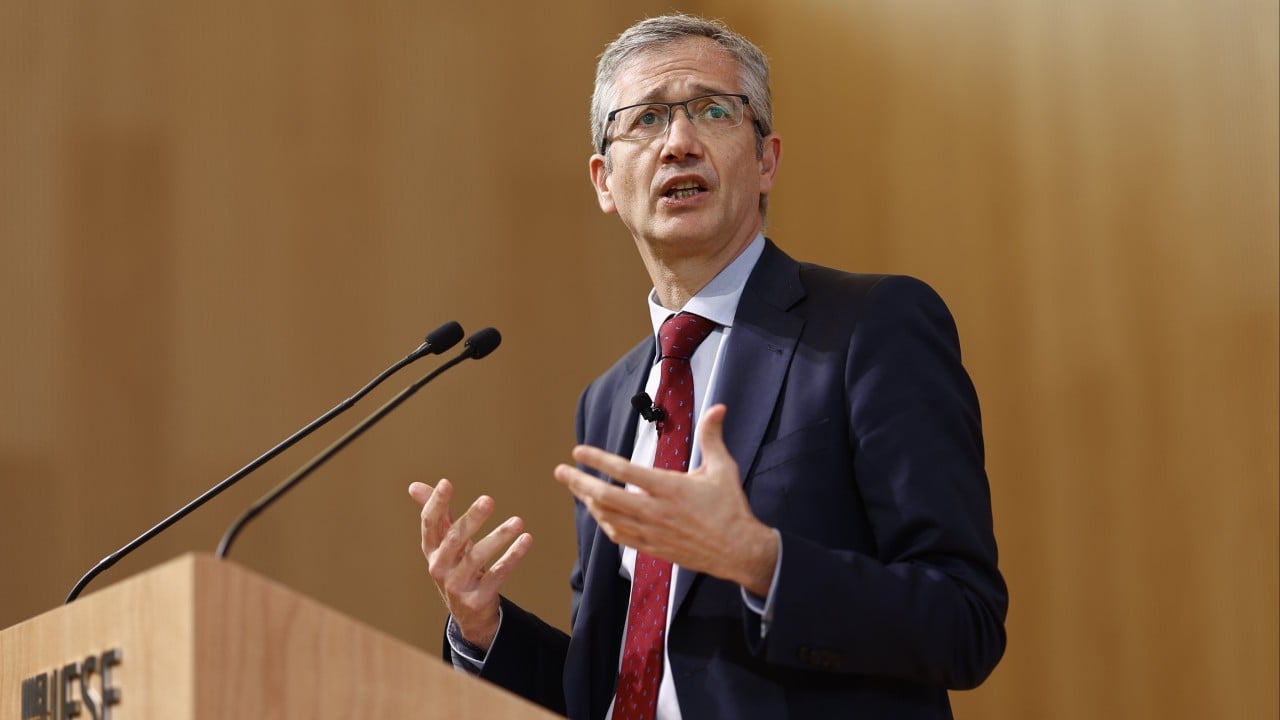
Eurozone leaders finally ended months of diplomatic horse-trading in Brussels on November 26, 2026. Their pick for the next European Central Bank president is Pablo Hernández de Cos, the former Bank of Spain governor and current general manager of the Bank for International Settlements.
He'll step in when Christine Lagarde exits early on February 7, 2027, serving a single, non-renewable eight-year term. If everything goes as planned, he'll be the first Spaniard to sit in the top chair at Frankfurt.
Let's be real. A headline calling him a simple "monetary dove" misses the whole point of what's happening in Europe right now. Energy shocks from the war in Iran have pushed eurozone inflation up to roughly 4%, double the ECB's 2% target. Meanwhile, heavily indebted governments—especially France—are sweating over borrowing costs while political pressure mounts from every angle.
How the Deal Came Together Behind Closed Doors
Basic news summaries treat this nomination like a neat coronation. It wasn't.
For weeks, rival camps jockeyed for leverage across three of the six seats on the ECB's Executive Board. Germany and France struck a broader package deal earlier in November that lined up Markus Brunnermeier (a German economist at Princeton) to replace chief economist Philip Lane, and Laurence Boone to take the seat opening up after Isabel Schnabel's departure.
The holdout was the Netherlands, which pushed former Dutch central bank chief Klaas Knot. At the Brussels meeting, Dutch Prime Minister Rob Jetten stepped aside and backed Hernández de Cos, giving him broad backing across the 21 eurozone countries. Formal sign-offs from ambassadors, the European Parliament, the ECB Governing Council, and the December European Council summit still sit on the calendar, though insiders widely view those steps as formalities.
Timing played a huge role too. Lagarde announced her early departure—months before her original term would have ended—giving current EU leaders a clear window to lock in a successor before French political shifts could complicate the math.
Why His Reputation as a "Dove" Is Misleading
Anyone who has watched monetary policy desks in Frankfurt and Madrid knows how lazy labels get. During his 2018–2024 stint as Bank of Spain governor and Governing Council member, Hernández de Cos often favored patience and caution when tightening policy so growth wouldn't get crushed unnecessarily.
Yet calling him purely dovish today ignores two hard realities:
- Inflation isn't whispering right now. With inflation running near 4% due to energy-driven price pressures tied to the conflict with Iran, even a centrist or mildly dovish central banker faces pressure to keep rates elevated or hike again in the near term.
- One president doesn't set rates alone. Monetary policy decisions belong to the full Governing Council, where national governors and executive board members debate and vote. A president shapes the agenda and communication, not unilateral rate cuts.
In practice, Hernández de Cos is a data-driven institutionalist who has seen multiple storms—Spain's banking crisis, the pandemic shock, and the post-pandemic inflation surge. Analysts like Carsten Brzeski at ING have pointed out something unusual too: unlike most predecessors, Hernández de Cos previously worked inside the ECB staff ranks before rising to policymaking. He knows the machinery from the inside out.
Debt, Politics, and the France Test
What makes this appointment high-stakes for markets isn't just inflation. It's fiscal strain mixed with domestic politics.
Several eurozone nations are carrying heavy debt loads just as borrowing costs bite harder. France is front and center, with political voices like Marine Le Pen calling for easier interest rate burdens while market watchers warn that ECB backstops or bond support won't be a free pass without fiscal discipline.
If you've ever traded European rates or managed corporate treasury exposure across borders, you know how quickly bond spreads widen when politicians demand cheap money while central bankers try to protect credibility. A central bank that looks too eager to rescue high-debt governments risks unanchoring inflation expectations; a central bank that ignores financial stability risks market turmoil.
Bringing in Markus Brunnermeier as chief economist and Laurence Boone on the executive board adds serious analytical and market firepower to that balancing act. Still, the president takes the heat when bond yields jump or households complain about higher mortgage rates.
What This Means for Investors, Businesses, and Households
If you follow European markets or run a business with euro exposure, don't treat February 2027 like a light switch flipping overnight. Policy continuity matters more in the short run than national flags.
Here is what you can actually do next to stay ahead of the transition:
- Track December's formal council ratification and near-term ECB meetings. Watch how the Governing Council handles inflation around 4% and whether communication signals prolonged restraint or further hikes. You can monitor official council announcements directly on the European Council press portal.
- Audit your floating-rate and sovereign-spread exposure. If you borrow in euros, hold sovereign or bank debt, or price multi-year contracts in EUR, stress-test your cash flows against rates staying higher for longer rather than betting on rapid cuts.
- Separate political noise from central bank mandates. Campaign rhetoric around interest rates makes great headlines, especially in France, but the ECB's legal mandate centers on price stability. Focus on inflation prints, wage data, and energy prices rather than political soundbites.
- Watch the full executive board turnover. A new president plus new faces for chief economist and market operations means fresh voices around the table between January and May 2027. Read their early speeches closely—that's where subtle shifts in tone show up first.