Poland just signed a five-year deal worth around $300 million to bring Palantir's Maven Smart System to its armed forces, running under the local codename Saturn. In Warsaw, Defense Minister Władysław Kosiniak-Kamysz framed the move as a turning point for military command. Elsewhere in Western Europe, officials are busy talking about building homegrown alternatives and cutting back on American defense software.
Warsaw didn't care about the continental mood ring.
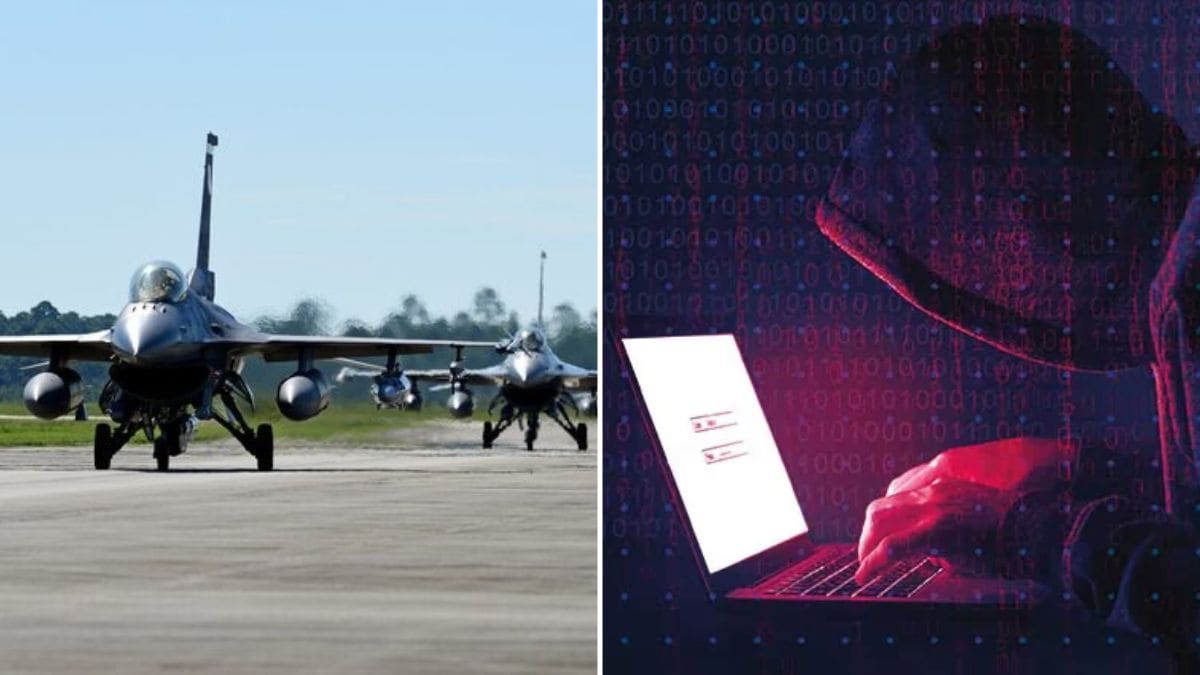
When Russian missiles and drones keep testing NATO's eastern flank—and three Russian missiles landed on Polish soil the week before the late-November 2026 signing ceremony—speed matters more than philosophical purity. Poland already spends heavily on defense relative to its economy and spent years buying hardware from Washington. Pairing physical firepower with AI-driven data fusion is the logical next step, even if it triggers loud pushback at home and awkward looks from Brussels.
What Saturn Actually Does on the Battlefield
Strip away the hype around "battlefield AI" and you're looking at a data plumbing and decision-support problem. Modern commanders drown in feeds. Drones send video, radars ping targets, satellites snap overhead imagery, and reconnaissance units file reports from the ground. Human staff can't stitch all of that together fast enough when incoming threats move in minutes.
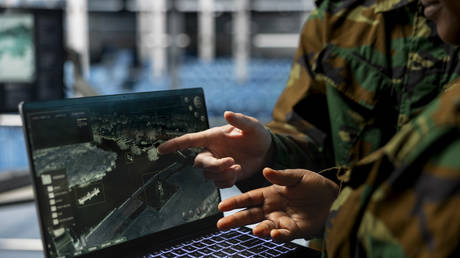
Saturn—Poland's adaptation of Palantir's Maven Smart System—is built to fuse those scattered inputs into a single operational picture. Based on reporting from the defense ministry's Polska Zbrojna portal and defense outlets covering the rollout, the software is designed to handle several core tasks:
- Sensor fusion: Combining feeds from drones, satellites, radars, and reconnaissance platforms so units see the same battlespace.
- Object detection and classification: Using machine learning models to spot and sort military objects across imagery and sensor streams.
- Targeting and response options: Helping staff speed up targeting workflows and weigh possible military responses against available troops and gear.
- Dual-network operation: Running across both classified military infrastructure and secure unclassified environments.
Polish officials stress that human commanders keep final decision authority. That's standard doctrine for NATO militaries, though in practice, software that ranks options and highlights targets shapes what humans notice first. Good tools don't replace judgment; they compress the time between spotting a threat and acting on it.
Why Warsaw Broke With the European AI Crowd
Timing makes this contract stand out. Across Europe, defense planners have grown anxious about relying too heavily on U.S. tech giants for sensitive command software. France and Germany have signaled ambitions around European alternatives, Germany has been evaluating dozens of AI tools for rollout starting in 2027, and the Netherlands has pushed to replace Palantir software within two years.
Poland went the other way. Why?
First, interoperability and maturity. The U.S. military already uses Maven, NATO moved to adopt its own version in March 2025, and Ukraine has relied on Palantir capabilities during its war with Russia. When your forces operate alongside American and NATO units on the eastern border, speaking the same software language beats waiting years for a hypothetical European rival to mature.
Second, procurement pragmatism. Kosiniak-Kamysz has argued that Warsaw buys Polish products whenever possible, and turns to the best global option when domestic capabilities aren't there yet. That lines up with Poland's broader defense build-up—between 2021 and 2025 it ranked as NATO's top arms importer, with roughly 44% of that equipment coming from the United States. Just days before the Palantir signing, Warsaw and Washington also inked a bilateral defense research, development, testing, and evaluation agreement after 17 years of talks.
Third, hands-on vetting. Polish cooperation with Palantir didn't start out of nowhere. Warsaw registered a local subsidiary years ago, signed a cybersecurity cooperation memorandum in December 2024, and followed up with a letter of intent in October 2025 after testing and demonstrations that officials trace back to December 2023. Military analysts and defense planners often point out that flashy software demos fail fast if systems can't survive real field exercises and strict security checks.
The Sovereignty Catch Nobody Should Ignore
Whenever a government buys U.S. defense AI, the same hard question pops up: Who actually controls the data?
Polish leaders have tried to shut that worry down hard. According to defense ministry statements and reporting from Warsaw, Poland retains full ownership of its data, with Palantir getting neither encryption keys nor remote access to Polish military data, while classified data stays on military infrastructure and ministry cyber teams log and monitor activity.
Honestly, those technical guardrails are necessary—and still don't end the argument.
Critics inside Poland haven't stayed quiet. Activist groups like Nasze Dane organized street protests in Warsaw in November 2026 demanding an open risk audit, a public tender, and parliamentary debate. Poland's human rights ombudsman, Sylwia Gregorczyk-Abram, pressed the ministry in October on privacy risks and potential U.S. reach under laws like the CLOUD Act. Even Digital Affairs Minister Krzysztof Gawkowski called for an audit ahead of signing.
Let's be candid about what's happening here. Even if a vendor doesn't hold encryption keys on day one, long-term dependence on proprietary software creates real switching costs. Updates, custom integrations, and model tuning can bind an army to a supplier for a decade or more. Furthermore, public contract details in defense deals aren't always disclosed in full—while several reports cite a roughly $300 million five-year price tag, the ministry itself has been selective about financial disclosure.
That tension isn't unique to Poland. Every modern military faces a trade-off between buying battle-tested commercial AI today and building sovereign, auditable alternatives tomorrow. Pretending there's zero risk is naive; pretending you can fight modern drone and missile threats with spreadsheets and slow manual workflows is worse.
What Competitor Coverage Often Misses
Quick news briefs on this deal tend to treat it like a binary scoreboard: either Poland is a smart American ally or a reckless sellout. Both takes miss the messier reality on the ground.
- Software is only half the equation: Buying Maven/Saturn doesn't automatically fix sensor gaps, radio jamming, or bad data hygiene. An AI model fed noisy or incomplete inputs just produces fast, confident clutter.
- Allied alignment cuts two ways: Using software compatible with U.S. and NATO commands boosts joint operations, yet it also ties Polish workflows tightly to American defense ecosystems.
- Domestic politics shape procurement: Defense ministers don't operate in a vacuum. Balancing border security urgency against coalition dynamics, ombudsman inquiries, and civil-society scrutiny is part of the job in Warsaw.
Practical Next Steps for Tracking Defense AI Deals
If you're following defense tech, European security policy, or procurement trends—whether as an analyst, founder, or policy watcher—don't stop at headline announcements. Look closely at what comes next:
- Watch the integration milestones: Track how quickly Saturn moves from initial contract signing to actual division-level workflows and joint NATO exercises, rather than treating a signed deal as instant operational readiness.
- Check oversight and audit responses: Follow how the Polish Ministry of National Defense answers questions from the ombudsman, lawmakers, and domestic cyber oversight bodies regarding data governance and legal exposure.
- Compare European alternatives over time: Keep an eye on whether France, Germany, and the Netherlands deliver usable sovereign platforms on schedule—or end up keeping hybrid U.S. and European stacks because timelines slip.
- Look at local industrial participation: Pay attention to how domestic firms, research institutes, and Polish subsidiaries participate in training, maintenance, and follow-on R&D under agreements like the new U.S.–Poland defense research pact.