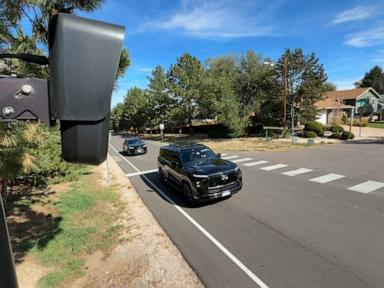
You drive down a public road, run an errand, and head home. You probably assume nobody is keeping a permanent, searchable log of your daily routine. You'd be wrong. Automated license plate readers and private camera networks like Flock Safety are quietly mapping the movements of millions of drivers every single day. And now, citizens are fighting back in federal court.
When high-tech surveillance systems enter local neighborhoods, they bring a heavy price tag: your personal privacy. Recent federal civil rights lawsuits, including a high-profile case filed by a Denver-area woman named Chrisanna Elser, highlight how police departments use these tracking tools not just to catch criminals, but sometimes to build flawed cases against everyday people. Elser filed a federal lawsuit alleging that Columbine Valley police used Flock cameras to track her movements for nearly a month before hitting her with a wrongful theft charge over a minor package dispute.
It isn't just isolated incidents of bad police work driving these legal battles. Across the country, civil rights groups and individual citizens are challenging the constitutionality of mass automated license plate recognition (ALPR) dragnets. From courtrooms in California to municipal challenges in Wisconsin, the central question is whether constant digital tracking on public streets violates the Fourth Amendment.
The Reality of Automated License Plate Readers
Law enforcement agencies love license plate tracking tech because it works with brutal efficiency. Cameras mounted at intersections, on patrol cars, and near commercial hubs capture every passing vehicle. They record the timestamp, GPS coordinates, license plate number, and even vehicle characteristics like color, make, and roof racks.
This data feeds into massive, searchable databases. Police can pull up a vehicle's entire location history over a period of weeks or months. They can run queries to find every car that passed a specific street corner at a specific hour.
Proponents argue these tools are indispensable for recovering stolen vehicles, locating missing persons, and tracking down suspects involved in violent crimes. But there is a massive gap between catching a fleeing felon and logging the daily commutes of teachers, delivery drivers, and teenagers heading to school. When every car on the road is treated like a suspect vehicle, the boundary between public observation and mass surveillance completely disappears.
When Police Abuse Tracking Systems
The risk multiplies when the people holding the keys to the database decide to use it for personal reasons. Law enforcement officers have repeatedly been caught exploiting automated camera systems to stalk ex-partners, romantic interests, and neighbors.
In North Carolina, an officer was arrested and charged after internal audits revealed she accessed a Flock camera system dozens of times to track her boyfriend's ex-wife. In other states, police chiefs and patrol officers have used automated plate readers to keep tabs on estranged spouses. While some departments catch these violations through routine 30-day internal audits, many others only uncover abuses when victims happen to check their own plate status online or file formal complaints.
When officers can quietly track anyone's vehicle history without a warrant, the technology stops being a crime-fighting asset and turns into an instrument for harassment.
The Legal Battle Lines in 2026
Courts are currently wrestling with how constitutional law applies to modern digital tracking. Municipalities often lean on older legal precedents stating that drivers have no reasonable expectation of privacy while traveling on public streets. For instance, a California judge recently dismissed a challenge against San Jose’s network of over 500 automated license plate readers, ruling that public street travel doesn't trigger Fourth Amendment protections under current state law.
Yet, plaintiffs in federal lawsuits are arguing that long-term digital aggregation changes the equation entirely. Spotting a car on a street corner is one thing. Compiling a continuous, month-long digital dossier of every place a citizen drives creates a comprehensive map of their personal life, medical visits, political affiliations, and religious gatherings.
Civil rights attorneys are pushing for strict statutory guardrails, demanding that law enforcement secure a judicial warrant before accessing historical location databases. Without mandatory warrants, local police departments can bypass constitutional checks and build warrantless tracking profiles on ordinary citizens who haven't committed any crime.
What You Can Do About Neighborhood Surveillance
If your local city council or police department is considering installing automated camera networks, you don't have to stay silent. Protecting your privacy requires active engagement before the hardware goes up on your street corners.
- Attend local council meetings: Police departments often acquire camera systems through federal grants or corporate pilot programs without a public vote. Check your local government agendas for discussions regarding surveillance tech contracts.
- Demand strict data retention limits: If cameras are deployed, push for local ordinances that require police to delete unflagged license plate data after a few days instead of storing it for months or years.
- Support warrant requirements: Advocate for local or state policies that explicitly forbid warrantless database queries for routine civil or minor infractions.
- Audit your local policies: Ask your city representatives how often police camera access logs are audited and whether independent oversight committees review the system usage.
Mass digital tracking won't go away on its own. As lawsuits continue to challenge unchecked police surveillance, holding agencies accountable starts with understanding how your local data is being collected, stored, and used.


