Tradition has long dictated how the Holy See handles medical emergencies. Past pontiffs faced severe health battles behind closed doors while spokespersons issued overly optimistic, vague statements designed to project an image of ironclad vigor. Remember John Paul II's harrowing battles with respiratory infections and Parkinson's disease. Officials routinely glossed over grim realities to maintain a facade of absolute papal resilience.
Pope Leo XIV just shattered that playbook. You might also find this similar coverage interesting: Why The Coxs Bazar Resort Fire Exposes A Fatal Blind Spot In Coastal Tourism.
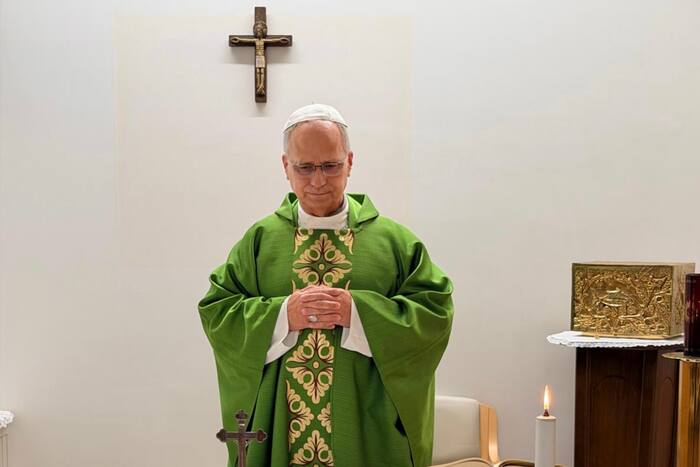
History's first American pontiff didn't hide his lung cancer diagnosis or leave the announcement to clerical handlers. He addressed the faithful directly during his Sunday noon blessing, detailing the need for surgery to remove a lung nodule. When recovery began at the Agostino Gemelli Polyclinic in Rome, the daily medical bulletins weren't drafted by tight-lipped Vatican bureaucrats. Instead, Dr. Luigi Carbone and thoracic surgery chief Dr. Stefano Margaritora signed off on transparent, clinical updates.
That shift represents a stark departure from centuries of institutional opacity. It mirrors a structured, corporate approach to management that prioritizes expert consultation and clear accountability. As extensively documented in detailed coverage by The New York Times, the implications are notable.
The Shift From Solo Rule to Systems Management
Previous leaders operated with a distinct style of solitary authority. Pope Francis governed as a hands-on strategist who frequently bypassed traditional communication channels, yet he routinely resisted medical advice for his own deteriorating mobility and respiratory ailments. He famously avoided knee surgery and delayed hospital visits, projecting a combative individualism that spurned routine healthcare protocols.
Leo operates differently. Trained with a background in mathematics, the current pontiff approaches administration through structural logic and institutional best practices. Observers note that his governance relies heavily on delegation, technical expertise, and systematic evaluation rather than personal endurance.
You can see this shift across recent Vatican milestones. When the Holy See rolled out its official document addressing artificial intelligence, the presentation broke convention. Rather than keeping the conversation locked inside a circle of senior prelates, Leo brought diverse voices to the stage. Lay female theologians from Britain and Congo shared the spotlight alongside tech sector leadership.
That inclusive methodology dismantles old clerical hierarchies. It signals an understanding that modern institutions survive by drawing on specialized talent from outside traditional walls.
Managing Diplomacy From a Hospital Bed
A medical crisis hasn't slowed the operational tempo of this papacy. While recovering from lung surgery at Gemelli, Leo executed high-stakes diplomatic maneuvers that proved he remains firmly in control.
He initiated a direct phone call with Russian President Vladimir Putin to address humanitarian conditions in Oleshky, pushing for a localized ceasefire to allow food deliveries, medical aid, and civilian evacuation. By handling vital international affairs straight from a hospital ward, Leo demonstrated that administrative command doesn't require physical invulnerability.
At the same time, this assertive leadership style has highlighted internal friction within the Curia. Cardinal Pietro Parolin, the veteran secretary of state and a major figure from the previous pontificate, publicly suggested that the papacy might require adjustment given the health diagnosis. Observers noted that Parolin's absence from the roster of visiting prelates at the hospital underscored ongoing administrative realignments.
Why Transparent Leadership Matters for the Church
Institutions survive by adapting to public expectations of accountability. For decades, the Vatican treated health disclosures as a public relations challenge to be managed rather than a factual reality to be shared.
By letting medical professionals speak directly to the public, Leo removes the guesswork and builds institutional trust. He treats his own health recovery as a matter of professional protocol rather than an exercise in mystical endurance.
Governance isn't about projecting superhuman perfection. It's about setting clear systems, trusting specialized experts, and keeping the machinery running even when the leader steps away for surgery.
Stop expecting religious institutions to remain frozen in medieval habits. The Vatican is learning what modern administration looks like, and the change is happening from the top down.