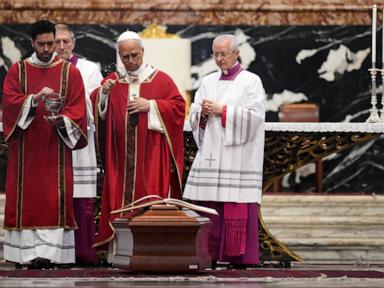
The Vatican press office usually hates it when foreign heads of state jump the gun on travel announcements. Yet, inside the Apostolic Library, interim Peruvian President José María Balcázar apparently got a pass. Following a massive two-hour private audience with Pope Leo XIV, Balcázar walked out and dropped a logistical bombshell to reporters: the Pope is headed back to Peru for a sprawling ten-day tour during the first half of November 2026.
While official Vatican confirmation is still pending, this isn't standard diplomatic posturing. This is personal. Leo XIV isn’t just making a routine papal visit to South America; he is going home.
The Citizen Pope Returns
To understand why this specific announcement is causing waves across Lima and Rome, you have to look at the man behind the white cassock. Born Robert Prevost in Chicago, the current pontiff isn’t an outsider to the Andean nation. He spent decades on the ground there as an Augustinian missionary and later as the Bishop of Chiclayo.
He didn't just work there. He became a Peruvian citizen in 2015.
When he was elected to succeed Pope Francis, his first address to the global church included an explicit, emotional shout-out to his "beloved Diocese of Chiclayo." He prays daily before an image of the Señor de los Milagros (Lord of Miracles), Peru's most revered religious icon.
Pope Leo XIV's Peru Footprint:
• 1985–1986: Missionary work in Chulucanas, Piura
• 1988–1999: Ministry and leadership in Trujillo
• 2014–2023: Bishop and Apostolic Administrator of Chiclayo
• 2015: Granted official Peruvian citizenship
This deep history is why the proposed itinerary looks less like a sanitized diplomatic route and more like a grueling, nostalgic trek across Peru's geographic divides.
Five Cities and an Empty Helicopter Offer
According to Balcázar, the current draft of the journey kicks off around November 10, 2026, and spans at least five major hubs:
- Lima: The political and historical epicenter.
- Chiclayo: The northern coastal city where Leo lived and served for nearly a decade.
- Piura: Another northern territory deeply rooted in his early missionary days.
- Pucallpa: A bustling port city deep in the Peruvian Amazon.
- Cusco: The high-altitude heartland of ancient Incan and modern Quechua culture.
Balcázar told local radio station RPP that he offered the 78-year-old pontiff a government helicopter to zip into isolated indigenous communities like Incahuasi and Cañaris—impoverished, Quechua-speaking regions Leo knows intimately.
Whether the Pope’s advanced security detail and medical team actually allow a high-altitude helicopter tour remains to be seen. The Vatican’s advanced flight planning teams are notorious for stripping back ambitious presidential itineraries to protect the pontiff's physical stamina.
Politics, Cuisine, and Artificial Intelligence
A two-hour meeting between a pope and a president is exceptionally long. Most official state visits clock in under forty-five minutes. According to sources close to the Peruvian delegation, the length of the meeting was fueled by long-standing personal acquaintance—Balcázar serves as a congressman for Lambayeque, the exact region where Leo used to be bishop.
They didn't just stick to pleasantries over Chiclayan cuisine. The timing of the meeting overlapped directly with a tense, razor-thin vote count back home following the second round of Peru's presidential elections.
"The Pope is concerned that we are still in the middle of this vote," Balcázar admitted to journalists outside St. Peter's.
📖 Related: sarasota police investigating drowning
The two reportedly spent a significant portion of the audience discussing the smooth transition of power. Leo stressed the absolute necessity for an orderly handoff and for the losing faction to explicitly recognize the official winner when the final proclamation drops in mid-July.
They also combed through the pages of Magnifica Humanitas, the Pope’s encyclical published on May 25, 2026. The document takes a hard, critical stance on the intersection of human rights and artificial intelligence, warning world leaders against letting automated systems hollow out social cohesion. For Peru, a country currently grappling with systemic corruption, migration surges, and illegal gold mining networks in the Amazon, the Pope's focus on material human rights over "lyrical declarations" hits incredibly close to home.
The Economic Ripple: Enter the Leo Route
While the spiritual implications are massive for a country that is roughly 75% Catholic, the economic machinery is already spinning. The Ministry of Trade and Tourism (MINCETUR) has been quietly preparing for this since early February, when whispers of a 2026 tour first surfaced.
Foreign Minister Hugo de Zela and Tourism Minister Teresa Mera have officially launched a multi-sector strategy dubbed The Leo Route (La Ruta de León).
The project aims to package 38 specific cultural and religious sites across Lambayeque, Piura, La Libertad, and Callao into a permanent tourism corridor. A permanent museum exhibition titled "Along the Paths of Leo XIV" has already opened its doors in Chiclayo to draw in travelers before the November crowds arrive. Religious tourism accounts for roughly 20% of global international travel, and Peru is betting heavily that Leo’s unique status as a native son will trigger a sustained travel boom long after the papal plane returns to Rome.
What Happens Next
Don't buy plane tickets to Chiclayo just yet. While Peruvian officials are operating at a 100% certainty level, the Holy See operates on its own timeline.
Expect the official Vatican Gendarmerie and the central planning committee to land in Lima by late August to audit security frameworks, medical access, and airport logistics. Only after their sign-off will Rome publish the definitive, hour-by-hour itinerary. Furthermore, the trip is highly likely to be expanded into a broader Southern Cone tour, with subsequent stops in Uruguay and Argentina planned for late November and early December.
Keep a close eye on the official Peruvian Episcopal Conference releases over the next six weeks. If you are planning to attend the public masses in Lima or Chiclayo, expect regional registration portals to open via local dioceses shortly after the official winner of the presidential election is ratified in July.