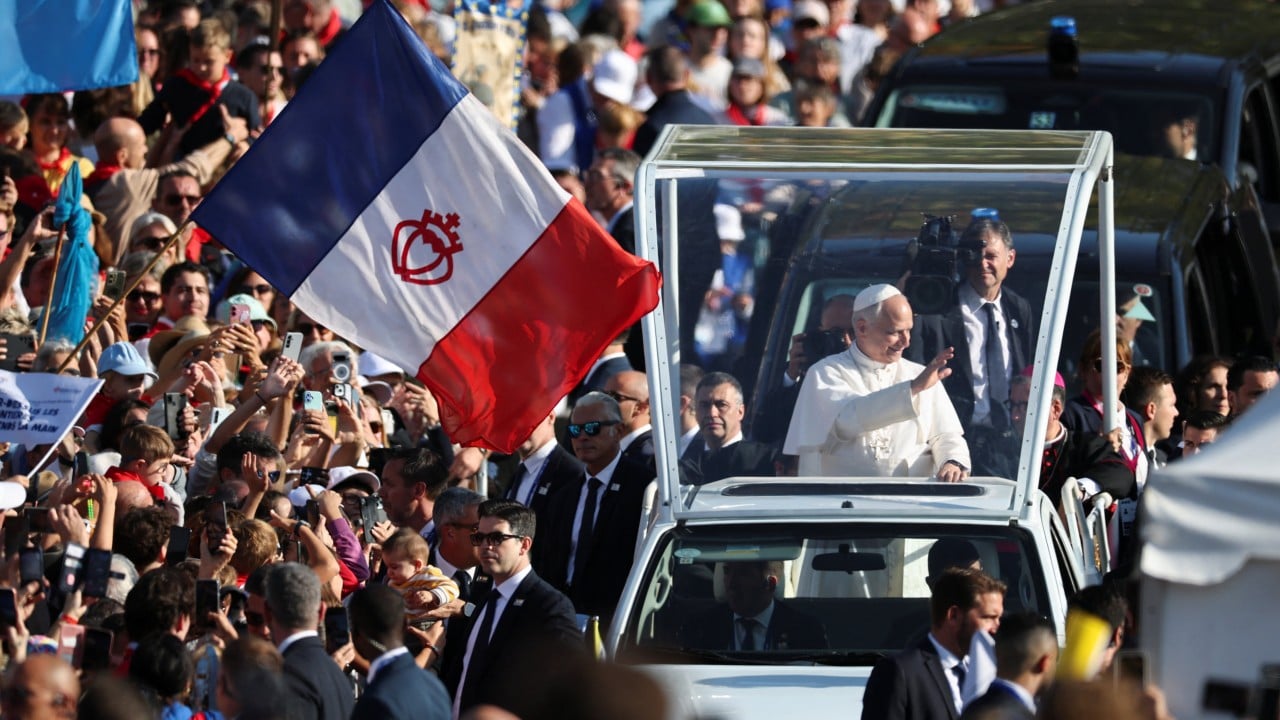
Pope Leo XIV spent his Sunday morning in Lourdes behind closed doors, sitting down with seven survivors of clerical sex abuse. It is the kind of high-stakes symbolic gesture the Vatican relies on when its back is against the wall. Meanwhile, just months away from a turbulent presidential election where the far-right is surging and immigration dominates every headline, the pontiff used his platform to pray for "wise and generous leaders" in France.
If you look past the pomp of the massive open-air masses in Paris and the historic pilgrimage sites, a sharper reality emerges. Survivors aren't buying empty empathy anymore. They want institutional accountability. And as French voters prepare to head to the polls with the political landscape fracturing, the intersection of church trauma and state politics reveals a nation grappling with its moral compass.
The Weight of the Lourdes Meeting
Let's be honest about closed-door meetings. They protect institutions just as much as they validate victims.
During his four-day swing through France—the first papal visit to the country in nearly twenty years—Leo met privately with a small group chosen to represent decades of systemic failure. Among them was a former student from the infamous Notre-Dame de Bétharram boarding school, a site central to horrifying allegations spanning generations.
Yet, independent advocacy groups and sociological experts have pointed out a glaring flaw. The Vatican and local bishops handpicked the participants rather than letting survivor networks run an open selection process. Critics call it controlled damage control. When an institution accused of covering up decades of trauma gets to curate who speaks truth to power, the optics are bound to feel hollow.
A landmark 2021 independent report estimated that roughly 330,000 children were abused within the French Catholic Church over seven decades. Seven people in a room in Lourdes cannot wash away a statistical abyss of that scale.
Politics, Elections, and the Search for Wise Leaders
While dealing with the fallout of the abuse crisis, Leo didn't shy away from stepping into France's domestic political arena. With the country sitting just seven months away from choosing a successor to President Emmanuel Macron, political heavyweights—including far-right leader Marine Le Pen—were spotted lingering around the edges of the papal events.
When the pope prayed at the Grotto of Massabielle in Lourdes, his plea for leaders "eager to serve the common good" and rejecting the "mentality of war" felt like a thinly veiled rebuke of the nationalist, anti-immigrant rhetoric currently flooding French television networks.
France is fiercely secular, yet its Catholic roots run deep. Politicians know this. They show up to these events because Catholic voters represent a massive bloc. But invoking moral leadership sounds rich coming from an institution that spent generations shuffling predators between parishes.
What Happens Next
Words of compassion expired years ago. Alain Esquerre, a spokesperson for survivor groups, stated clearly that symbolic gestures are no longer enough. Opening secret archives, enforcing transparent independent oversight, and stripping away canonical protections for abusers are the only metrics that matter now.
If you are following how massive institutions handle internal corruption, keep your eyes on whether these closed-door meetings translate into open records. Until church archives are cracked wide open without ecclesiastical immunity, meetings in Lourdes remain nothing more than theater.