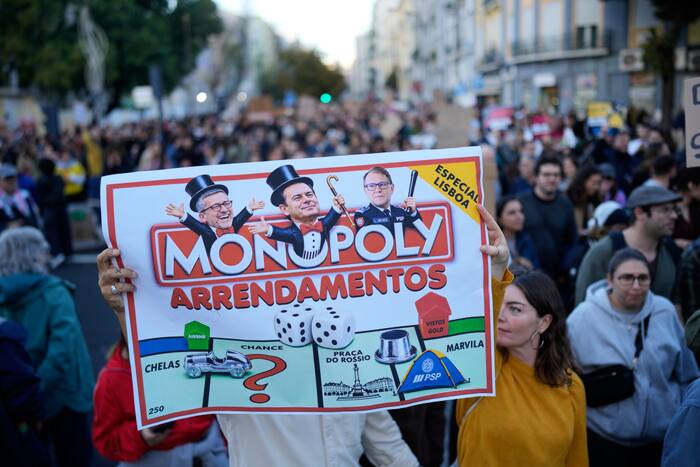
You can't walk down a street in Lisbon or Porto right now without tripping over the raw frustration of an entire generation priced out of their own country. Tens of thousands of people are flooding Portuguese streets, and it's not a drill. It’s a full-scale social rebellion against a housing market that has completely uncoupled from reality.
If you look at the raw numbers, the anger makes sense. House prices nationwide have jumped by nearly 20% in a single year according to government figures, while long-term rental costs have skyrocketed by 68% since 2020. In cities like Lisbon and Porto, cumulative increases over the last decade sit well above 150%. Local wages haven't budged to match that trajectory. When prime minister Luís Montenegro notoriously told housing activists "don't be selfish"—while owning dozens of properties himself—he ignited a powder keg.
The Anatomy of a Breaking Point
How did it get this bad? A cocktail of golden visas, foreign investment funds buying up residential blocks, an explosion of short-term tourist rentals, and an influx of digital nomads transformed sunny Portugal into an elite playground.
For locals, the math is brutal. An average monthly salary barely covers a one-bedroom apartment in the city center anymore. Families who have lived in neighborhoods like Alfama or Baixa for generations are receiving eviction notices or facing exponential rent hikes. They are being pushed to the urban fringes, spending hours commuting just to serve the tourism industry that displaced them.
The state's response hasn't helped calm the waters. Police interventions at protest camps in Rossio Square and near city halls have turned violent, resulting in dozens of injuries and arrests. Lawyers and human rights groups have condemned the heavy-handed tactics, creating a dual crisis: a battle for basic shelter and a battle for civil liberties.
What the Government Claims vs. Reality
The administration points to its official housing strategies—promising thousands of newly constructed units and tinkering with tax incentives for new builds. But protesters aren't buying the PR. Construction takes years. People need roofs over their heads now.
Grassroots coalitions like Casa para Viver are pushing past empty political promises. Their demands are clear and aggressive:
- Immediate caps on surging rental prices.
- A hard clampdown on short-term holiday rentals swallowing residential housing stock.
- Restrictions preventing real estate investment funds from hoarding residential property.
- Stricter legal protections preventing arbitrary tenant evictions.
President António José Seguro has started convening advisory councils and meeting with demonstrators, acknowledging the pressure. But dialogue without sweeping legislative reform is just noise.
Where This Goes From Here
Portugal is a cautionary tale for any desirable global destination. When you optimize your entire economy for tourism and foreign capital without protecting domestic residents, the social contract snaps.
The protests aren't slowing down. They are morphing into nationwide mobilizations, localized rent strikes, and sustained political friction. If you're watching European real estate trends, pay close attention to Lisbon. What happens next on these Atlantic shores will dictate how other tourist-heavy economies handle the global housing affordability crunch.
Portugal Housing Protests | Thousands Protest Rising Rents, Demand Affordable Homes
This video captures the scale and raw energy of the demonstrations unfolding across Lisbon and Porto as residents demand immediate intervention in the housing market.