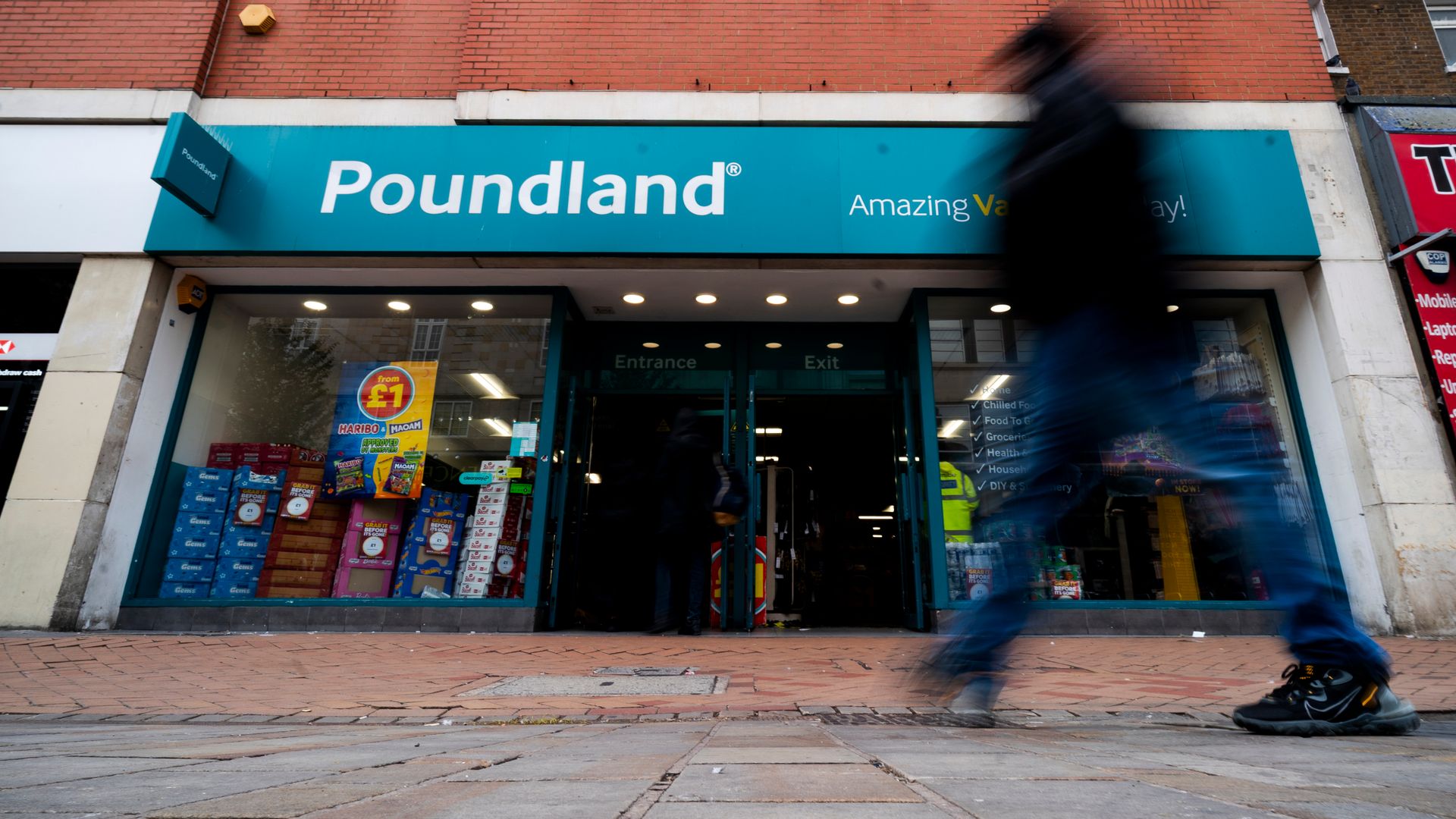
Poundland is fighting for survival again. That's not a metaphor, and it's not a distant threat.
Bosses at the discount retailer have gone back to government ministers warning of a fresh funding squeeze as the clock ticks down on a rescue deal. Around 600 stores and roughly 11,000 jobs sit on a knife-edge, with a second notice of intention to appoint administrators extending its breathing room toward late November 2026. If no credible buyer steps up in time, administration looms—and with it, the very real risk that a staple of British high streets breaks apart or shuts down large chunks of its estate.
How did a brand with decades of recognition end up pleading for liquidity while ministers weigh what the state can actually do?
The Funding Squeeze Behind the Headlines
When you hear a retailer warn of a funding squeeze, it's easy to picture an empty bank account and a simple cash crunch. Retail distress is rarely that tidy.
Often, the squeeze isn't just about whether a business can turn a profit on a good week. It's about working capital timing, lender restrictions, debt terms, and who holds the keys to cash when suppliers want payment up front or on tighter terms.
In Poundland's case, the saga goes back to mid-2025, when Boston-based restructuring firm Gordon Brothers acquired the chain from Polish-listed Pepco Group for a nominal £1, taking a majority stake in the parent company while Pepco retained a minority share. A court-sanctioned restructuring plan followed in August 2025. That plan cut rents across landlord tiers, closed loss-making sites and two distribution centres—Darton and Springvale—and wiped out hundreds of millions of pounds in legacy Pepco debt.
By autumn 2026, management pointed to green shoots, including comparable store sales growth and a return to operating profit. Yet cash generation over the longer haul remained tight, and a sale process launched in late summer 2026 still hadn't delivered a clean exit. By November 2026, a second administration notice pushed the pressure point right up against a late-November deadline, with Business Secretary Jonathan Reynolds holding talks alongside management and ownership while some bidders stepped back amid political noise.
Honestly, that combination—operational tweaks on the shop floor colliding with tight credit and high fixed costs—is classic distressed retail. Even when store teams start moving stock better, a squeeze on credit lines or supplier terms can choke momentum fast.
What Ministers Can and Can't Do
Let's be real about government involvement when a high street chain hits a funding wall. Ministers can jawbone, convene meetings, push parties toward a practical deal, and look at broader cost pressures like business rates or wage rules.
They generally shouldn't—and usually can't—act as a bottomless lender of last resort for every struggling retailer.
As reported by ITV News, calls have mounted for executives and stakeholders to get around the table and find a workable solution that protects viable stores and jobs, even as officials played down state ownership. That tension captures the whole policy dilemma. High streets rely on footfall anchor tenants like discount chains. When a major discounter wobbles, neighboring shops feel the drop in passing trade, and local councils worry about vacant units and job losses.
Still, taxpayers have every right to ask tough questions before public money gets anywhere near a private turnaround. If a buyer isn't willing to back a business on commercial terms, why should the public carry the downside?
Why Discount Retail Has Zero Room for Error
Discount retail looks deceptively simple from the outside. Pile it high, sell it cheap, turn inventory quickly.
In practice, it's one of the unforgiving corners of retail. When you sell items for a pound or a few pounds, your gross margin per transaction leaves almost no cushion for mistakes.
A few extra percentage points of shrink, a dip in footfall on a rainy Tuesday, higher transport costs, or a bump in payroll can wipe out profit fast. Unlike luxury or specialty brands that can widen margins by raising prices a little, value retailers face fierce price resistance from shoppers who already watch every penny.
Over the past few years, discounters have also been squeezed from two directions at once:
- Rising operating costs: Payroll increases, energy bills, and property costs hit labor-heavy, store-dense businesses hardest. When you run hundreds of physical shops, small cost increases multiply across thousands of shifts and dozens of leases.
- Aggressive online and rival competition: Value-conscious shoppers don't just compare Poundland to other physical discounters anymore. Low-cost online marketplaces and major supermarkets' own value ranges compete for the exact same basket spend.
I've watched plenty of mid-market and value retailers get tripped up by the same trap: trying to fix a margin problem by over-complicating the range. When shelves fill up with unfamiliar lines or non-core stock that moves slowly, cash gets tied up in inventory instead of turning into bankable cash. Keep it focused, fast, and cheap to move, or the model starts to creak.
Restructuring Fixes Balance Sheets, Not Customer Habit
A restructuring plan or lender facility can buy time. It can reset rents, trim overhead, and give management a runway.
What it can't do on its own is force shoppers back into a store if the range feels confusing or prices no longer feel sharp. Store closures and supply-chain cuts reduce drag, which is necessary, yet shrinking can't be the entire strategy forever. At some point, a retailer has to win repeat baskets on value, availability, and convenience.
Lessons From High Street Turnarounds
Watching Poundland's latest talks with ministers brings back familiar patterns from years of UK retail shakeouts. Across department stores, casual dining, and value chains, distressed turnarounds tend to follow a recognizable script—and stumble on predictable hurdles.
First, liquidity is king during a sale process. Prospective buyers hesitate when supplier credit tightens or working capital feels stretched. Even a viable core of stores looks riskier if stock flow gets choppy right before peak trading.
Second, political attention cuts both ways. Ministerial engagement can spotlight thousands of jobs and urge parties to negotiate constructively, as seen in coverage from The Guardian. At the same time, intense public scrutiny around fees, debt terms, and ownership can complicate delicate commercial negotiations behind closed doors.
Third, partial survival is often the realistic outcome. In distressed retail, saving every store and every job rarely happens. More often, viable outlets with strong footfall and fair rents find a home, while chronically unprofitable sites don't make the cut.
It's worth noting that observers disagree sharply on who bears the most blame when a chain reaches this stage. Some point straight to legacy missteps, shifting consumer habits, and rising state-mandated cost pressures. Others focus on restructuring mechanics, lending terms, and whether turnaround owners structured the business for long-term recovery or short-term exit. Often, both factors are at play at the same time—and neither side gets a free pass when thousands of livelihoods are hanging in the balance.
What This Means for Workers, Suppliers, and Shoppers
If you're watching this story unfold, your stake depends on where you sit:
- For store staff and head-office workers: Notices to appoint administrators are a serious warning sign, though they also create a legal window to pursue a rescue or sale of parts of the business. Keep a close eye on official company briefings, union or employee updates, and statutory redundancy and notice rules so you know your rights if restructuring deepens.
- For suppliers and trade creditors: Tighter credit limits and careful exposure checks are standard practice when a customer faces funding pressure. Verify credit insurance terms, review delivery schedules, and avoid over-committing unhedged stock without clear payment backing.
- For shoppers: Day-to-day trading often continues while talks happen, yet store availability, loyalty schemes, or specific ranges can change quickly during a rescue or administration process. Use up any active vouchers or store credits promptly rather than sitting on them.
- For local high street stakeholders: Councils, landlords, and business groups should plan around realistic scenarios—including both a scaled-back rescue and selective store closures—and push for practical support that helps workers retrain or transition fast.
A funding squeeze doesn't happen overnight, and it won't be solved by slogans alone. Real recovery takes cold cash, workable terms, a clear buyer, and a retail offer shoppers actually want to walk through the door for.