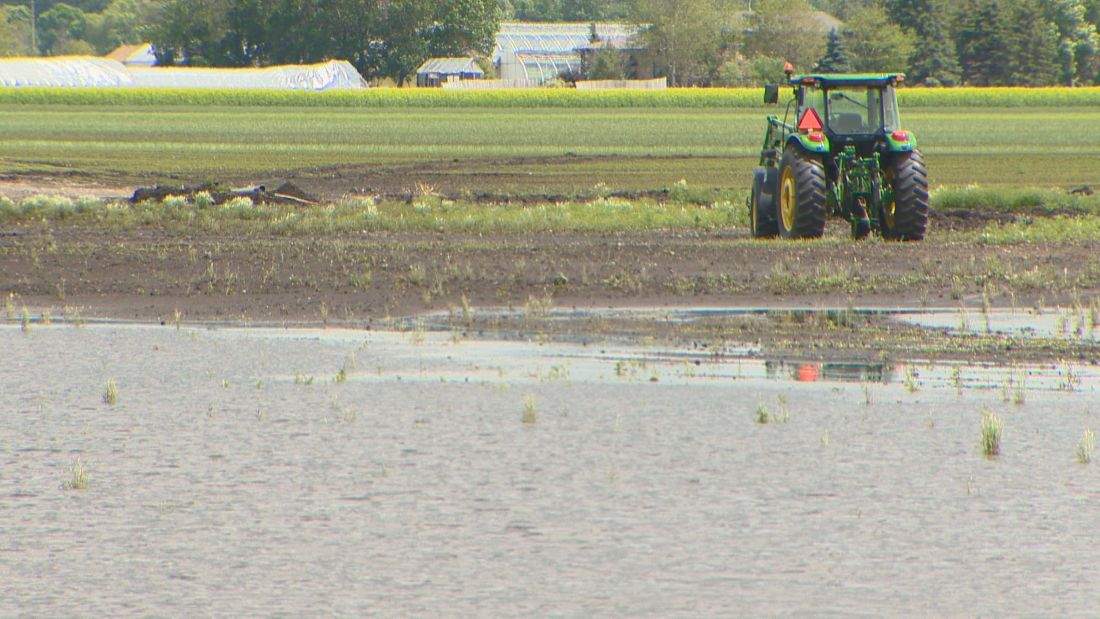
Heavy rainfall and waterlogged fields are choking the life out of this season's harvest across the Canadian Prairies. Combines are stuck. Grain is rotting or sitting too damp to store. If you think this is just a minor scheduling hiccup for farmers, you are missing the entire financial and operational disaster playing out across Saskatchewan, Alberta, and Manitoba.
Producers are staring down staggering delays. Saskatchewan sits at just 32 per cent of its crop in the bin compared to a typical 71 per cent average for mid-September. Alberta is lagging even further behind at 21 per cent harvested against a 43.5 per cent normal pace. When skies open up and dump inches of unwanted moisture right when machinery needs to roll, the math changes overnight. Building on this idea, you can find more in: Why Russia And China Just Smashed The Un Iran Sanctions Watchdog.
The Real Cost of Soaked Acreage
Grain can't go straight into a bin if it's holding too much moisture. It heats up, spoils, and loses market value. Farmers are forced to pay hefty fees to run grain dryers or rely on neighbors who have operational drying setups.
Jonothan Hodson, a cattle and grain farmer and board chair of the Manitoba Crop Alliance, pointed out the obvious financial strain. Operating costs spike because running commercial dryers eats straight into profit margins. When you spend four decades farming like Hodson has, you learn that every single year brings a unique brand of chaos. Yet, a late-season soaking of this magnitude hits the wallet hard. Experts at USA Today have provided expertise on this situation.
Soil Compaction and Long-Term Damage
Surface water brings another silent killer to agricultural land: soil compaction. When heavy equipment crosses wet clay and loam, the ground packs down tight. Ranjan Sri Ranjan, acting head of the University of Manitoba's department of biosystems engineering, notes that just a few passes over wet soil ruin structure for future years.
Root growth chokes out. Yields drop for seasons to come. While tile drainage can alleviate chronic wetness, installing it runs anywhere from $1,800 to $2,000 per acre. That kind of capital expenditure isn't something a producer can casually drop after taking a hit on wet crops.
What Comes Next for Prairie Producers
Farmers are resilient by necessity, but grit doesn't pay fuel bills or dry damp wheat. Weather patterns are shifting. Relying on historical averages is a losing game when precipitation spikes unpredictably during crucial windows.
If you want to understand where agriculture is heading, watch how producers adapt their storage, drying investments, and drainage strategies. The current crisis isn't an isolated anomaly. It's a stark preview of the financial pressures facing modern food production when the weather refuses to cooperate.