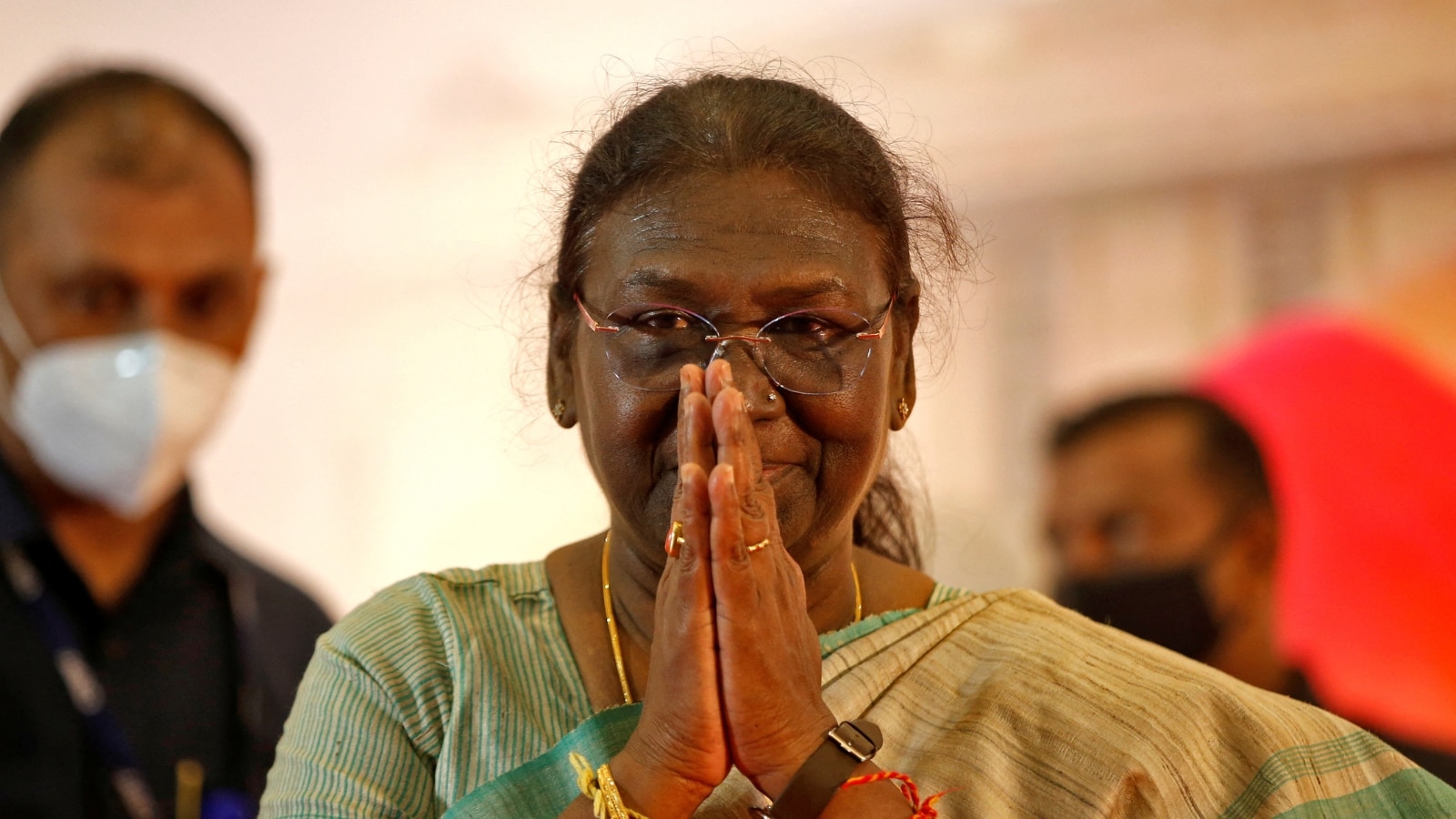
When an Indian head of state steps into a foreign capital after a three-decade gap, diplomatic protocol usually dictates polite speeches, formal toasts, and standard economic pacts. But during her state visit to Bucharest, President Droupadi Murmu's conferment of an honorary doctorate by the Bucharest University of Economic Studies turned out to be much more than a routine ceremonial stop.
The Bucharest University of Economic Studies awarded her its highest academic distinction, Doctor Honoris Causa, after a unanimous vote by the university senate. The decision was proposed by the university's Council for Administration and backed fully by Senate President Professor Gheorghe Hurduzeu, who noted that Murmu’s personal trajectory serves as a global example of how education alters human destinies.
If you look past the formal robes and heavy medals, the real story lies in what this moment reveals about soft power, shared historical links, and how a girl from a remote village in Odisha ended up speaking on artificial intelligence and ethics in Eastern Europe.
A Personal Journey That Resonates Far Beyond India
During her acceptance address, President Murmu accepted the degree on behalf of 1.4 billion Indians, framing the honor as a reflection of enduring bilateral friendship. But she quickly brought the room back to her personal roots.
She reminded the audience that she grew up in a small village with modest means and became the first girl from her village to attend college. Later, she worked as a school teacher, getting a front-row seat to how a single classroom can alter the course of an entire family and community.
That lived experience gave her speech a level of authority that canned political statements simply cannot match. When she called education the great equalizer that cares nothing about where you were born and everything about how far you're willing to go, it wasn't abstract theory. It was her actual life.
Public service isn't just about passing policies from high offices. It's about knowing what happens when a student in an underfunded school gets their first decent textbook. Murmu's time in the classroom clearly shaped her view that access to learning forms the bedrock of an inclusive society, a point she stressed to the Romanian academic community.
Century Old Connections and Deep Literary Ties
Diplomacy often focuses heavily on trade volume, energy corridors, and defence contracts. Those matter, of course. But deep cultural links keep nations connected over decades when geopolitical winds shift.
In her address, Murmu pointed out that India and Romania have communicated through poets long before modern diplomats stepped into the picture. Exactly one century ago, in November 1926, Nobel laureate Rabindranath Tagore visited Bucharest and spoke to a packed hall at the National Theatre on the unity of the human spirit.
The connection goes even deeper into Romanian literature. Romania's iconic national poet, Mihai Eminescu, studied the Upanishads and the Bhagavad Gita during his university years, allowing ancient Indian philosophy to shape his literary work.
These aren't just trivia points to fill out a speech. They reflect a long-running intellectual conversation between two distinct regions. They also explain why both nations found common ground so easily during this visit, leading to new agreements such as the establishment of a dedicated Department of Indian Studies at the University of Bucharest through the Indian Council for Cultural Relations.
Technological Change and the Ethical Responsibility of Universities
One of the most striking parts of Murmu's speech dealt with the modern challenges facing higher education. We live in a period dominated by artificial intelligence, automated decision tools, and rapid scientific breakthroughs that move much faster than legislation.
Murmu directly challenged the faculty and students present. She argued that as technology reshapes the global economy, universities bear a heavy responsibility to ensure that technical knowledge doesn't strip away human values.
Knowledge without wisdom, ethics, and compassion quickly turns destructive. When universities focus solely on technical skills while ignoring human values, they risk training people who can build complex algorithms but cannot evaluate their impact on real human beings.
She reminded the graduating students that real success isn't just a list of professional achievements or high corporate titles. It's measured by the ethical choices you make and the actual good you bring to people around you.
What This Visit Means for Bilateral Relations
This state visit represents the first time an Indian President has set foot in Romania in over thirty years. That length of time makes the trip significant on its own.
Romania has long served as a quiet destination for Indian students pursuing higher education, particularly in fields like medicine, engineering, and technology. Over the past few years, thousands of Indian students have trained in Romanian institutions.
By formalizing academic agreements and holding high-level discussions on business, technology, and energy, both nations are laying clear groundwork leading up to the 80th anniversary of their diplomatic relations in 2028. Soft power exchanges like honorary doctorates might look symbolic, but they open practical doors for student exchanges, joint research projects, and broader trade alignments.
Taking Action on Knowledge and Values
If you're an educator, student, or professional trying to navigate today's fast-changing work environment, there are clear takeaways from this event:
- Focus on human values alongside technical skills. Coding or financial modeling alone won't make you a great leader; ethical decision-making will.
- Look for non-traditional educational paths. Background and origin don't define your ceiling if you consistently seek learning.
- Build cross-cultural awareness. Understanding literature, history, and philosophy from other parts of the world makes you a far more capable global collaborator.
Start by auditing your own daily work or study habits today. Identify one area where technical knowledge needs to be tempered with better ethical judgment, and make a conscious shift in how you handle it.