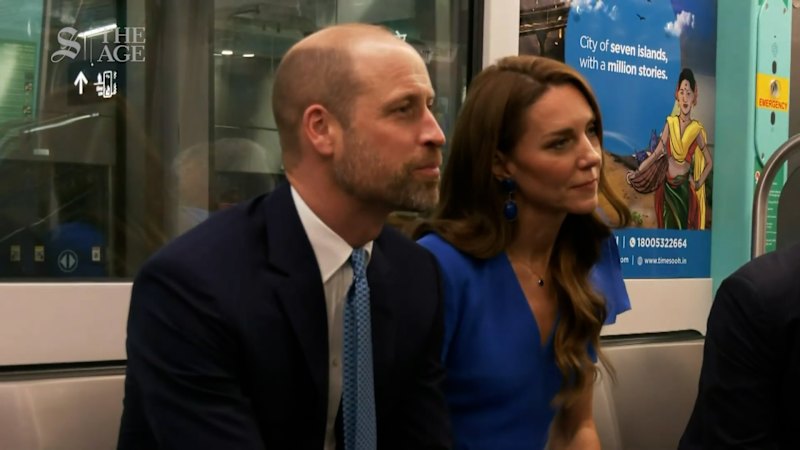
When global royals step foot in mega-cities like Mumbai, protocol usually dictates tinted motorcades, police escorts, and total seclusion from everyday commuter chaos. Prince William and Kate Middleton completely threw out that playbook during their arrival in India. Instead of sitting in standard traffic gridlock, the Prince and Princess of Wales walked right into a local subway station and boarded the Mumbai Metro Aqua Line.
It wasn't just a clever photo opportunity. This unexpected public transit ride from Vidhan Bhavan to the Bandra Kurla Complex (BKC) highlights a major shift in how modern high-profile delegations manage international diplomacy and public image.
Beyond the Motorcade Protocol
Public transit stunts by visiting heads of state or high-ranking royals are notoriously rare for security reasons. Yet, William and Kate chose to experience the city the exact same way millions of local residents do every single day. Stepping past the turnstiles and riding the escalators offered an unvarnished glimpse of Mumbai's bustling transit infrastructure, which recently crossed historic passenger milestones.
The timing wasn't accidental. The royal couple touched down in India to kick off a high-stakes three-day tour primarily anchored around the sixth annual Earthshot Prize Summit. Because William's environmental initiative heavily champions sustainable urban growth, green transit, and carbon reduction, stepping onto a modern underground electric rail network aligned perfectly with the core mission of the prize.
The Context Behind the India Tour
This visit carries immense personal and diplomatic weight. It marks Kate's first major international joint tour alongside William since her public health journey and cancer remission announcement. Rather than choosing a quiet European getaway or a traditional state-only itinerary confined to five-star ballrooms, they dived straight into the chaotic energy of Mumbai.
Before heading underground, the couple joined Indian cricket icon Sachin Tendulkar at Ballard Estate for a high-energy game of street cricket with local children. Merging street sports with an underground metro commute in a single afternoon completely shattered the stiff mold of twentieth-century royal visits. It felt grounded, spontaneous, and intensely human.
What This Means for Sustainable Urban Travel
Public transit systems across developing mega-cities face immense skepticism regarding capacity, cleanliness, and efficiency. By publicly endorsing the Mumbai Metro Aqua Line, international figures draw massive global attention to local infrastructure success stories. Mumbai's transit network has seen explosive daily ridership growth, proving that high-density urban centers can successfully pivot toward mass electric transit to fight urban congestion.
When global leaders bypass private transport to ride public rail, they send an unmistakable signal. Sustainability cannot just be a conference talking point or an award ceremony speech. It has to look like everyday life.
After wrapping up their packed schedule of innovation summits, startup showcases, and cultural exchanges in Mumbai, the royal delegation is scheduled to travel north to New Delhi for high-level meetings with Prime Minister Narendra Modi. But long after the motorcades resume in the capital, their choice to ride side-by-side with everyday commuters in Mumbai remains the defining image of the trip.