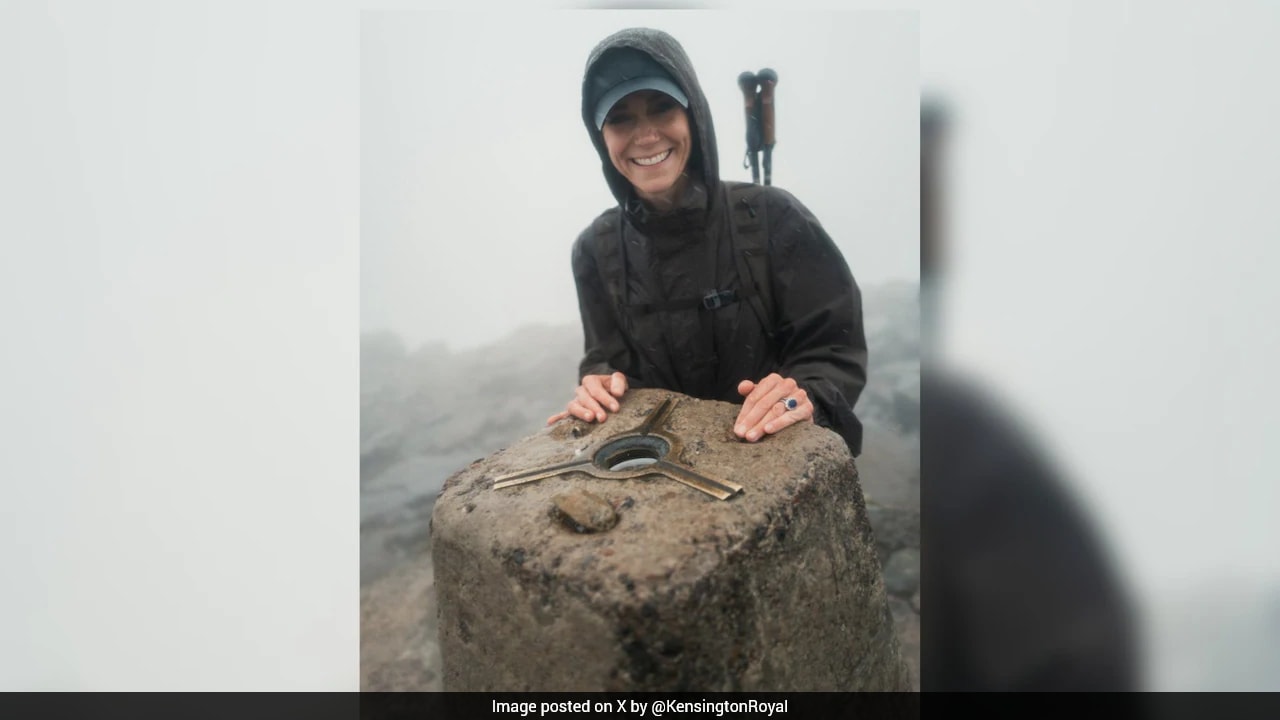
Climbing three mountains in twenty-four hours sounds exhausting for anyone. Doing it right after recovering from cancer is a different level of intense. Over the weekend, Princess Catherine completed the National Three Peaks Challenge, scaling the highest peaks in Scotland, England, and Wales.
Kensington Palace confirmed she completed the trek solo, tracked by Mountain Rescue teams, and finished within the strict 24-hour window. This wasn't a ceremonial stroll or a ribbon-cutting photo op. It required hiking 23 miles, ascending over 10,000 feet, and enduring 462 miles of driving between trailheads with virtually zero sleep.
She did it to raise money for the Royal Marsden Cancer Charity. More than that, she did it to prove something about life after a diagnosis. For a public figure who spent much of 2024 undergoing chemotherapy before entering remission in January 2025, the trek marks a definitive shift from patient to survivor.
The Brutal Reality Of The National Three Peaks Challenge
Don't mistake this for a casual weekend walk. The Three Peaks is a notorious endurance test that breaks seasoned hikers. The clock starts at the base of the first mountain and doesn't stop for traffic, blisters, or torrential rain.
National Three Peaks Challenge Breakdown:
• Total Hiking Distance: 23 miles (37 km)
• Total Ascent: 10,052 feet (3,064 meters)
• Driving Distance: 462 miles across three nations
• Time Limit: 24 hours
The journey kicks off at Ben Nevis in Scotland. At 1,345 meters, it's the tallest and most punishing peak of the trio. It's a relentless, steep slog over loose scree and rocky paths. The weather at the summit changes instantly, frequently dropping into freezing temperatures even in summer. Catherine started here on Saturday evening, reaching the summit while the light faded.
Next comes Scafell Pike in England. Standing at 978 meters, it's the shortest but arguably the most technically frustrating. Most challengers hit Scafell Pike in the dead of night. You are navigating boulder fields with a headlamp, fighting heavy fatigue, and trying not to twist an ankle.
The final stretch is Snowdon, or Yr Wyddfa, in Wales. At 1,085 meters, the final climb is a mental battle against total exhaustion. Your legs are heavy from the previous climbs and your body is stiff from hours of cramped driving between locations.
Reclaiming The Body After A Cancer Diagnosis
When you go through serious illness, your body stops feeling like your own. It becomes a project for doctors, a target for treatments, and a source of anxiety. Catherine hinted at this in her personal statement following the climb, noting that cancer tests every single part of a person. It alters how you think, how you feel, and how you perceive your own physical limits.
Taking on a grueling physical challenge like this is an act of reclamation. It sends a clear message to anyone watching that remission isn't just about surviving. It's about living fully again.
The physical toll of chemotherapy lingers long after the final round. Rebuilding muscle mass, cardiovascular endurance, and mental stamina takes months of quiet, unglamorous training. Stepping out to face three mountain peaks shows an incredible level of dedication to physical recovery that happens away from the public eye.
What The Royal Marsden Charity Does With The Funding
The funds raised from this trek go straight to the Royal Marsden Cancer Charity, supporting the London hospital where Catherine received her own care. The focus of this campaign is funding comprehensive care services that treat the whole person, not just the tumor.
Standard oncology treats the physical disease. It uses surgery, radiation, and chemotherapy to eliminate cancer cells. But the psychological and emotional fallout of a diagnosis often gets ignored.
The Royal Marsden uses charity funding to provide psychological counseling, nutritional advice, physical rehabilitation, and support groups for families. When a person hears they have cancer, the shock waves hit their spouse, their children, and their daily life. This campaign highlights the desperate need for funding that helps patients rebuild their lives during and after clinical intervention.
Why Most People Fail The Twenty Four Hour Mark
Stats show that while about 90 percent of people eventually crawl to the top of all three mountains, only around 40 percent manage to do it inside the 24-hour limit.
The biggest enemy isn't the steep terrain. It's the clock.
You lose time in the most mundane ways. Traffic jams on the motorway between Scotland and England can destroy a schedule. Sleep deprivation ruins your pacing. When you've been awake for 20 hours and you're staring up at a pitch-black Welsh mountain in the rain, your brain tells you to quit.
Catherine managed to beat those odds. She did it without a team of royals hiking beside her, leaning entirely on her own training and the logistical tracking of Mountain Rescue.
At the final finish line at Snowdon, she was met by Prince William, Prince George, Princess Charlotte, and Prince Louis, alongside her parents and brother. It was a rare, grounded family moment at the end of an extraordinary physical feat.
How To Actually Support Life Beyond Diagnosis Today
Awareness is fine, but action matters more. If you want to back the cause Catherine championed on the peaks, you don't need to climb a mountain tomorrow.
First, consider donating directly to the Royal Marsden Cancer Charity at their dedicated page. The funds directly scale up support programs for survivors trying to find their footing after treatment ends.
Second, look at how you support people in your own circle dealing with serious illness. Don't just ask how their treatment is going. Ask how they are doing mentally, or help them take care of practical, daily tasks so they can focus on recovery.
True support means standing by people through the entire journey, long after the immediate crisis has passed.