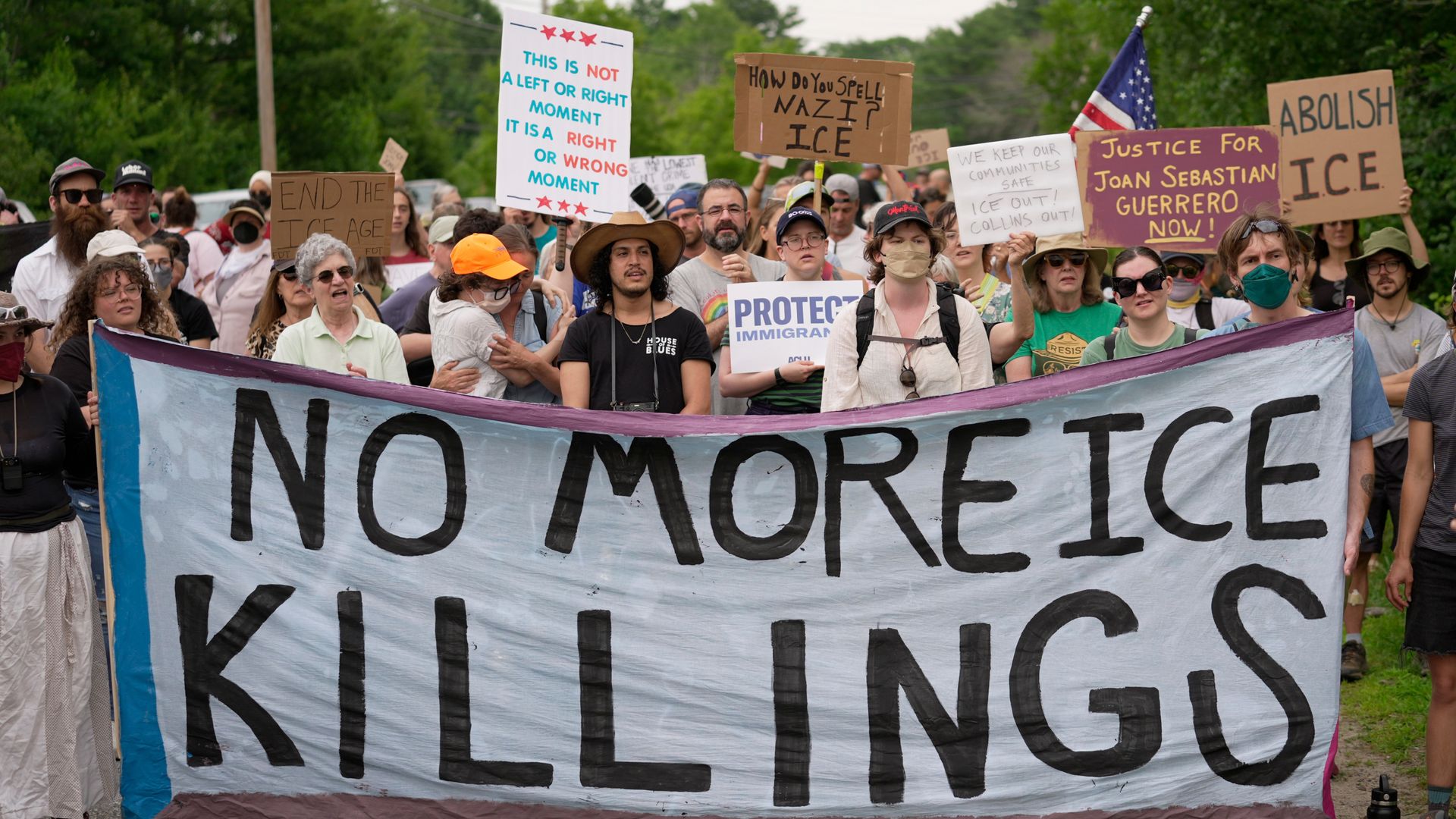
The streets of Scarborough, Maine, aren't usually the staging ground for national outrage. Yet on a recent Tuesday, hundreds of people gathered outside a federal facility to scream themselves hoarse. They weren't just angry. They were terrified and grieving. The protest over the killing of a driver by an ICE officer in the US is the spark that finally forced the federal government to hit the brakes on one of its most controversial tactics.
If you've been following the news, you know immigration enforcement has reached a fever pitch. But even by recent standards, the tragic death of 26-year-old Colombian national Johan Sebastián Durán Guerrero in the small coastal city of Biddeford, Maine, felt different. He was a husband, a father, and a legally authorized worker who regular customers at the local laundromat knew as a gentle soul.
Now, he is dead. His wife fell to her knees in the middle of a Maine street, looking at his body.
The immediate, furious backlash to this shooting has done something almost unprecedented. Within twenty-four hours of the shooting, senior administration officials quietly ordered Immigration and Customs Enforcement to suspend most vehicle stops nationwide. It's a massive policy shift, but for the family of Durán Guerrero and another victim killed just days earlier in Texas, it comes far too late.
What Happened on Pool and Hill Streets
Early in the morning of Monday, July 13, 2026, ICE officers were watching a home in downtown Biddeford, Maine. They were looking for someone they believed was in the country illegally with a final order of removal.
They spotted a vehicle pulling away. The driver was Durán Guerrero.
According to federal officials, officers attempted to conduct a vehicle stop. The Department of Homeland Security claims the car tried to flee, and an officer, fearing for public safety, fired his weapon.
But local witnesses and security camera footage tell a far more confusing, chaotic, and terrifying story.
A nearby business's security camera caught a white sedan approaching the intersection at a modest speed. It didn't speed off in a high-speed chase. Instead, it made several slow circles in the middle of the street.
A law enforcement SUV then blocked its path. Two officers opened the driver’s door and dragged out a limp body.
The Witness Accounts That Contradict the Official Narrative
Local resident Daniel Boucher looked out his third-floor window after hearing a succession of pops. He saw a small car turned ninety degrees to the curb with an unmarked SUV right behind it.
Boucher saw Durán Guerrero’s face and head covered in blood. He clearly heard him cry out a final sentence.
"I tried to stop."
When Boucher confronted the agent who fired the shots, the agent reportedly told him that the driver tried to run him over.
But another neighbor, Mary Hayes, witnessed the immediate aftermath. She watched Durán Guerrero's wife fall to her knees on the asphalt next to her husband's body. She watched their young daughter, wearing a pink backpack, crying in absolute confusion.
Advocacy groups like the Maine Immigrants' Rights Coalition and Presente! quickly confirmed that Durán Guerrero was authorized to work in the US and had a Social Security number. He was attending his required immigration court proceedings. He was doing everything by the book.
The Pattern of Deadly Force Without Cameras
If this were an isolated incident, the federal response might have been different. But this shooting was the second fatal ICE encounter in a single week, and at least the ninth death since the administration began its aggressive immigration crackdown.
Just six days earlier, on July 7, 2026, another ICE officer in Houston shot and killed 52-year-old Lorenzo Salgado Araujo.
In that case, federal agents in unmarked vehicles pursued Salgado Araujo while he was driving his construction crew to a job site. DHS claimed Salgado Araujo weaponized his work van and rammed an ICE vehicle. But three migrants who were in the van at the time contested that claim. They told investigators that a federal officer opened fire almost immediately upon exiting his vehicle, and Salgado Araujo never tried to ram anyone.
To make matters worse, a third man died on Tuesday, July 14, in Florida. He was struck and killed by a tractor-trailer while fleeing from federal and local immigration officers on foot.
There is a glaring, troubling detail connecting the Maine and Houston shootings. None of the officers involved were wearing body cameras.
DHS had previously claimed that body cameras were deployed to half of ICE's field offices, with the rest supposedly getting them soon. Yet when lethal force was used, there was zero official video footage to back up the federal claim of self-defense.
We are left with a system where federal agents can execute high-stakes vehicle stops in residential neighborhoods, use deadly force, and then police themselves behind closed doors.
Local Officials Say Enough is Enough
The political reaction in Maine has been swift and incredibly hostile to federal authorities. This isn't just activists screaming in the streets. It is the state's highest-ranking leaders demanding accountability.
Maine's congressional delegation, including Independent Senator Angus King, immediately demanded an expedited and fully transparent investigation. King spoke directly with Homeland Security Secretary Markwayne Mullin, who initially told him the driver tried to use his car as a weapon.
Later, DHS shifted its public statement to say the officer fired because they were fearing for public safety. That kind of rhetorical shift suggests they know the initial story doesn't hold water when compared to witness statements and camera footage.
Maine Secretary of State Shenna Bellows was blunt.
"It's time to get ICE off our streets."
🔗 Read more: of mice and men study guide
The Maine Attorney General's office launched its own independent investigation. While federal authorities tried to claim sole jurisdiction, state investigators are pushing hard to ensure that a local resident's death isn't brushed under a federal rug.
Why Vehicle Stops Are Incredibly Dangerous
You might wonder why ICE uses vehicle stops in the first place if they are so risky. The reality is that boxing in a car with unmarked vehicles is a common tactic to catch people off guard. But it's a tactic designed for war zones, not sleepy residential neighborhoods next to local laundromats and pawnshops.
When an unmarked vehicle cuts you off and armed individuals in tactical gear jump out, what is your natural human reaction? Panic.
If you don't speak fluent English, like Durán Guerrero, that panic is multiplied tenfold. You don't know if you are being carjacked, assaulted, or arrested. You hit the gas to get away.
Once the vehicle moves, officers routinely claim the vehicle is being used as a deadly weapon, giving them a legal shield to open fire. It is a dangerous, self-fulfilling cycle.
The suspension of these stops is a major admission of failure. The Trump administration didn't stop these operations out of the goodness of their hearts. They did it because the public backlash was threatening to boil over, and the legal liability of using deadly force with zero body camera footage was becoming impossible to defend.
The Next Steps for Community Protection
If you want to protect your community and ensure these tragedies don't continue, you can't just wait for the federal government to police itself. Here is what needs to happen next.
Push for Local Non-Cooperation Ordinances
Local police departments do not have to act as force multipliers for federal immigration agencies. Work with your local city council to pass clear ordinances that prohibit city resources and local police from participating in ICE sweeps or providing backup during non-criminal vehicle stops.
Demand Universal Body Camera Mandates
Write to your congressional representatives and demand that federal funding for DHS and ICE be strictly conditioned on the immediate, mandatory use of body-worn cameras for all field operations. If there is no camera footage, there should be an automatic independent civil rights investigation into any use of force.
Know Your Rights on the Road
If you are pulled over by federal officers, you have rights, regardless of your immigration status.
- Keep your hands visible on the steering wheel.
- You have the right to remain silent. You do not have to answer questions about where you were born or how you entered the country.
- Do not consent to a search of your vehicle without a warrant signed by a judge. An administrative ICE warrant is not the same as a search warrant signed by a court judge.
- Record the interaction if it is safe to do so. Bystander video in Maine is the only reason the public knows the truth about Durán Guerrero’s final moments.
The federal suspension of vehicle stops is a temporary victory bought with the lives of innocent people. Keep the pressure on. Keep watching. Do not let them quietly slide back into these lethal habits once the protests fade from the evening news.