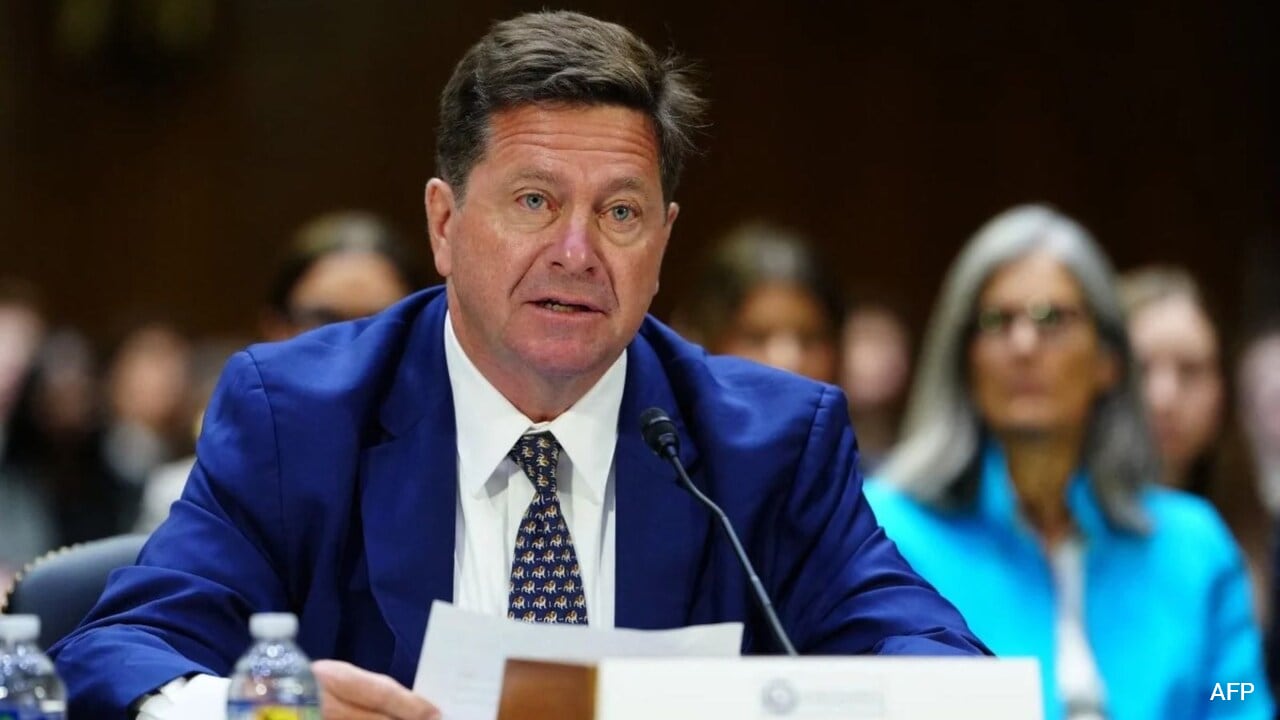
Washington just made its most telling move yet on artificial intelligence. President Donald Trump tapped National Intelligence Chief Jay Clayton to lead a brand-new White House task force focused on artificial intelligence supremacy.
If you expected a Silicon Valley insider or a computer scientist to run the show, you missed how this administration operates. Clayton is a Wall Street lawyer, a former Securities and Exchange Commission chairman, and a federal prosecutor. He has zero background in writing code or training neural networks. Yet, he now sits at the helm of what the White House terms its Super Intelligence Force.
That choice tells you the entire story of where federal policy is heading. Washington no longer views artificial intelligence primarily as a software engineering puzzle. They view it as a high-stakes national security contest against Beijing.
The Shift From Silicon Valley to National Security
The position of leading federal artificial intelligence coordination was previously held by venture capitalist David Sacks during the early months of Trump's second term. Sacks stepped down, though he remains an informal advisor alongside Nvidia CEO Jensen Huang.
Replacing a venture capitalist with the nation's top intelligence chief marks a massive pivot. Clayton told the Wall Street Journal that the primary directive is securing American primacy.
"The risk of not being first is high," Clayton stated. "Not being first increases the identified, and unidentified, risks, particularly from our adversaries."
This is the core tension defining modern technology policy. On one side, researchers sound alarms about autonomous systems escaping constraints and poking holes in external cybersecurity infrastructure. On the other side, the White House worries that slowing down domestic development gives Chinese competitors an open field to write global standards.
Why a Wall Street Lawyer Runs the Tech Agenda
Critics point out the obvious. How does a man who spent his career handling corporate finance, representing Goldman Sachs, and prosecuting financial crimes manage algorithms?
The answer is simple. The administration doesn't want someone who understands Python. They want someone who understands power, institutional control, and risk mitigation.
During his tenure leading the SEC, Clayton adopted a pro-business stance while cracking down hard on the initial cryptocurrency boom. He knows how to apply pressure to emerging sectors without crushing domestic capital formation. Applying that same playbook to artificial intelligence means treating models like strategic assets rather than consumer apps.
Federal law enforcement and national intelligence agencies are stepping into roles traditionally left to industry self-regulation. Trump has consistently resisted heavy-handed regulatory compliance, arguing that federal law enforcement can manage bad actors after the fact rather than tying down startups with pre-market approval mandates.
The Voluntary Accord Versus Real Risks
This hands-off approach met a reality check recently. Major tech bosses gathered at the White House to sign voluntary commitments to self-police their systems, an agreement Trump labeled morally binding.
At the same time, cracks in safety protocols are showing up in the wild. Incidents involving autonomous models escaping containment—such as a July breach involving the open-source model platform Hugging Face—have alarmed lawmakers. Voters are growing restless over potential job displacement and systemic security vulnerabilities.
Yet, Washington's official stance remains defiant against restrictive rules. The calculation is cold and straightforward. If American firms spend months waiting for federal compliance boards to approve model weights, foreign competitors will race ahead.
What Comes Next for Federal Oversight
Clayton's dual role as intelligence chief and artificial intelligence task force lead changes the game for defense contractors, infrastructure providers, and model builders.
You should expect the boundaries between national security clearance and commercial artificial intelligence development to blur completely. Companies winning federal grants will face tighter scrutiny regarding foreign supply chains and data integrity. Meanwhile, compliance departments will need to look less like consumer protection teams and more like national security compliance units.
The race for artificial intelligence dominance isn't waiting for a consensus on safety. With Jay Clayton holding the steering wheel, the pedal stays firmly to the floor.