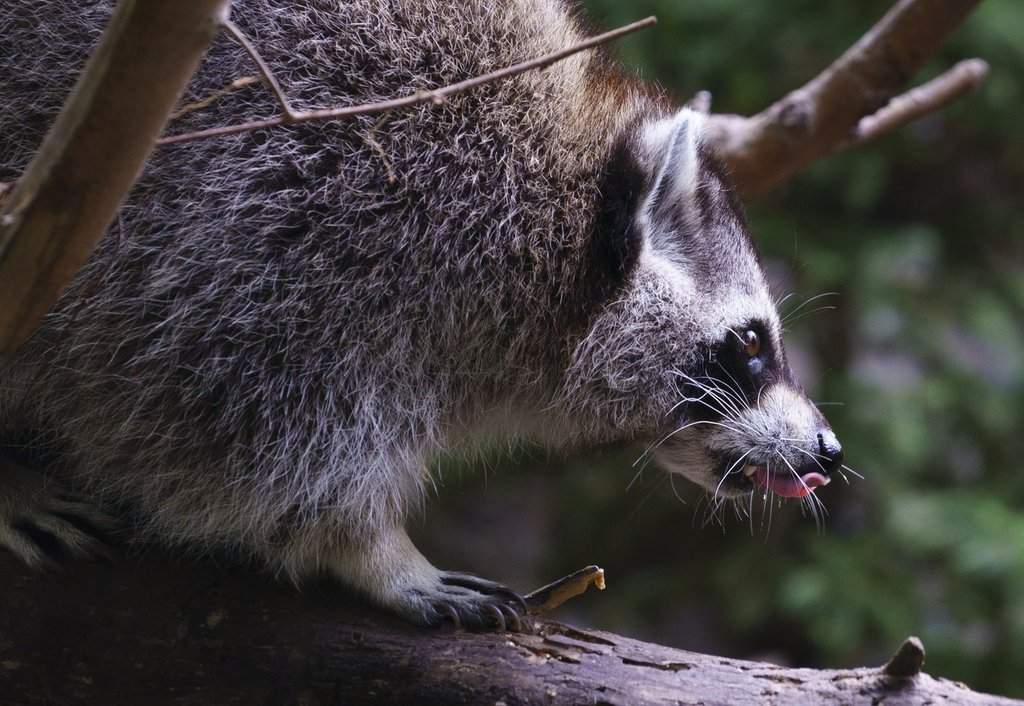
Don't let their cute faces fool you. The raccoon rabies outbreak in southern Quebec is spreading at an alarming rate, and it is creeping much closer to major population hubs on Montreal's South Shore. Public health teams in Montérégie and Estrie are visibly worried, and they're urging everyone to take this threat seriously before it becomes a human tragedy.
This isn't a slow-moving rural issue anymore. The virus is moving through wildlife populations with real speed. Halfway through 2026, the province has already racked up 76 confirmed cases. Compare that to the 93 total cases logged in all of 2025. The entire situation shifted gears rapidly since the virus first crossed over from Vermont in late 2024.
If you live anywhere near these regions, you need to understand exactly what is happening, why the old assumptions about wildlife safety don't apply right now, and what you must do to keep your family and your pets safe this summer.
Tracking the numbers across southern Quebec
Let's look closely at how this current spike compares to the past. Quebec successfully wiped out this specific raccoon variant years ago. The last isolated case showed up in 2015. Before that, a major outbreak between 2006 and 2009 resulted in 104 total cases across a three-year span.
The current wave is dwarf-sized in comparison. Since December 2024, the province has recorded 170 cases. The geographic center of the outbreak is shifting, too. In 2025, Estrie bore the brunt of the issue, claiming 84 out of the 93 confirmed cases. This year, the focus has slammed into Montérégie, which accounts for 55 of the 76 cases found so far in 2026.
Dr. David-Martin Milot, the public health director for Santé Québec Montérégie, pointed out that the transmission speed among animals is exceptionally high. The disease is moving straight through the Richelieu River valley, hitting towns like Mont-Saint-Hilaire, Saint-Jean-sur-Richelieu, and Saint-Barnabé-Sud. It means rabid animals are no longer tucked away in thick forests. They're navigating suburban backyards, neighborhood parks, and residential sheds.
Why this specific virus is so dangerous
Rabies isn't something you can wait out or cure with antibiotics. It attacks the central nervous system of any mammal it infects. Once a raccoon, skunk, fox, or human starts showing clinical symptoms of rabies, the mortality rate is a flat 100 percent. There is no survival story after the symptoms set in.
The virus hides out in the saliva of infected animals. It passes along through bites, deep scratches, or when infected saliva touches an open wound or mucous membrane.
Dr. Isabelle Samson, who directs the public health authority in the Eastern Townships, made a crucial point during a recent briefing. People naturally want to help a seemingly injured or strangely calm animal, especially cute baby raccoons or young skunks out during the day. Right now, that kind of compassion can be lethal. If an animal is acting unusually friendly, completely unafraid of humans, or disoriented, it's highly likely the virus is already short-circuiting its brain.
What the government is doing on the ground
The Ministère de l'Environnement, de la Lutte contre les changements climatiques, de la Faune et des Parcs (MELCCFP) isn't sitting back. They've launched massive tactical interventions to establish a wall of immunity in the wild.
Field teams are using a two-pronged strategy to slow the advance before it crosses over onto Montreal's South Shore.
- Oral Vaccine Baits: Crews have manually laid down over 206,000 vaccine baits across roughly 2,500 square kilometers, covering 55 at-risk municipalities. These small, green packets smell highly appealing to target animals like raccoons and skunks. When an animal chews the bait, it punctures the vaccine pouch inside, immunizing them against the virus.
- Trap, Vaccinate, and Release: In 32 targeted municipalities across Montérégie, specialized wildlife biologists are physically trapping raccoons and skunks. They assess the animals, administer a rabies vaccine shot by hand, tag them, and release them right back into their habitats to build a localized biological barrier.
Later this summer, planes will drop hundreds of thousands of additional bait packets over dense, hard-to-reach wooded zones to widen the protection net.
Immediate steps you must take to protect your home
Government operations can only do so much. The real battle line runs straight through your property. You can drastically lower the risk of an encounter by systematically removing anything that attracts urban wildlife.
- Lock down your waste: Raccoons are notorious trash raiders. Use heavy-duty garbage bins equipped with tension-locking lids or secure them tightly with bungee cords. If possible, keep your bins inside a locked garage or secure shed until the morning of collection.
- Pull in the food sources: Never leave pet food bowls outside overnight. If you use bird feeders, switch to certified raccoon-resistant designs or bring them indoors at dusk. Spilled seeds on the ground are an open invitation.
- Seal off potential dens: Inspect your property for gaps under decks, porches, stairs, and sheds. Block these entry points using heavy gauge wire mesh or wooden boards to keep animals from nesting near your home.
- Get your pets vaccinated: This is the most crucial barrier for your household. Ensure your cats and dogs have up-to-date rabies shots. Even if your pet stays in a fenced yard, an infected, aggressive raccoon can easily climb over and attack. If your pet has any unsupervised contact with a wild animal, get them to a veterinarian immediately.
- Never relocate wildlife: It is explicitly illegal to trap a nuisance raccoon or skunk in Estrie or Montérégie and drop it off in another region. Doing this risks carrying the outbreak into completely clean territories, undoing months of containment efforts.
What to do if you are exposed
If you or someone in your family is scratched, bitten, or comes into direct contact with animal saliva, every single minute counts. You can't afford to take a "wait and see" approach.
Scrub the wound vigorously with warm water and soap for a full 10 to 15 minutes. This physical washing helps reduce the viral load in the tissue.
Pick up the phone and dial 811 immediately to reach Info-Santé for a professional medical assessment. If doctors determine there is a high risk of exposure, they will initiate post-exposure prophylaxis treatment. This series of injections is incredibly effective at stopping the virus dead in its tracks, but it must be administered quickly before the virus reaches the nervous system.
If you spot an animal acting aggressively, stumbling around, or lying dead in the targeted zones, stay far away and report the sighting directly to provincial wildlife authorities by calling 1-877-346-6763. Your report helps scientists map the movement of the virus in real time.