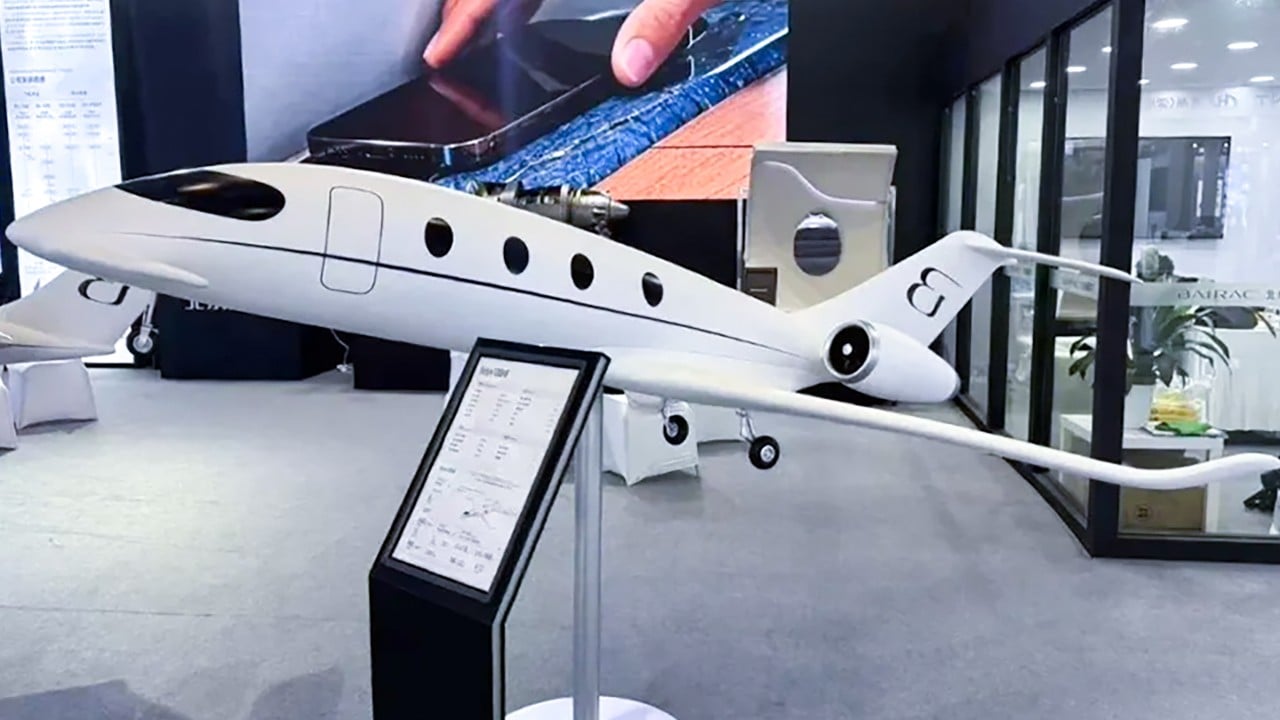
Private aviation is getting an aggressive eco-makeover. While most aerospace giants are still talking about carbon neutrality goals decades down the line, a bold new venture in China is trying to fast-track the future. Beijing Airlink Aircraft has entered the scene with a heavy-hitter founding team, setting its sights on a massive milestone: building the country’s first domestic, home-grown new-energy business jet.
If you think this is just another PR stunt backed by empty corporate slide decks, look closer. The mechanics of what they are attempting reveal a radical shift in how regional and executive transport will burn fuel—or rather, how it won't.
The Hybrid Architecture Behind the Ambition
Let's look at the engineering choice driving this project. Beijing Airlink Aircraft isn't putting all its eggs in a single, unproven electric basket. Instead, they are splitting their approach into two distinct variants, utilizing different propulsion setups.
One variant relies on a parallel hybrid system. In this configuration, both the internal combustion or turbine engine and the electric motor can deliver power directly to the drivetrain simultaneously. It's built for raw performance bursts and maximum efficiency during heavy-load phases like takeoff and climb.
The other variant utilizes a series hybrid system. Here, the fuel-powered engine acts strictly as an onboard generator to feed the batteries and electric motors, which do 100 per cent of the driving work. This setup provides ultra-smooth cruising and significant noise reduction, a massive selling point for corporate executives who value quiet cabins.
Why split the design? Because pure battery-electric flight for a business jet is still heavily constrained by weight and energy density limits. Hybridization is the pragmatic middle ground that makes commercial sense right now.
Why Business Aviation is the Next Frontier for Green Tech
Electric vehicle technology conquered cars, and urban air mobility is currently battling out the short-range drone and flying car space. But business jets sit in an awkward, highly demanding middle tier. They need range, speed, and reliability that standard lithium-ion packs struggle to deliver over long trans-regional hops.
Traditional business jets consume massive amounts of jet fuel per passenger mile. Corporate fleets face mounting pressure from shareholders and regulators to clean up their act. By targeting the executive jet market rather than massive commercial airliners, start-ups can bypass some of the rigid certification bottlenecks that plague major civil aviation bodies, while still capturing high-paying corporate clients who want to slash their carbon footprints.
The Reality Check on Manufacturing Hurdles
Building an aircraft is fundamentally different from building an electric car. You can't just pull over at 30,000 feet if your software glitches.
China has made monumental strides in civil aviation recently, heavily highlighted by the commercial rollout of the COMAC C919 passenger jet. However, scaling a brand-new aerospace enterprise from scratch involves severe financial burn and brutal regulatory scrutiny. Certifying a novel propulsion architecture requires millions of hours of simulation, wind-tunnel testing, and rigorous safety checks by the Civil Aviation Administration of China (CAAC).
A star-studded founding team gives Beijing Airlink Aircraft the initial capital backing and political tailwinds, but the physics of flight remain unforgiving. Supply chain stability, battery thermal management at high altitudes, and weight distribution will make or break these prototypes.
What Comes Next for the Market
If this start-up successfully moves from blueprints to tarmac testing, it will change the competitive calculus for legacy planemakers like Bombardier, Gulfstream, and Cessna. Domestic Chinese demand for private corporate travel has grown steadily, and Beijing's broader push for technological self-reliance means state-backed leasing firms will likely line up to support local aerospace innovation.
Keep an eye on how quickly they move from initial design disclosures to ground-rig testing. The real test won't be what the press releases promise, but how much payload and range the hybrid prototypes can actually deliver when the landing gear leaves the ground.