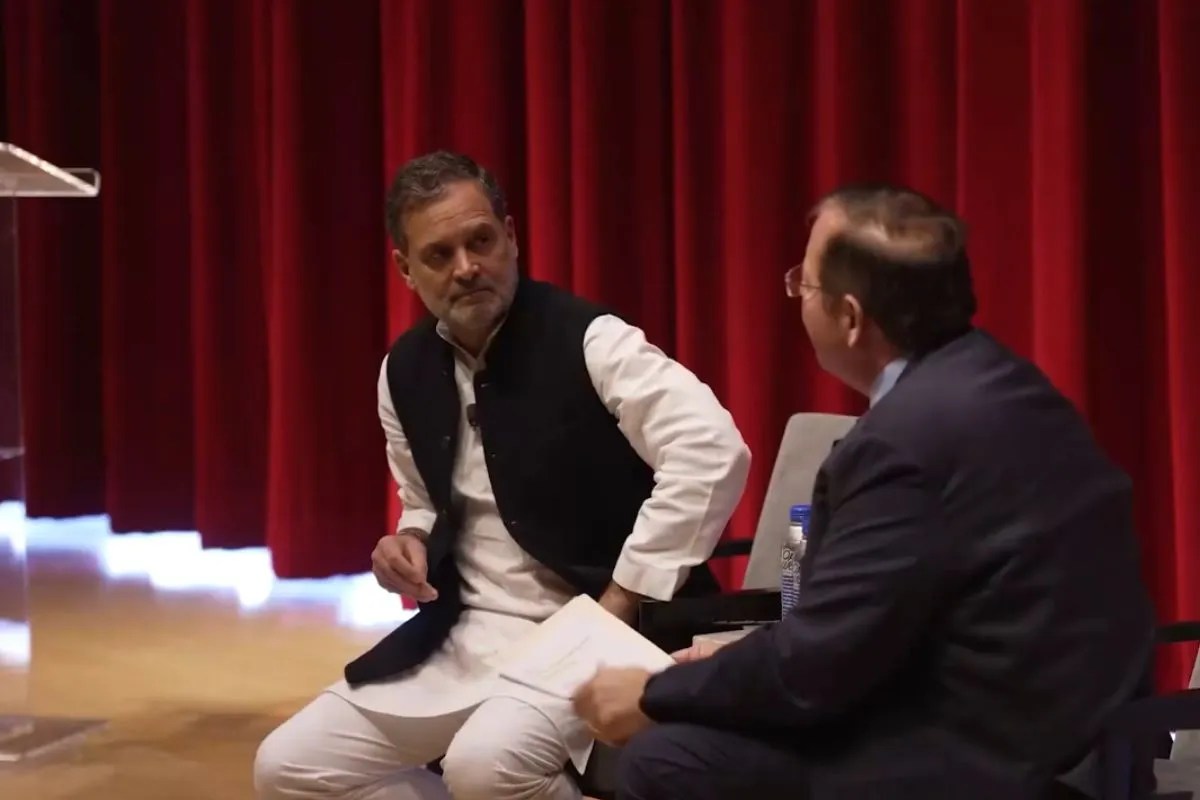
During an address at the University of Chicago, Leader of the Opposition Rahul Gandhi laid out his perspective on India's global posture. Addressing students, faculty, and political observers alongside Professor Robert Pape, Gandhi tackled one of the touchiest questions in international relations: how should India handle its relationship with Israel while addressing the ongoing humanitarian crisis in Gaza?
His answer wasn't a standard diplomatic hedge. Instead, he took a clear line that highlights an ongoing debate inside Indian political circles about what strategic autonomy actually means on the world stage.
The Balancing Act Between Defense Ties and Moral Clarity
Gandhi didn't mince words about defense reality. He openly supported maintaining a strong strategic relationship with Israel, pointing directly to India's military hardware needs. India buys sophisticated defense equipment from Tel Aviv, and breaking those supply lines isn't practical or realistic for national security.
At the same time, he argued that buying weapons shouldn't buy silence.
"I support a strong relationship with Israel," Gandhi stated. "We have strategic interests, including buying the best weapons for our armed forces. But that cannot mean silence on Gaza."
He explicitly condemned both the October 7 attacks by Hamas against Israeli civilians and Israel's subsequent military campaign in Gaza. His core premise was simple: one wrong doesn't justify another.
This posture attempts to draw a line between cold transaction and foreign policy values. You can source defense tech while still calling out military strikes that harm civilians.
Standing Up to Pressure from Major Powers
The most punchy segment of the Chicago interaction wasn't just about the Middle East—it was about how big powers treat India. Gandhi insisted that foreign policy must serve national interest, free from external arm-twisting.
He pointed out that a nation of 1.5 billion people shouldn't let outside forces dictate its foreign policy. Whether it's Washington, Moscow, Beijing, or Tel Aviv, India's decisions ought to stem from its own priorities.
Historically, India built its international reputation on non-alignment—a doctrine designed during the Cold War to keep from getting dragged into proxy fights. Modern strategic autonomy is the updated version of that philosophy. But today's global landscape is far more fragmented.
When major trade deals, defense corridors, and energy supply lines are tangled together, keeping an independent voice gets complicated fast. Washington wants clear alignment against regional adversaries; Moscow relies on India's energy purchasing power; Middle Eastern capitals watch India's statements on Palestine closely.
Navigating that web without buckling under economic or political pressure is tough. It requires standing firm on core principles while protecting trade and defense pipelines.
What Most Analysis Misses About Opposition Diplomacy
When Indian political figures talk foreign policy on foreign soil, critics often jump to call it partisan chatter. That misses the bigger picture.
Foreign policy isn't static—it evolves through friction between governing parties and opposition benches. When an opposition leader speaks at an international university, it signals to foreign observers how a potential alternative government views key partnerships.
By endorsing defense cooperation with Israel, Gandhi aligned with a foundational pillar of modern Indian security policy. By vocally criticizing the situation in Gaza, he aligned with India's long-standing support for Palestinian statehood and international law.
That dual position reflects a broad consensus across much of the Indian political spectrum: defense pragmatism on one side, traditional diplomatic principles on the other.
Key Principles Shaping India Foreign Policy Debates
- National interest comes first. Defense procurement, energy security, and trade routes take precedence over ideological posturing.
- Partnerships aren't blank checks. Maintaining strong bilateral relations doesn't mean endorsing every action of an ally.
- Strategic independence matters. No global power should dictate New Delhi's diplomatic posture.
- Multilateral consistency counts. Condemning terrorism must go hand-in-hand with calling out civilian harm.
What to Watch Next in Indian Foreign Relations
Keep an eye on how New Delhi manages its diplomatic messaging in upcoming multilateral forums like the UN and G20. Pay attention to whether official statements shift toward stronger calls for ceasefires or two-state negotiations, and watch defense procurement contracts with Israel to see if domestic political debates alter purchasing timelines or joint ventures.