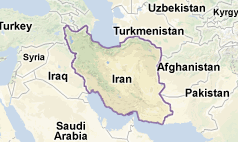
The Middle East just took a massive step toward a wider regional war, and it didn't happen in a vacuum. When news broke that Iran launches drone, missile attacks on Bahrain, Kuwait, and other regional neighbors, many analysts acted surprised. They shouldn't be. This is the direct result of a collapsed diplomatic strategy and the sudden return of a heavy-handed American naval blockade. For days, the situation around the Strait of Hormuz has been a ticking time bomb, and the explosion is finally playing out across the capitals of America's Gulf allies.
If you're trying to make sense of the chaos, you have to look past the immediate headlines of sirens sounding in Manama and Doha. Tehran is sending a brutal, calculated message to Washington through the countries that host its military infrastructure. By targeting locations like Kuwait, which hosts major American staging grounds, and Bahrain, home to the U.S. Navy's Fifth Fleet, the Islamic Revolutionary Guard Corps (IRGC) is trying to prove that American protection comes with a devastating local cost. It's a dangerous gamble that has left an interim truce in absolute tatters. Read more on a connected topic: this related article.
How the Stalled Interim Truce Blew Up the Gulf
We have to look back a few months to understand how we got here. In April, the U.S. imposed a strict naval blockade on Iran. That blockade was briefly lifted when both sides agreed to a temporary 60-day window to negotiate over Iran's nuclear program and regional maritime access. Those talks stalled out completely. Neither side was willing to budge on the core issues. Washington demanded stricter oversight of uranium enrichment, while Tehran wanted ironclad guarantees of economic normalization and formal recognition of its rules over the Strait of Hormuz.
When the 60 days ran out without a signature, the U.S. military moved fast to reimpose the blockade. Within 24 hours of that decision, American forces opened fire on a Curacao-flagged oil tanker named the Belma, which was heading toward Iran's Kharg Island. According to U.S. Central Command, the ship ignored multiple warnings before an American aircraft disabled it by putting Hellfire missiles directly into its smokestack. More journalism by Associated Press delves into similar perspectives on the subject.
That was the spark. Tehran viewed the disabling of the Belma as an explicit act of war and promised an immediate, decisive response. The American military followed up the tanker incident with waves of airstrikes hitting dozens of targets inside Iran, including defense positions on Greater Tunb Island and an army barracks of the 388th Mechanized Infantry Brigade in Sistan and Baluchestan province. Iranian officials reported that at least seven troops died in those initial strikes, with the total death toll quickly rising past 35.
Tehran wasn't going to absorb those losses quietly. The IRGC activated its regional doctrine, using drone and missile salvos to strike back not at the U.S. mainland, but at the regional hubs that make American power projection possible.
What Happened When Iran Launches Drone and Missile Attacks on Bahrain and Kuwait
The retaliatory strikes began in the early morning hours, lighting up the skies over multiple Gulf nations. In Bahrain, air defense sirens woke up residents across the country. The Bahrain Defense Force confirmed it intercepted and brought down several aerial targets, but some shrapnel and drone remnants still made impact. A residential building in Muharraq, located near the international airport, suffered structural damage.
Iranian state media was quick to explain the exact targets of the eleven-phase operation, which they labeled Thunder. They claimed they were hunting U.S. helicopters and P-8 Poseidon surveillance aircraft stationed at the Shakir Airbase. They wanted to blind American aerial reconnaissance over the Persian Gulf.
Gulf Status Update: July 2026
-----------------------------------------------------------------
Location      Target Listed              Defense Outcome
-----------------------------------------------------------------
Bahrain       Shakir Airbase             Interceptions reported;
                                         Muharraq building hit
Kuwait        Logistical Hubs            Missiles intercepted;
                                         Explosions over capital
Qatar         Airspace Threat            Thwarter attacks;
                                         Shrapnel injures one child
Jordan        Fighter Jet Bases          Three missiles downed;
                                         No local casualties
-----------------------------------------------------------------
Over in Kuwait, the situation was just as tense. The Kuwaiti military rushed to social media to tell residents that the massive explosions shaking the capital were the sound of air defense batteries destroying incoming threats. The IRGC openly took credit for these strikes, stating they used a mix of one-way attack drones and ballistic missiles to target American logistical installations.
The escalation didn't stop with Bahrain and Kuwait. Qatar's Defense Ministry announced its forces thwarted a separate missile threat, while shrapnel from an interception injured a young child. Even Jordan found itself dragged into the crossfire, reporting that its military shot down three Iranian missiles slicing through its airspace toward western bases where American fighter jets are parked.
The Core Misconception About Gulf Air Defenses
There's a common belief that the billions of dollars spent on regional missile defense systems mean the Gulf states are completely invulnerable. That's a dangerous myth. Yes, Western-made Patriot batteries and local defense networks intercepted a large percentage of the incoming Iranian hardware during this latest salvo. But air defense is a game of numbers and economic depletion.
An interceptor missile can cost millions of dollars. An Iranian-manufactured attack drone can cost as little as twenty thousand dollars. When Tehran launches coordinated, multi-axis salvos combining slow drones, low-flying cruise missiles, and high-speed ballistic threats, they are trying to saturate the radar systems. They want to force local forces to empty their magazines.
Even a successful interception creates a major hazard. When a missile hits a drone directly over a major metropolitan area like Kuwait City or Manama, thousands of pounds of burning metal, unexploded fuel, and kinetic shrapnel rain down onto civilian neighborhoods. The damage to the residential complex in Bahrain shows that you don't need a direct missile hit to cause a crisis.
The Fight for the Strait of Hormuz
This entire conflict is fundamentally an argument about who controls the flow of global energy. Iranian Foreign Minister Abbas Araghchi made his country's position clear, stating that Tehran must govern the narrow waterway that serves as the gateway to the Persian Gulf. He warned that any Western attempt to set up alternative maritime routes or bypass Iranian oversight will only drag out the crisis and guarantee that the strait stays closed.
The economic stakes are massive. The Revolutionary Guard threw down a clear ultimatum: if Iran isn't allowed to export its oil and gas because of the American blockade, then no one else in the region will be allowed to export theirs either. They are threatening a total energy freeze.
This puts countries like Kuwait and Saudi Arabia in a terrible spot. They rely completely on the safe passage of tankers through those very waters to keep their economies alive. By striking the infrastructure of these oil-producing states, Iran is showing that it can instantly disrupt global markets if it gets pushed into a corner.
Immediate Steps for Regional Operations and Security
The security landscape has shifted overnight, requiring immediate, practical adjustments from anyone managing operations, logistics, or corporate security in the region.
- Rethink Corporate Travel and Logistics: Instantly freeze non-essential corporate travel to Bahrain, Kuwait, and Qatar. If you have active supply lines running through Gulf international airports, prepare for sudden ground stops, flight diversions, or temporary airspace closures like we've seen during previous escalations.
- Audit Emergency Emergency Protocols: Facilities operating in the Gulf must verify that their localized warning systems and shrapnel shelters are fully operational. Don't assume your office building is safe just because it's away from a military base; interception debris is entirely unpredictable.
- Diversify Supply and Energy Chains: Supply chain managers must secure alternative shipping routes that bypass the Strait of Hormuz entirely. Relying on maritime transit through the Gulf right now is an unacceptable risk to business continuity.
The diplomatic paths are frozen, and the military responses are growing larger with every iteration. President Donald Trump indicated that the U.S. won't back down from its blockade strategy, claiming that the pressure will eventually force Tehran to seek a deal. But right now, the only thing the pressure is producing is incoming fire. This isn't a temporary border skirmish. It's a fundamental breakdown of the Gulf security architecture, and the fallout is landing right on America's regional allies.