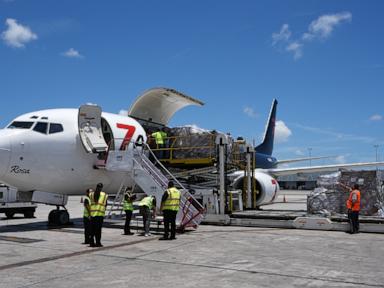
A cargo plane loaded with 700 packages of rice, beans, pasta, and basic hygiene kits took off from Miami International Airport on July 21, 2026. Its destination was Cuba.
It wasn't a standard trade delivery. It was the first $60 million tranche of a promised $100 million aid package from Washington. On the surface, sending food to a struggling island nation looks like a pure humanitarian gesture. But look a little closer and you'll see a high-stakes geopolitical strategy at play.
Washington is attempting a delicate tightrope walk. The government wants to feed ordinary Cubans while simultaneously starving the Cuban regime of energy, cash, and legitimacy. It's a strategy designed to bypass state channels entirely, using church networks to hand aid directly to citizens.
Will this strategy actually work? Or is it just a drop in the ocean compared to the massive economic pressure squeezing the island?
How the Miami Air Lift Bypasses Havana
For decades, foreign aid sent to authoritarian regimes faced a massive hurdle. State officials usually seized control of the shipments, hoarded the supplies for elites, or sold them at inflated prices on the black market.
To avoid that exact scenario, Washington built a specific workaround for this relief mission.
The U.S. State Department partnered directly with Catholic Relief Services and local parish priests scattered across Cuba. Jeremy Lewin, a senior State Department official overseeing foreign assistance, confirmed that U.S. personnel and local religious workers are coordinating the logistics on the ground. Because parish churches handle distribution directly at the neighborhood level, the Cuban government has almost zero opportunity to intercept the packages or claim credit for them.
Sean Callahan, President and CEO of Catholic Relief Services, traveled to Cuba weeks before the flight to inspect the logistics pipeline personally. The goal was simple. Ensure accountability so every bag of rice reaches a family in need rather than a military warehouse.
This isn't the first time this channel was tested. Late last year, when Hurricane Melissa slammed into eastern Cuba, Washington routed $9 million in direct relief through the same Catholic network. Expanding that effort to a $100 million initiative shows that the U.S. now views religious networks as its primary bridge to the Cuban public.
Squeezing the Regime While Feeding the People
You can't understand this food shipment without looking at the economic reality surrounding it. The aid flight didn't happen in a vacuum. It arrived during one of the most intense U.S. pressure campaigns against Havana in decades.
Washington has imposed tight restrictions on oil shipments bound for Cuba, creating an energy shortage that has crippled daily life across the island. Rolling blackouts last for hours. Thermoelectric plants are failing. Public transit is nearly frozen, and food processing plants struggle to operate without reliable electricity.
Secretary of State Marco Rubio and the Trump administration have made their goals clear. They want deep, structural changes to Cuba's political system. Just twenty-four hours before the aid plane departed Miami, the State Department released a detailed report documenting five decades of alleged Cuban intelligence operations and influence campaigns inside the United States.
The political message behind the food aid is hard to miss. Washington wants Cuban citizens to see that the United States is ready to help them directly, even as it targets the military and intelligence leadership running the country.
What the Cuban Government Is Saying
In Havana, official state media largely ignored the arrival of the Miami cargo plane. But earlier in the month, Cuban Foreign Minister Bruno Rodríguez didn't hold back his frustration.
Rodríguez dismissed initial U.S. aid announcements as little more than PR "fantasy." While acknowledging that $100 million in food and supplies provides short-term help to families, he pointed out the math behind Cuba's broader economic crisis. According to official Cuban estimates, U.S. sanctions and energy blockades cost the island billions of dollars each year.
From Havana's perspective, $100 million in aid covers roughly five days' worth of economic damage caused by U.S. sanctions.
Cuban President Miguel Díaz-Canel has framed the U.S. oil restrictions as a deliberate energy blockade designed to incite social unrest. During a rare press conference in Havana, he asked Cubans to prepare for continued sacrifice, insisting that the government would not surrender its sovereignty under external pressure.
Why Private Delivery Portals Are Shutting Down
While the U.S. government ramps up its direct humanitarian aid flights, everyday relief channels used by Cuban-American families are grinding to a halt.
For years, Cubans living in Florida sent groceries, clothes, and appliances to their relatives through online delivery portals like EnviosCuba.com. These sites allowed families in Miami to purchase goods online that were then fulfilled out of existing warehouses in Cuba.
That system is collapsing under the weight of recent U.S. sanctions targeting GAESA, the massive business conglomerate run by the Cuban military. GAESA controls everything from state retail stores and car rentals to import logistics. Because private delivery platforms relied on GAESA warehouses to deliver goods, they can no longer operate without risking severe U.S. financial penalties.
As a result, sites like EnviosCuba.com have frozen new orders, leaving thousands of Cuban-American families without a simple, direct way to support their aging parents or siblings on the island.
This creates a striking contrast. Official U.S. aid is landing on the tarmac via military-contracted charter flights, while informal private channels built by families over two decades are being shut down by compliance laws.
The Real Numbers Behind Cuba's Humanitarian Emergency
To understand why this aid flight matters so much right now, look at the daily reality facing Cuban families on the island.
- Power Outages: Major cities routinely experience 12 to 18 hours of daily power cuts due to fuel shortages and aging grid infrastructure.
- Basic Food Inflation: Essential items like milk, pork, and eggs have seen prices skyrocket, placing them out of reach for citizens earning standard state salaries.
- Medical Shortages: Basic antibiotics, painkillers, and surgical supplies are in short supply at regional hospitals, forcing families to source medicine on the informal market.
- Private Remittance Barriers: Sanctions on state-linked financial institutions have made sending cash or supplies directly to family members harder than ever before.
The $60 million shipment of food and hygiene kits offers brief relief to households facing these conditions. But it doesn't fix the systemic collapse of Cuba's domestic production or energy supply.
Practical Steps for Families Trying to Send Support to Cuba
If you have family members or friends in Cuba right now, navigating aid options can feel confusing. With commercial shipping rules changing constantly and delivery websites closing down, here are the safest and most reliable ways to get help to people on the ground.
- Work Through Verified Non-Governmental Agencies: Organizations with established, legal distribution channels inside Cuba—such as Catholic Relief Services, Caritas Cuba, or accredited international humanitarian groups—are currently the most reliable way to ensure supplies reach communities directly.
- Use Authorized Money Transfer Services: Stick strictly to financial institutions that operate outside state military conglomerates. Verify that any transfer service complies fully with current U.S. Department of the Treasury guidelines before sending funds.
- Send Emergency Medical and Food Packages via Approved Couriers: Certain licensed air-freight couriers based in Miami continue to operate direct cargo flights for personal packages. Confirm that your carrier handles customs clearance on the Cuban side to prevent items from being held in port indefinitely.
- Monitor Official State Department and OFAC Bulletins: Foreign policy rules affecting shipping, travel, and remittances are shifting rapidly. Check the Office of Foreign Assets Control guidelines regularly to avoid sending aid through platforms facing sudden regulatory freezes.