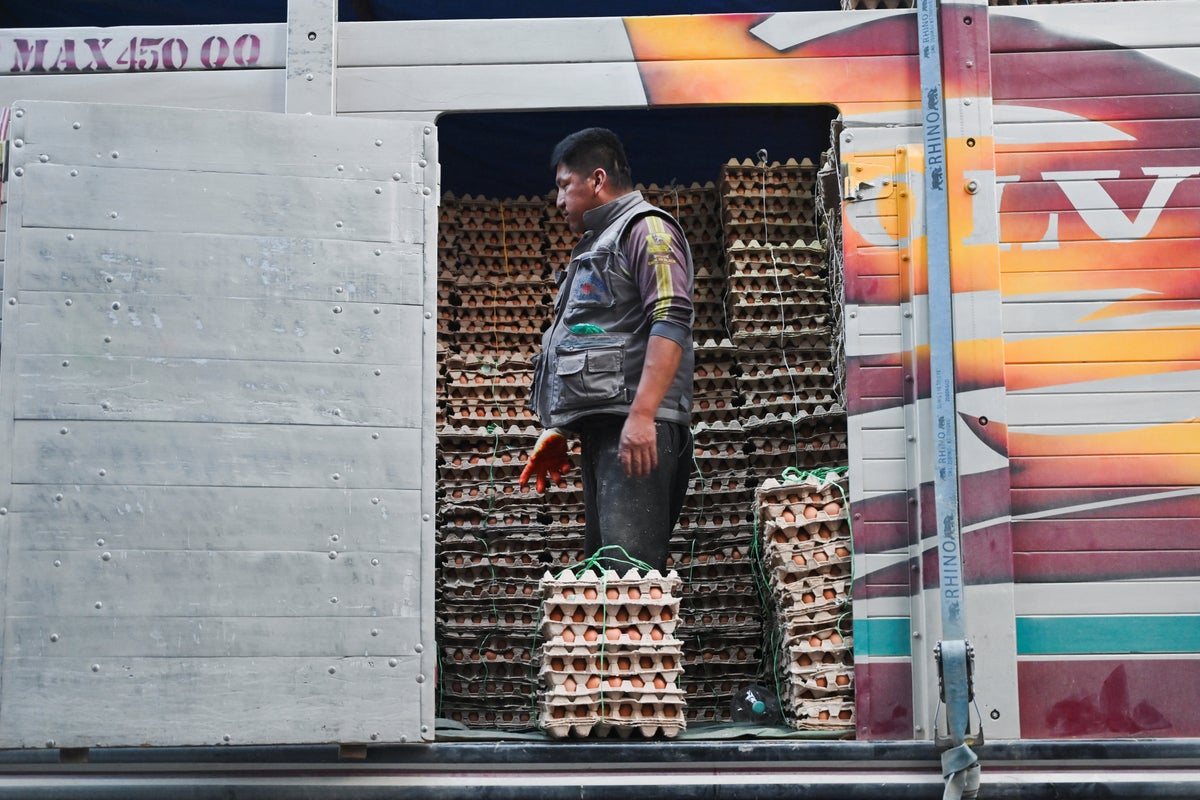
If you walked into a grocery store over the last few years, you probably stared at the egg case in sheer disbelief. A simple carton of large grade A eggs felt like a luxury item, with prices peaking at eye-watering highs. For a long time, the massive industrial egg producers told us the exact same story. They blamed avian flu, supply chain shocks, expensive chicken feed, and general inflation.
It turns out that wasn't the whole story. You might also find this related story useful: What Most People Get Wrong About Trump's New Iran Claims.
The U.S. Justice Department and attorneys general from 17 states just blew the lid off what was actually happening behind closed doors. Federal and state authorities reached a major settlement with three of the country's biggest egg giants: Cal-Maine Foods, Versova, and Hickman's Egg Ranch. The government flat-out accused them of running a secret, coordinated scheme to artificially pump up egg prices when Americans were already struggling to buy groceries.
Before digging into how they allegedly pulled this off, let's clear up a massive piece of misinformation floating around the internet. A major British news outlet published a headline claiming these companies are paying a $3.3 billion settlement. That's a flat-out typo. The real cash settlement is $3.3 million, alongside a massive donation of 53 million eggs to food banks. While $3.3 million might sound like couch change for corporations making billions, the real story lies in the creepy mechanics of how our food prices get set. As extensively documented in recent reports by TIME, the effects are widespread.
Inside the Room Where Egg Prices Were Rigged
Most people think grocery prices are dictated by simple supply and demand. If chickens get sick, eggs get scarce, and prices go up. But the industrial food system doesn't work like a local farmer's market.
Instead, large commercial contracts rely on a daily price index published by a company called Urner Barry. If you can manipulate what Urner Barry thinks eggs are worth, you instantly change what supermarkets, restaurants, and food manufacturers pay across the entire country.
The DOJ complaint lays out an incredibly specific blueprint of how these three competitors allegedly worked together to trick the index between June 2022 and March 2025. They didn't just casually chat about prices. They used an online trading platform called the Egg Clearinghouse exchange to coordinate fake signals of massive demand.
The evidence prosecutors put forward is wild. In December 2022, Glenn Hickman, who was the chief executive of Hickman's Egg Ranch at the time, sent a direct email to senior executives at his top competitors, Cal-Maine and Versova. He explicitly urged them to log on and post "strong bids, early and often" before the market reporters at Urner Barry started their workday.
The plan worked like a charm. That very morning, the three companies flooded the exchange with dozens of high-priced bids. To put that in perspective, every other egg producer in the country combined submitted fewer than six bids that day. When the Urner Barry reporters logged on, they saw a sudden, massive wave of expensive bids and assumed the market was frantic for eggs. They raised their official price quotation later that afternoon.
Another executive from an unnamed egg cooperative put it even more bluntly to the group, telling them they needed to "bid like they vote in Chicago, early and often."
This wasn't a standard business strategy. It was a targeted effort to make a stable market look desperately starved for product, forcing the benchmark price higher and squeezing cash out of everyday families.
Breaking Down the Actual Settlement Numbers
Since these companies were caught with their hands in the chicken coop, the government forced them to sign a multi-part settlement. None of the companies admitted to any legal wrongdoing. That's a classic corporate legal shield, but the penalties they agreed to tell a different story.
Let's look at exactly what each company is giving up under the deal.
Cal-Maine Foods is the undisputed heavyweight champion of the American egg industry. They are the only publicly traded company out of the three, which means we can see their actual financial health. During the 2025 fiscal year, while consumers were panicking at the cash register, Cal-Maine reported a staggering profit of $1.22 billion. Under this new agreement, Cal-Maine will pay $1.5 million in cash to the states and donate 30 million physical eggs to local food banks.
Versova, another massive player, is on the hook to provide 20 million eggs over the next three years and make a one-time cash payment of $800,000.
Hickman's Egg Ranch rounds out the trio. They will contribute 3.25 million eggs and pay $1 million in cash. The current owners of Hickman's, a joint venture involving Mantiqueira USA, quickly pointed out that this shady behavior happened before they officially bought the company in late 2025. Still, they have to pay up to clear the ledger.
When you add it all together, it comes out to $3.3 million in cash distributed among the 17 states involved in the lawsuit, and 53 million total eggs distributed to non-profits and food pantries. New York led the charge on this investigation, so organizations serving New Yorkers will pull in roughly 4.9 million of those donated eggs.
The participating states spanning from coast to coast include Arizona, California, Colorado, Connecticut, Florida, Hawaii, Iowa, Maryland, Minnesota, North Carolina, Ohio, Pennsylvania, Texas, Utah, Vermont, Wisconsin, and New York.
Why Some Consumer Advocates Think the Government Let Them Off Easy
While the headlines focus on the millions of donated eggs, a lot of industry watchdogs are incredibly angry about this settlement. They view it as a pathetic slap on the wrist.
Think about the math for a second. Cal-Maine alone cleared over a billion dollars in pure profit in a single year during this exact timeline. Paying $1.5 million and giving away some excess inventory doesn't hurt their bottom line at all.
Angela Huffman, the president of an advocacy group called Farm Action, publicly slammed the agreement. She pointed out that dominant corporations can simply treat these minor settlements as a predictable cost of doing business rather than real accountability. When a company makes hundreds of millions of dollars by artificially inflating a market, a million-dollar fine is just a small tax on a massive heist.
The real punishment isn't the money. It's the strict structural changes the DOJ is forcing these companies to implement. Moving forward, all three producers have to completely ban any communication with their competitors regarding pricing, bidding strategies, or market transactions. They are also forced to hire dedicated internal antitrust compliance officers and set up formal monitoring programs that report directly to government regulators.
The Shocking Way Prices Reacted to the Investigation
If you need proof that the government's investigation hit a nerve, you only have to look at what happened to egg prices the second the companies found out they were being watched.
According to the legal complaint, federal investigators officially told Cal-Maine, Versova, and Hickman's to preserve all of their internal documents and communications in March 2025.
Almost instantly, the daily price quotations on the exchange dropped significantly. The suspicious bidding wars stopped. The aggressive, coordinated push to inflate the daily benchmark evaporated overnight.
Of course, the companies still claim they did absolutely nothing wrong. Sherman Miller, the CEO of Cal-Maine, released a statement arguing that the allegations of price manipulation were entirely baseless and that their actions were perfectly legal. He blamed the price spikes on an unpredictable mix of avian influenza outbreaks, pandemic ripples, bad weather, and high inflation. Versova echoed that defense, stating that their individual farmers don't set wholesale prices and are at the mercy of grain costs for hen feed.
There's no doubt that bird flu was real. Millions of hens had to be culled, which naturally strained the supply chain. But the timing of the price crash is incredibly telling. The supply didn't miraculously double overnight in March 2025. The only thing that changed was that the Department of Justice knocked on their door with a subpoena. By May 2026, consumer egg prices tumbled all the way down to under $2.20 per dozen.
Your Next Steps as a Savvy Consumer
Knowing that major food corporations manipulate benchmarks behind the scenes can make you feel completely helpless at the grocery store. But you don't have to just take it. You can change how you buy to protect your wallet and support fairer food systems.
- Look past the major supermarket chains: The big egg giants control the supply lines to massive corporate grocery stores. Check out local farmers' markets, food co-ops, or smaller independent grocers. They often source from independent local farms that operate outside of the rigged corporate price indexes.
- Track localized alternative proteins: When specific items like eggs skyrocket, don't just grumble and pay the inflated price. Shift your shopping habits immediately to alternative whole foods like tofu, legumes, or local dairy products until the corporate standoffs settle down.
- Support agricultural antitrust reform: Keep an eye on groups like Farm Action or the National Farmers Union. They actively lobby for stricter enforcement of the Packers and Stockyards Act and other antitrust laws. Supporting their campaigns helps push lawmakers to pass fines that actually hurt corporate lawbreakers instead of letting them slide with minor penalties.