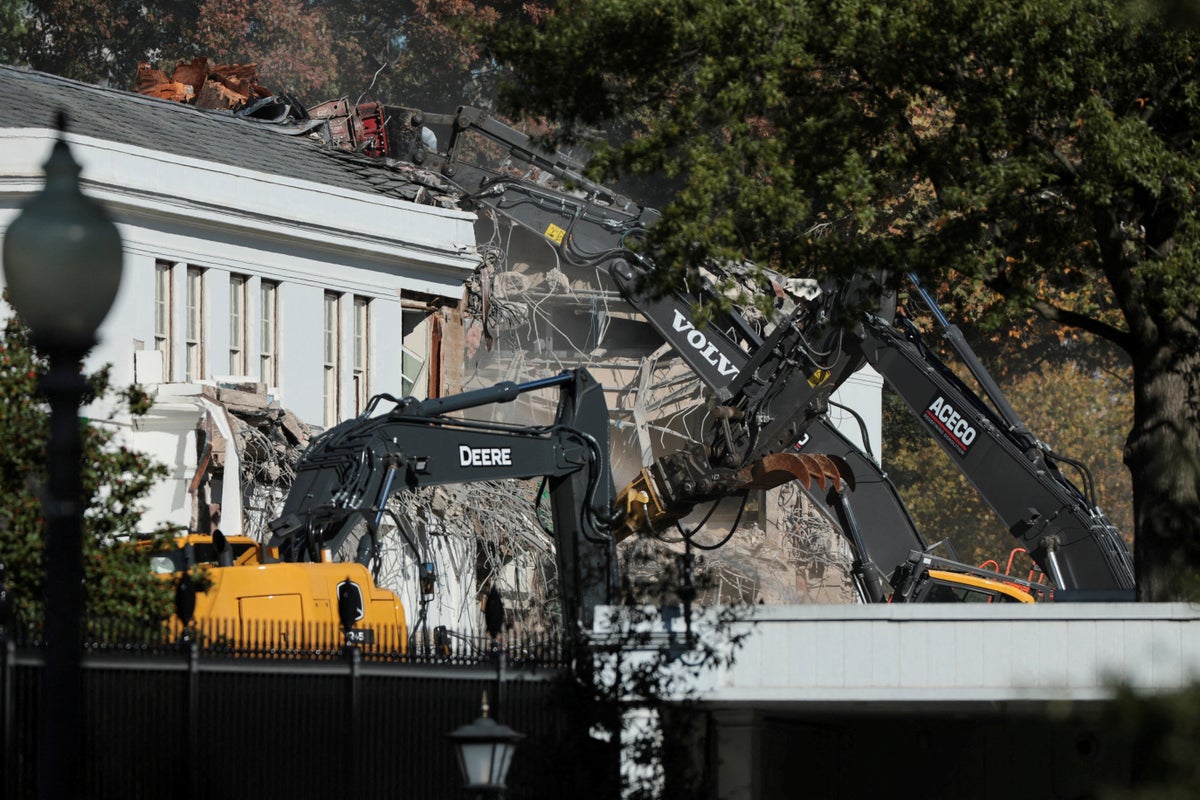
You have probably heard the headlines about a massive, fortified ballroom being built at the White House. It sounds like a bizarre mix of luxury and high-stakes military engineering. While the mainstream media tends to focus on the flashy optics of gold-plated floors or the irony of a ballroom doubling as a bunker, the reality of the situation—and why the Supreme Court just stepped in—is far more grounded in legal power dynamics than just architecture.
Basically, the Supreme Court has granted a temporary green light for construction to continue on what the administration is calling a "national security complex." If you are wondering why a project that started as a ballroom is now being described by the Department of Justice as a "nuclear-blast-resistant military installation," you are not alone. If you found value in this article, you should read: this related article.
The Core Legal Fight
The central issue here isn't just about whether the President should have a ballroom. It is about who actually has the authority to spend federal money and fundamentally alter the East Wing of the White House. The National Trust for Historic Preservation and other critics have been fighting this in court, arguing that Donald Trump bypassed Congress entirely.
In our constitutional system, Congress holds the power of the purse. When you look at the administrative state and how federal property is managed, the executive branch cannot just decide to raze a historic wing of the White House and replace it with a $400 million facility without legislative authorization. For another look on this development, refer to the latest coverage from BBC News.
The administration’s defense is simple: they claim they already have the authority. Attorney General Todd Blanche has gone on record suggesting that past presidents have performed various upgrades and that this shouldn't be treated as an anomaly. But there is a massive difference between fixing the HVAC system and gutting a section of the White House to build a 90,000-square-foot bunker with a "drone port" on top.
Why This Matters in 2026
If you look at the financials, the shift in narrative is striking. We started with an estimated cost of around $200 million. We are now looking at $400 million, and some experts suggest that figure could realistically climb to $600 million once the specialized military-grade components are factored in.
The administration has been using funds pulled from the Secret Service budget to cover "security upgrades." This is where it gets messy. When you shuffle hundreds of millions of dollars from an agency tasked with protection into a construction project that is being sold as a dual-purpose military-ballroom complex, you create a transparency nightmare.
Most people don't realize that if this construction proceeds to a certain point—what lawyers call a fait accompli—it effectively becomes irreversible. Once you have poured nuclear-blast-resistant concrete and installed specialized venting and structural supports, you can't exactly "undo" the damage to the historic site. That is the urgency the plaintiffs were trying to convey to the Supreme Court.
The Strategy Behind the Build
You have to look at the branding here. By labeling this a "Military/Ballroom Complex" and emphasizing its utility as a safe facility for the President to perform constitutional duties during a crisis, the administration is effectively using national security as a shield against judicial scrutiny.
It is a clever move. If a judge stops the construction, they aren't just stopping a ballroom—they are technically, on paper, hindering a "vital" security project. It’s hard for a court to argue with the executive branch when they claim a building is necessary for the continuity of government.
What to Watch Next
The Supreme Court didn't rule that the construction is legal. They just didn't stop it yet. They have allowed the work to continue while they figure out how to handle the broader challenge regarding the President’s authority to bypass Congress.
If you are paying attention to this, keep your eyes on these two things:
- Budgetary Shuffling: Watch how much more money is funneled out of existing agency budgets to cover cost overruns. This is where the real accountability battle will happen.
- Congressional Involvement: Will Congress actually step up and exert its authority? Right now, there is a weird silence from both sides of the aisle. They seem content to let the courts deal with the political hot potato.
This isn't about whether the President deserves a nice room for events. It is about whether the executive branch can unilaterally reconfigure the seat of the American government without a single vote from the people's representatives. We are watching a significant test of executive power. The outcome will set a precedent for how much freedom future administrations have to reshape federal property on their own terms. Don't expect a quick resolution. This fight has only just started moving through the highest court in the land.